
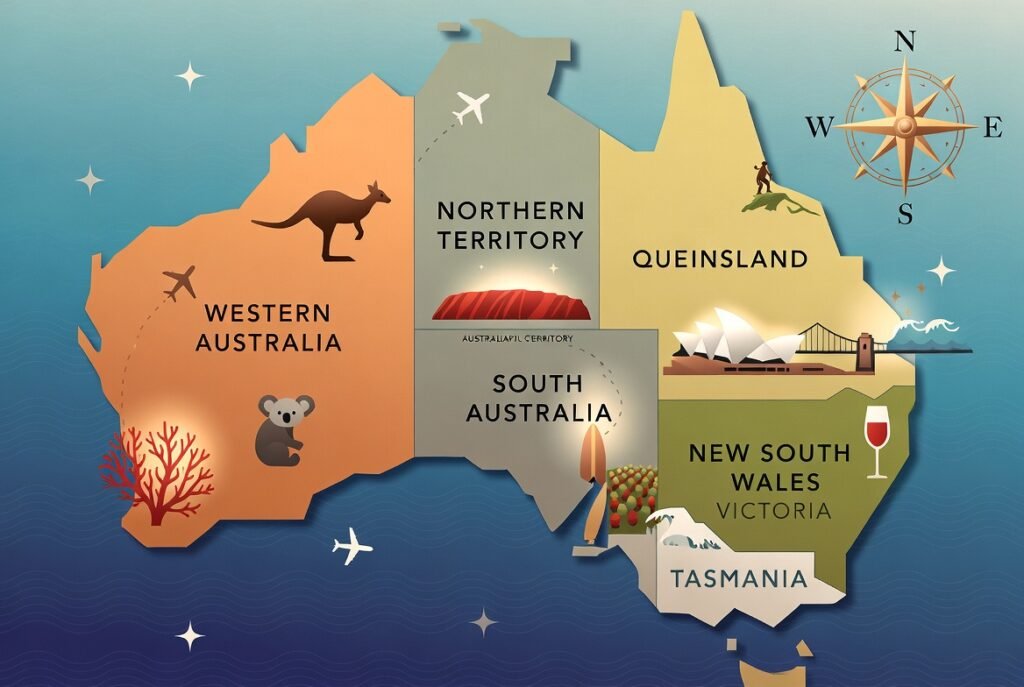
How To Travel To Australia
How To Travel To Australia: The Ultimate Guide
Australia is one of the most exciting travel destinations in the world, famous for its stunning beaches, unique wildlife, vibrant cities, and incredible natural landscapes. This practical guide covers everything you need for a smooth trip in 2026: transportation options, current visa & entry rules, best times to visit, and essential tips — including the reality that Australia is a **very big country** with vast distances between many popular destinations.
Essential Steps for Traveling to Australia
1. Choose Your Transportation
Australia is well-connected internationally, but domestic travel requires planning due to its enormous size.
By Air: Major international gateways include Sydney (SYD), Melbourne (MEL), Brisbane (BNE), Perth (PER), and Adelaide (ADL). Low-cost carriers like Jetstar, Virgin Australia, and QantasLink offer many domestic routes.
By Train: Long-distance scenic trains such as The Ghan (Adelaide–Darwin) and Indian Pacific (Sydney–Perth) are iconic but take several days.
By Bus/Car: Greyhound and other coach services operate on major routes. Self-driving is popular but distances are huge.
Top 5 Tips:
- Book domestic flights early for the best prices
- Consider flying between major cities rather than driving
- Use the Qantas or Virgin Australia app for bookings
- For road trips, plan fuel stops carefully — some stretches have very few services
- Book long-distance trains well in advance
2. Understand Visa & Entry Rules
Australia has strict but straightforward entry requirements that vary by nationality.
ETA (Electronic Travel Authority): Available to citizens of many countries including the USA, Canada, UK, Japan, and others (subclass 601).
eVisitor: Free for EU/EEA/Swiss passport holders.
Visitor Visa (subclass 600): Required for many other nationalities.
Top 5 Requirements:
- Valid passport (usually 6+ months validity recommended)
- Proof of onward or return travel
- Sufficient funds to support your stay
- Travel insurance strongly recommended
- No criminal record issues (character requirements apply)
3. Pick the Best Time to Visit
Australia has diverse climates across its huge landmass — timing depends on which regions you plan to visit.
Spring (Sep–Nov) & Autumn (Mar–May): Generally the best overall — pleasant weather in most regions and fewer crowds.
Summer (Dec–Feb): Great for beaches in the south, but very hot and humid in the north (wet season in tropical areas).
Winter (Jun–Aug): Mild in the south, perfect for the Red Centre and tropical north. Ski season in the Australian Alps.
Top 5 Seasonal Highlights:
- Spring: Wildflowers in Western Australia, whale watching
- Summer: Beach holidays, cricket, Australia Day (Jan 26)
- Autumn: Mild weather, harvest festivals, fewer tourists
- Winter: Great Barrier Reef diving, Uluru at its best
- Shoulder seasons: Best value and comfortable temperatures
4. Plan Internal Transport
Australia is a very big country — the distances between major cities and attractions are often vast. This is one of the most important things to understand when planning your trip.
Domestic Flights: The most efficient way to travel long distances (e.g. Sydney to Perth is over 3,000 km).
Trains: The Ghan and Indian Pacific offer unforgettable scenic journeys but are slow and expensive.
Buses & Driving: Greyhound coaches and self-drive are options, but expect long hours on the road.
Top 5 Options:
- Domestic flights — fastest for long distances
- The Ghan & Indian Pacific — bucket-list train experiences
- Greyhound or other coach services for budget travel
- Campervan or 4WD rental for road trips (especially outback)
- Internal flights + short domestic hops for efficiency
5. Budget & Practical Essentials
Prepare for a smooth and enjoyable stay with these basics.
Currency: Australian Dollar (AUD). Cards are widely accepted; notify your bank before travel.
Language: English is the main language (with a distinctive Australian accent).
Power: Type I plugs (three flat pins), 230V — bring a universal adapter.
Top 5 Money-Saving & Practical Tips:
- Book domestic flights and accommodation in advance
- Use Opal card in Sydney or Myki in Melbourne for public transport
- Consider a campervan for flexible, cost-effective travel
- Buy a SIM card on arrival for cheap data
- Pack sunscreen, hat, and insect repellent — the sun is strong
Disclaimer: Entry requirements and travel conditions can change. Always check the official Australian Government websites (homeaffairs.gov.au and smartraveller.gov.au) before departure. Information current as of 2026.