
Getting To and Around the Pacific Islands
Getting To and Around the Pacific Islands: Complete Transportation Guide 2026
The Pacific Islands are spread across millions of square kilometres of ocean, making travel both exciting and logistically unique. Whether you’re coming from the USA, Australia, Europe, or Asia, reaching these paradises requires planning. Once there, island hopping by small aircraft and ferry is the main way to explore multiple destinations. This detailed guide covers international access, the best hubs, and how to move efficiently between islands.
Major Entry Points to the Pacific
Key International Airports
Nadi (NAN), Fiji – The most connected hub in the South Pacific. Excellent for onward travel to Samoa, Tonga, Vanuatu, Solomon Islands and more.
Apia (APW), Samoa – Direct links from Australia, New Zealand, and seasonal USA flights.
Papeete (PPT), Tahiti (French Polynesia) – Main gateway for the Society Islands, Marquesas, and connections to Hawaii and Los Angeles.
Port Vila (VLI), Vanuatu – Good connections from Australia and New Zealand.
Rarotonga (RAR), Cook Islands – Strong links with New Zealand and seasonal flights from Australia.
From Major World Regions
From Australia (Sydney, Melbourne, Brisbane): Multiple daily flights to Nadi (Fiji), Apia (Samoa), Port Vila, and direct seasonal services to Tahiti and Cook Islands. Fiji Airways and Qantas are the main carriers. Flight time: 4–6 hours.
From USA (Los Angeles, San Francisco, Honolulu): Direct flights to Papeete (Tahiti) and Nadi (Fiji). Seasonal services to Samoa and Rarotonga. Hawaiian Airlines, Air Tahiti Nui, and Fiji Airways operate these routes. Flight time: 8–12 hours.
From Europe (London, Paris, Frankfurt): No direct flights. Best routing is via Dubai/Singapore to Australia or Los Angeles, then onward to a Pacific hub. Total travel time: 20–30+ hours with connections.
From Asia (Tokyo, Seoul, Singapore): Growing connections via Fiji Airways, Korean Air, and codeshares to Nadi and Papeete.
How to Get to the Pacific Islands
International Flight Routes & Airlines
Fiji Airways is the flag carrier of the region and offers the most comprehensive network. Direct flights from Los Angeles, San Francisco, Sydney, Melbourne, Auckland, and seasonal Tokyo/Seoul.
Air Tahiti Nui flies direct Los Angeles–Papeete with good onward connections.
Qantas, Virgin Australia, Air New Zealand provide strong links from Australia and New Zealand.
Top Tips for Booking:
- Book 3–6 months in advance for best fares
- Consider open-jaw tickets (fly into one island, out of another)
- Check for multi-carrier alliances (oneworld, Star Alliance)
- Look for stopover packages in Fiji or Tahiti
- Travel insurance with flight disruption cover is essential
Cruises & Alternative Arrivals
Many visitors arrive by cruise ship, especially to Fiji, Tahiti, and Vanuatu. Major lines include Royal Caribbean, Norwegian, Princess, and Paul Gauguin Cruises.
Yacht charters and cargo ship adventures are options for more adventurous travellers, but require significant planning and time.
Getting Around the Pacific Islands
Inter-Island Flights
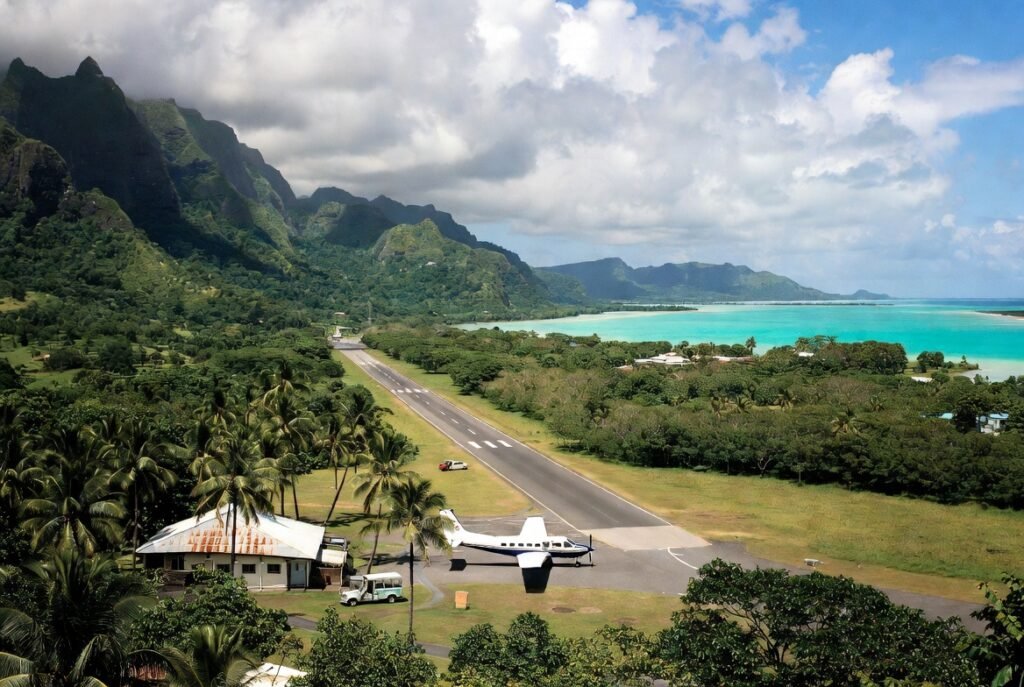
Small propeller planes are the lifeline of the Pacific. Flights are short (20–90 minutes) but offer breathtaking views.
Key Carriers: Air Tahiti (French Polynesia), Fiji Link, Samoa Airways, Air Vanuatu, Air Rarotonga, and Northern Air (Fiji).
Practical Advice:
- Book early — planes have limited seats (often 30–70 passengers)
- Weight limits apply (usually 20kg checked + 7kg carry-on)
- Flights can be cancelled or delayed due to weather
- Multi-island air passes offer excellent value
Ferries & Local Boats
Ferries are the affordable and scenic way to travel between nearby islands.
Popular Routes: Samoa (Upolu–Savai’i), Fiji (Viti Levu–Yasawa/Mamanuca), French Polynesia (Society Islands), Tonga inter-island services.
Local longboats and speedboat transfers are common to outer resorts and motus.
Local Transport on Islands
Buses: Cheap, colourful, and authentic (“aiga buses” in Samoa, “carrier” in Fiji). Great for meeting locals.
Taxis & Private Transfers: Available on main islands; agree on price beforehand.
Scooter & Car Rental: Easy on larger islands (international driving permit recommended).
Walking & Bicycles: Perfect for small islands and eco-friendly exploration.
Practical Travel Tips for Smooth Journeys
Time Zones & Jet Lag
The Pacific spans many time zones. Samoa and Tonga are among the first places on Earth to see the new day. Build in recovery time when crossing the International Date Line.
Baggage & Packing
Domestic flights often have strict 20kg limits. Pack light and use soft-sided luggage. Reef-safe sunscreen, insect repellent, and quick-dry clothing are essentials.
Disclaimer: Flight schedules, ferry operations, and entry requirements change frequently. Always verify the latest information directly with airlines, ferry companies, and official government websites before booking. Information is current as of 2026.