
From Provence to the Dordogne
Through the Tarn to Sarlat, with villages, valleys and one very large hire car
We picked up our hire car the next morning.
Or at least, we picked up what the hire company had decided was our car.
We had booked something small.
They handed us the keys to a small van that looked capable of carrying six people, their luggage and possibly a couple of dogs.
A.P. and I looked at each other.
Driving on the wrong side of the road always required a little concentration for the first day or so. Doing it in a vehicle considerably larger than the one we had actually booked added another degree of difficulty.
Still, this was what we had.
What does one do?
We climbed in, worked out which bits did what and headed west.
Our first stop was Figeac.
Once we left the drier landscape of Provence behind, the countryside began to change dramatically. The road wound through deep valleys with wooded hills rising around us, rivers tumbling far below through rocky gorges and villages appearing every now and then against the hillsides.
It was beautiful.
The sort of driving where you keep slowing down because there is something else you want to look at.
After a few hours we reached Figeac, stopped at a supermarket to stock up on a few essentials and then found a camping ground on the edge of town, right on a bend in the river.
A.P. had packed his tent and we had bought sleeping mats, so before long our little home was up and we were settled in.
This was my first introduction to French camping grounds.
I was impressed.
Actually, I was more than impressed.
The pitches were large and grassy, surrounded by trees, the bathroom blocks were immaculate and everything was remarkably civilised.
But the best surprise was the restaurant.
Apparently the French attitude was that just because you happened to be sleeping in a tent did not mean you should be expected to eat badly.
This seemed entirely reasonable to me.
That evening we sat outside and ate a superb meal, washed down with a very acceptable bottle of wine, before wandering back to our little tent feeling extremely pleased with the whole arrangement.
French camping, it seemed, was going to suit me just fine.
The following morning we packed everything away and continued west.
The countryside grew even more dramatic as we travelled through the valleys and gorges of southern France, and somewhere along the way the Millau Viaduct appeared.
It is difficult to miss.
The enormous cable-stayed bridge sweeps across the Tarn Valley near Millau, its slender concrete piers rising out of the landscape and carrying the motorway high above the valley floor. Opened only a few years earlier, in 2004, it was already famous, with its tallest mast reaching more than 340 metres above the ground.
It is, objectively, an extraordinary piece of engineering.
I took one look at it.
“Please tell me we are not going over that.”
We weren’t.
I was very pleased to hear it.
High bridges are not my favourite things.
I am perfectly happy to admire engineering from below.
Eventually we arrived in Sarlat-la-Canéda.
And I loved it immediately.
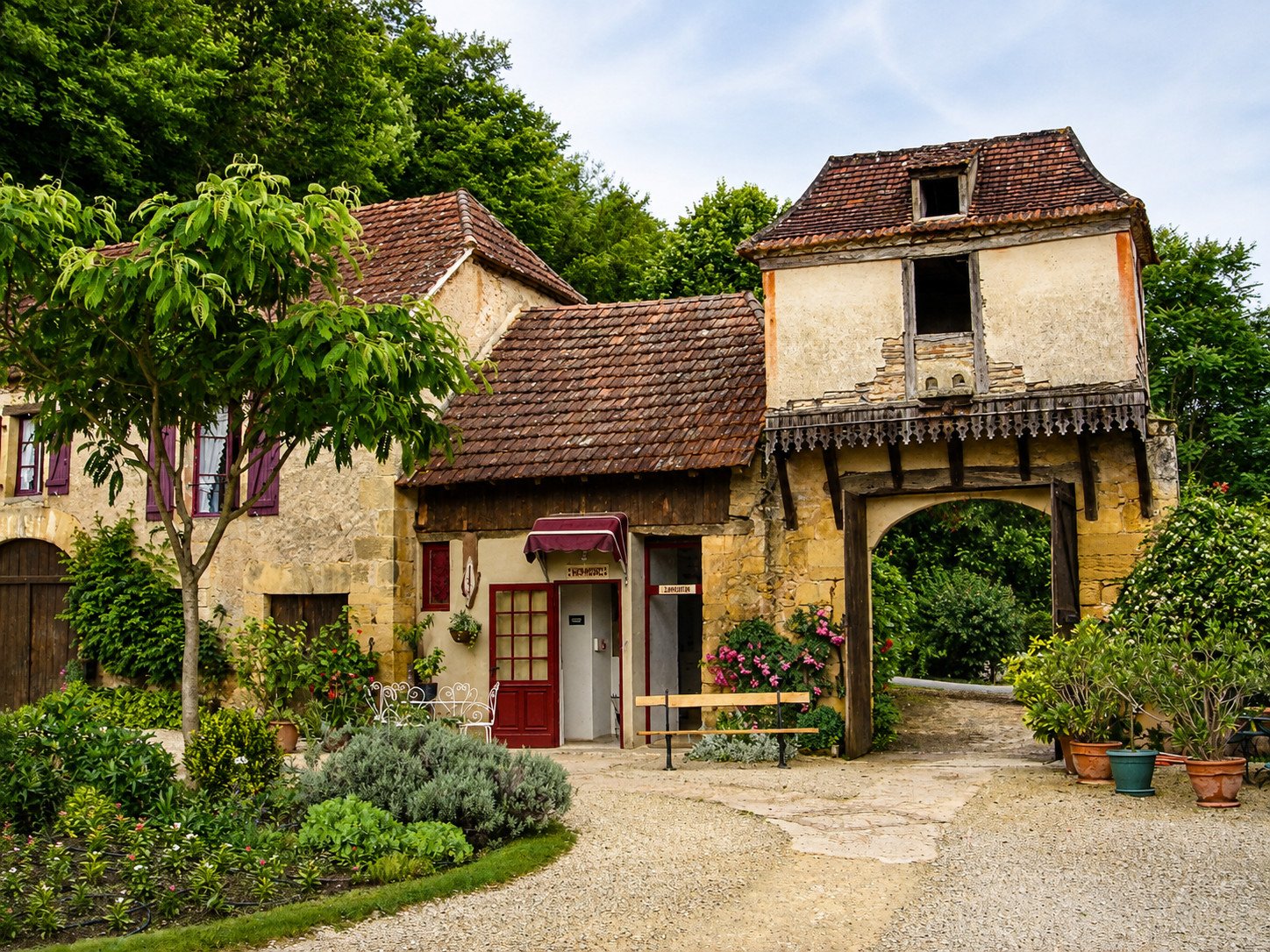
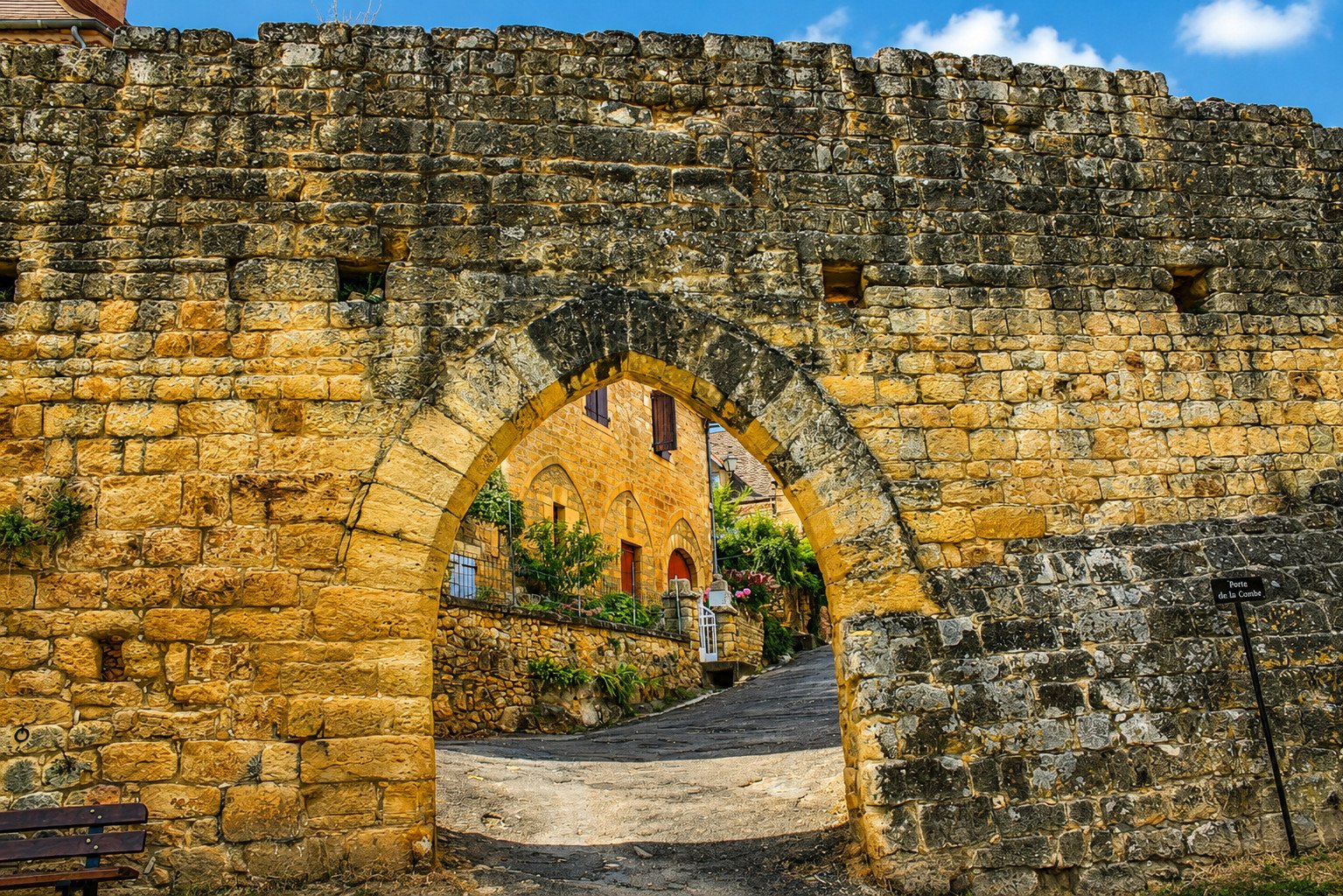
Sarlat sits in the Périgord Noir, in the Dordogne, and its old centre is a maze of narrow lanes, honey-coloured stone houses, little squares and beautifully preserved medieval and Renaissance buildings. Tall roofs and stone towers rise above the streets, and almost everywhere you turn there is another archway, courtyard or crooked little lane disappearing off somewhere.
It was gorgeous.
We headed straight for the tourist office to see whether we could find a self-catering holiday rental somewhere nearby.
They could help.
Before long we were back in our oversized vehicle and heading about ten kilometres out of town to have a look at a place they had found for us.
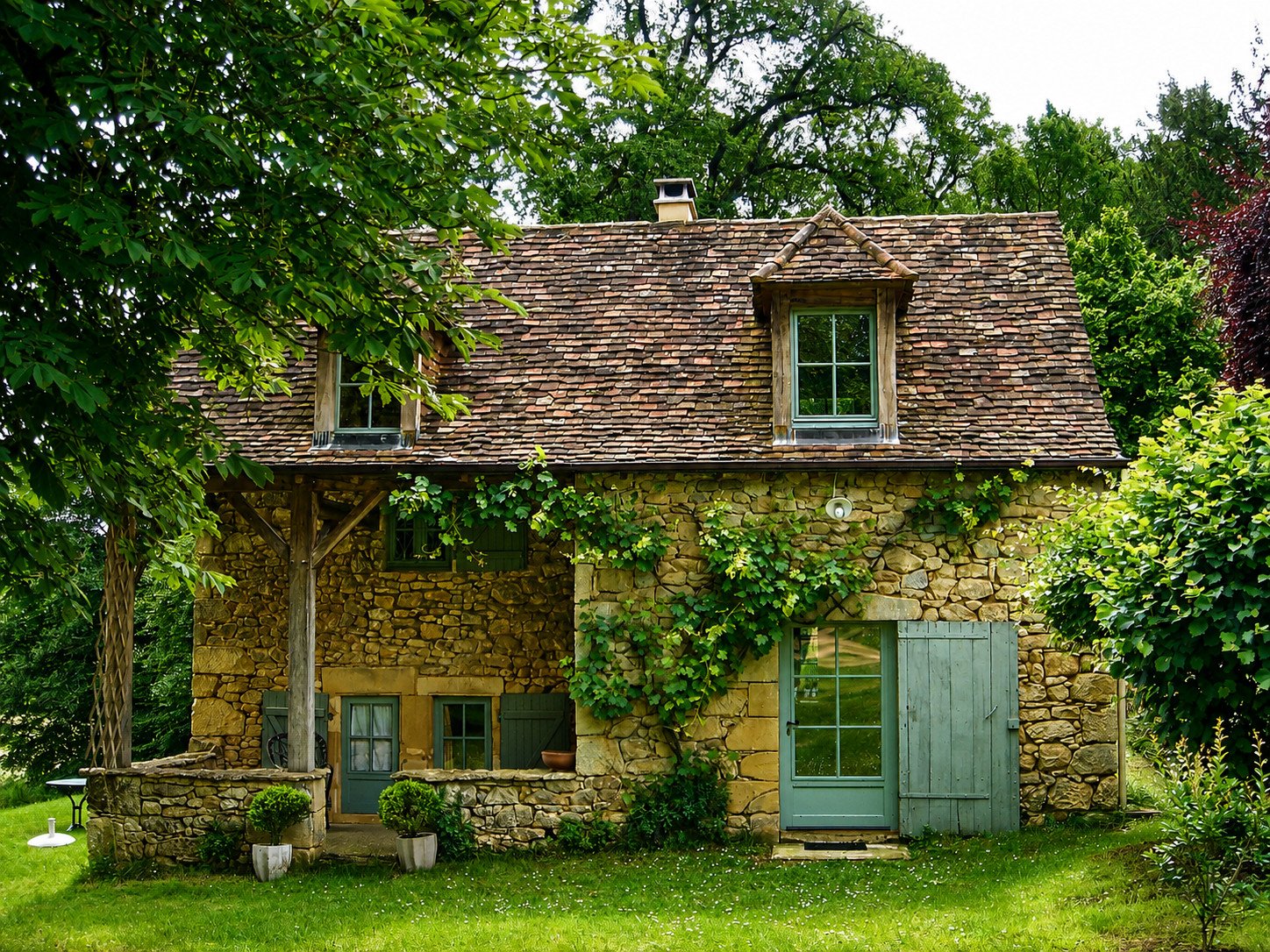
It turned out to be a beautifully converted pig barn on a farm.
Which sounds considerably less appealing than it actually was.
The little building had been wonderfully restored and sat among fields and woodland, with the main manor house nearby.
The farm belonged to a lovely Parisian couple who used the manor as their holiday home, and as luck would have it, they happened to be staying there while we were.
The owner was a fascinating man.
He had once been the French ambassador to China and the house was filled with an extraordinary collection of furniture, objects and treasures he had accumulated over the years.
You could have spent hours wandering around asking where everything had come from.
The property itself was still a working farm, although a large area of woodland had been permanently protected from clearing. He had also banned hunting from his land.
Both excellent policies as far as I was concerned.
One evening they invited us up to the main house for a drink.
A drink became another drink.
Then another bottle appeared.
Then possibly another one after that.
Several bottles of wine and many hours later, A.P. and I eventually staggered back across the farm to our converted pig barn, somewhat less steady than when we had left it but extremely happy.
Not a bad evening.
Over the next few days A.P. showed me the Dordogne.
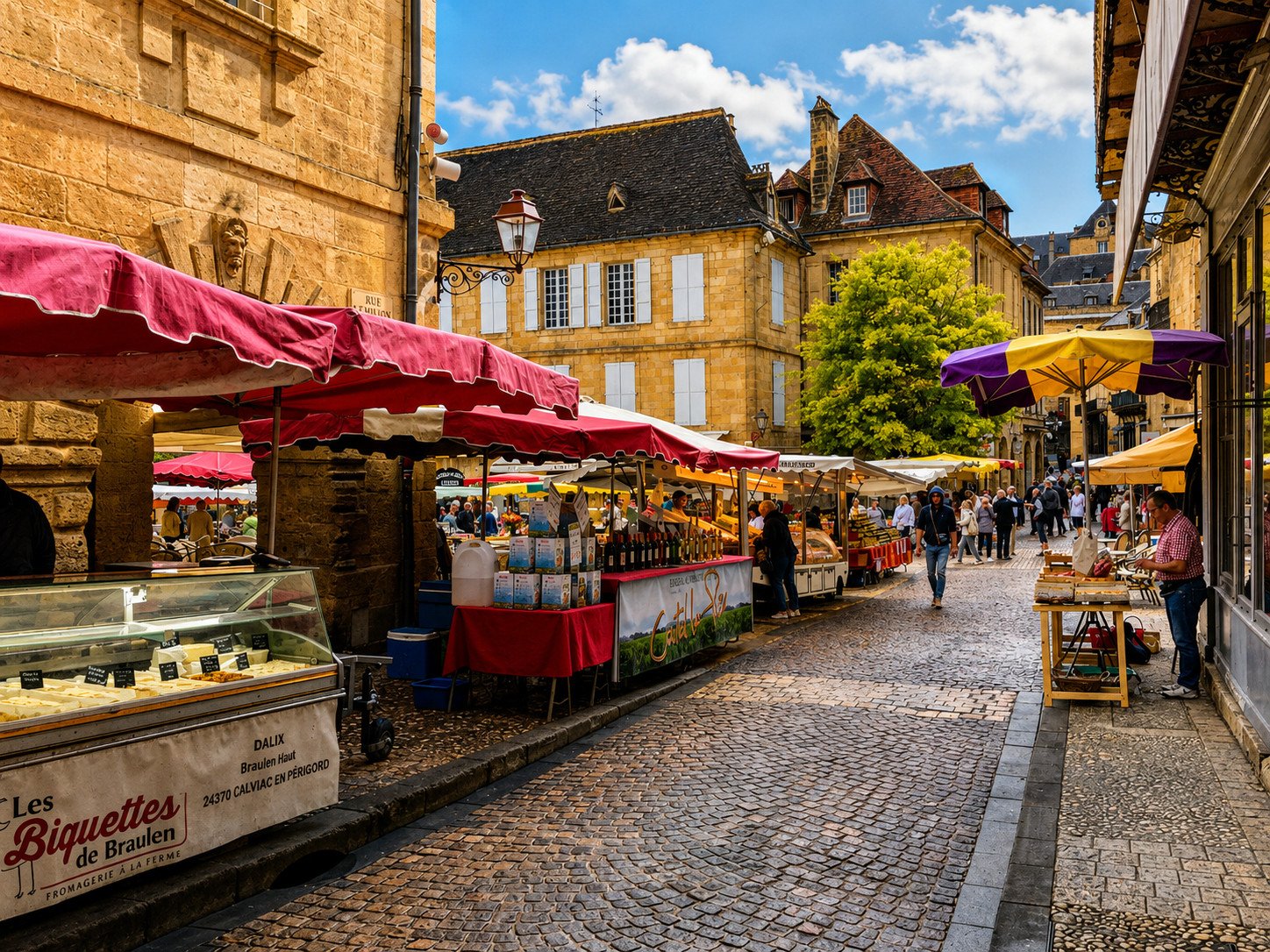
We wandered through Sarlat, spent hours exploring its streets and markets, and drove out through the countryside to some of the villages along the river.
There was Domme, a fortified bastide sitting high above the Dordogne Valley, with sweeping views across the river and surrounding countryside.
And La Roque-Gageac, squeezed into a narrow strip of land between the Dordogne River and a great limestone cliff, its golden stone houses seeming almost to grow out of the rock behind them.
It was one beautiful place after another.
Eventually we had to leave our little house on the farm.
But we were not remotely ready to leave the Dordogne.
So we moved.
Not very far.
We found another camping ground at Les Eyzies, La Rivière, and once again put up our little tent.
By now we were getting quite good at it.
Les Eyzies sits deep in the Vézère Valley, an area filled with caves, rock shelters and some of the most important prehistoric sites in Europe.
Which meant there was plenty more to explore.
We visited Lascaux, or more accurately the replica cave that visitors could actually enter. The original cave, discovered in 1940 and filled with extraordinary prehistoric paintings of horses, bulls, deer and other animals, had been closed to the public decades earlier to protect the paintings from damage.
Even knowing we were looking at a reproduction, it was astonishing.
The paintings were created thousands of years ago, yet the animals seemed full of movement and life.
It was difficult not to wonder about the people who had stood in those caves and painted them.
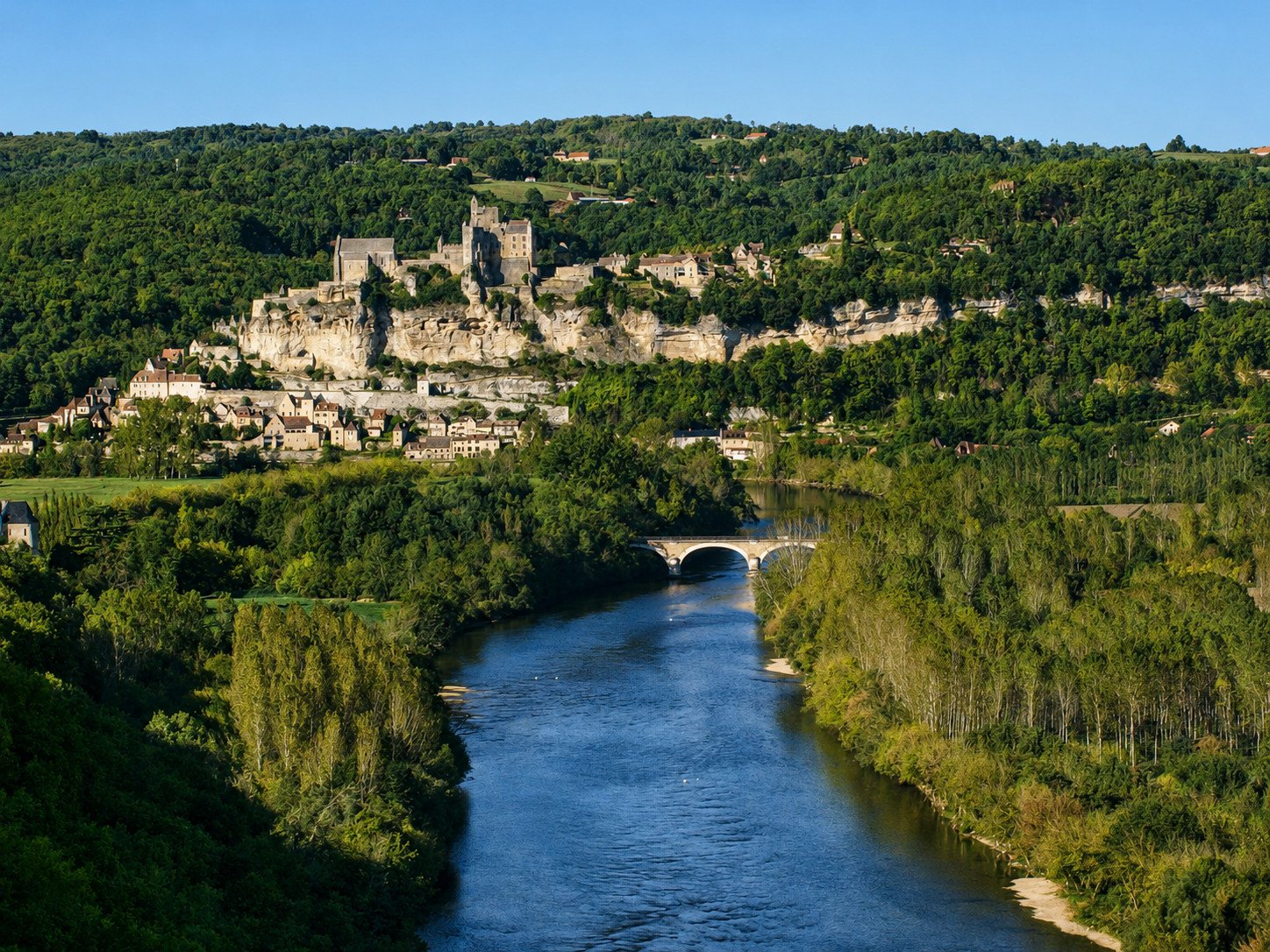
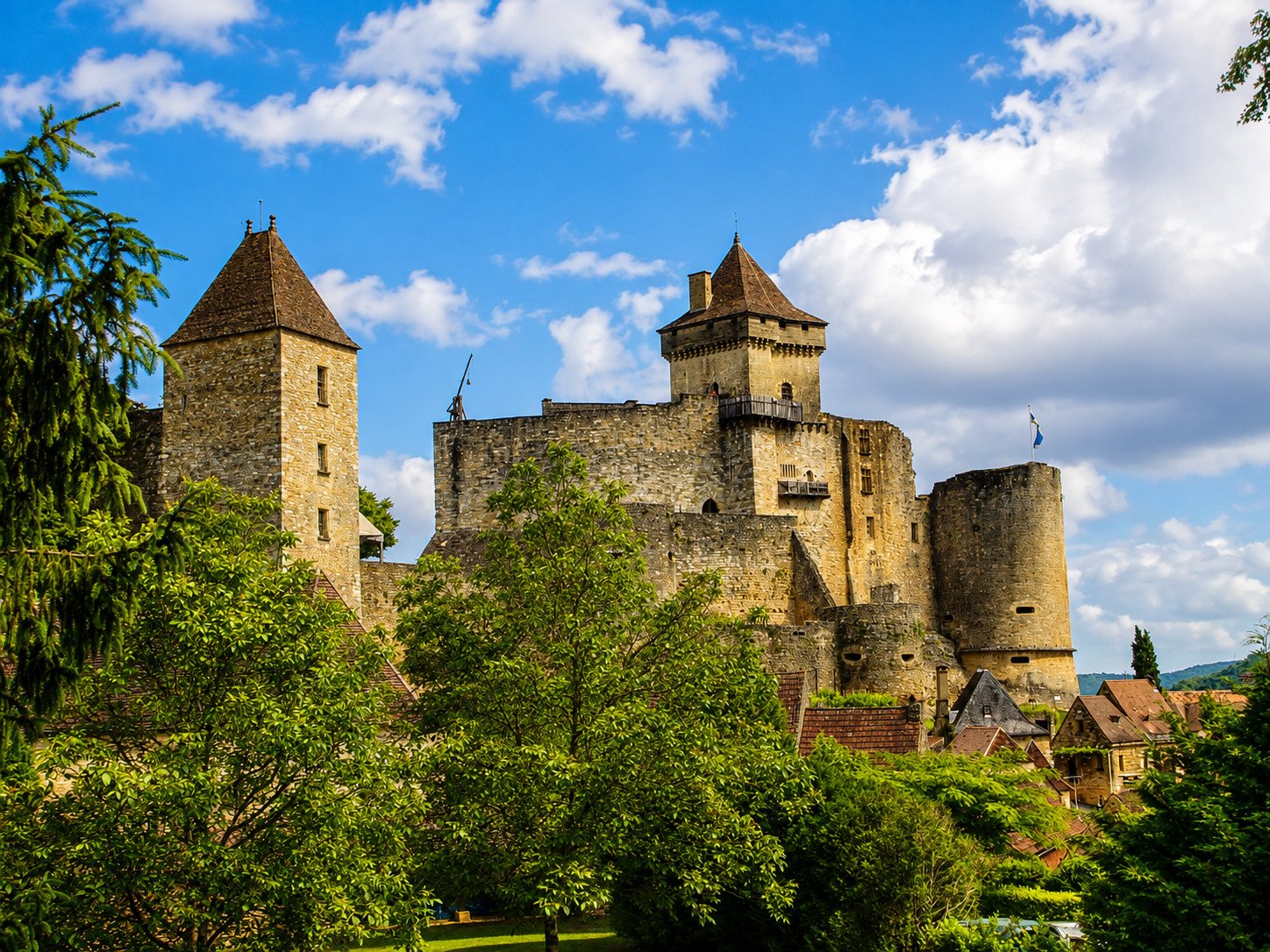
We also visited the two great castles overlooking the Dordogne, Beynac and Castelnaud.
They face one another across the valley from opposite sides of the river, both perched high above the Dordogne.
During the Hundred Years’ War, Beynac was generally associated with the French side while Castelnaud, for periods at least, was held by supporters of the English crown.
Which meant that these two enormous stone fortresses spent a considerable amount of history glaring at one another across the valley.
Beynac rises almost vertically above the village of Beynac-et-Cazenac, its stone walls appearing to grow straight out of the cliff.
Across the river, Castelnaud is equally imposing and gives you one of those views that makes climbing all the way up worthwhile.
Even if your legs disagree at the time.
Between the castles, caves, villages and drives along the river, the days disappeared quickly.
And there was, of course, more food.
Lots of it.
We ate in little local restaurants, ate at the camping ground and continued to discover that travelling through France while attempting to eat badly was surprisingly difficult.
It was a fabulous few days.
But eventually we really did have to move on.
We packed up our little tent, loaded everything back into the van and pointed ourselves north.
Our next stop was Autun, an old Roman town in Burgundy.
And so, somewhat reluctantly, we left the Dordogne behind.