
Across Burgundy: Autun, Semur & Avallon
Roman towns, medieval villages, old battlefields and a surprising amount of closed restaurants
We set off from the Dordogne with Autun in Burgundy as our next destination, a drive that would take us north-east across the Massif Central.
The Massif Central isn’t really one mountain range but an enormous upland region covering a large chunk of central and southern France — mountains, volcanic plateaux, deep valleys and forests stretching across the middle of the country. For something so large, it never seems to get talked about very much.
It should.
The drive was beautiful.
We climbed steadily away from the softer countryside of the Dordogne and into higher, wilder country, following roads through forests and valleys with rivers twisting away below us.
At some point we found a quiet spot beside one of those rivers, pulled over and unpacked lunch.
There are worse ways to spend an afternoon than sitting beside a French river eating bread and cheese.
We reached Autun by mid-afternoon and found a camping ground on the edge of town beside a lake.
Once again, the French camping system came up trumps.
Beautiful pitches, plenty of trees, everything spotlessly clean.
We had our tent up fairly quickly and then headed into town for a look around.
Autun has a ridiculous amount of history for a relatively small place.
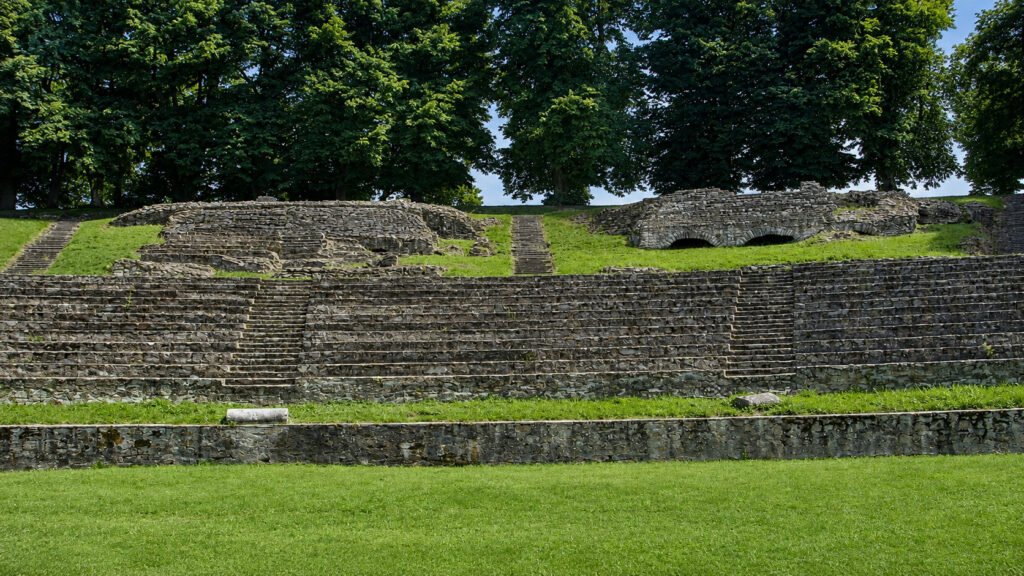
The Romans founded it as Augustodunum during the reign of Augustus, intending it to become one of the great cities of Roman Gaul. Two thousand years later, bits of that city are still scattered around modern Autun — Roman gates, stretches of ramparts, the remains of a temple and an enormous Roman theatre that could once hold around 20,000 people. Then there is the medieval town above it, dominated by the twelfth-century Saint-Lazare Cathedral.
So there was certainly plenty to see.
We wandered around for a few hours, looked at the Roman remains, poked around the old streets and generally gave Autun a fair chance.
Then we went back to the camping ground, opened a bottle of wine and discussed it.
“Well?”
A.P. looked at me.
I looked at him.
It was nice.
It had history.
It had Roman ruins.
It had a cathedral.
And, for reasons neither of us could really explain, it simply wasn’t for us.
That settled it.
We would move on in the morning.
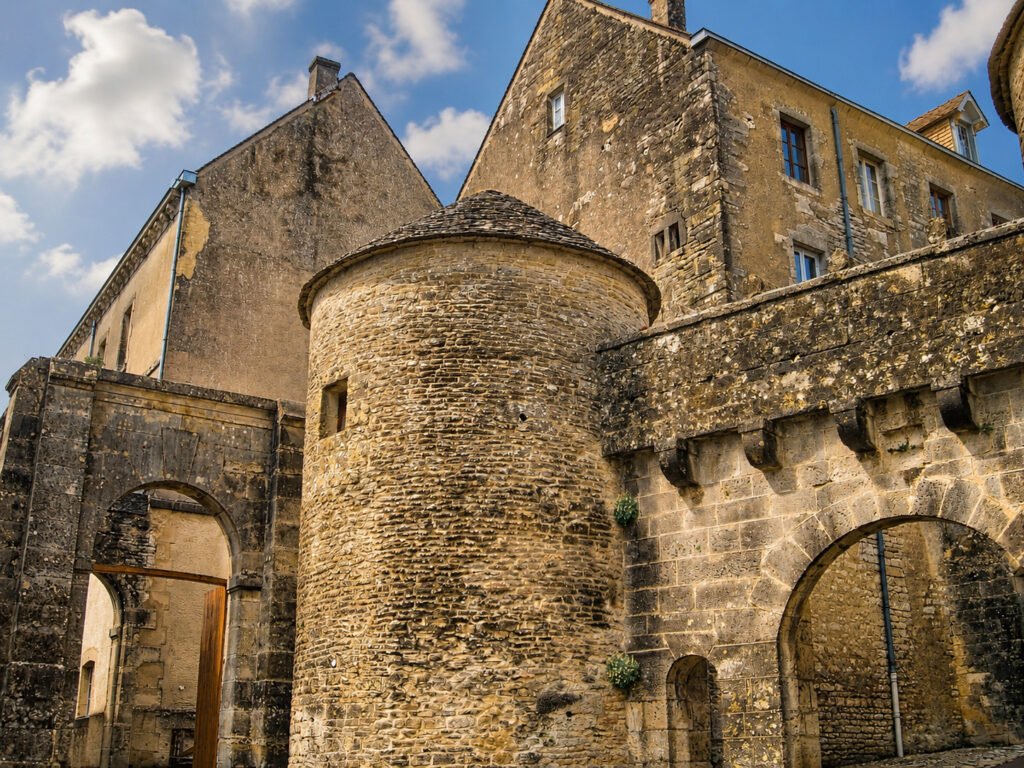
Our next destination was Semur-en-Auxois, but on the way we stopped at Flavigny-sur-Ozerain, the little medieval village famous for Anis de Flavigny, those tiny aniseed sweets that have been made there for centuries. They are still produced inside the old Benedictine abbey, each sweet built up slowly around a single aniseed.
It sounded like a lovely place to stop.
Unfortunately, not a single solitary thing was open.
Nothing.
The village appeared to have collectively decided to take the day off.
We wandered around for a while hoping somebody might appear.
Nobody did.
So we climbed back into the van and continued towards Semur, hoping it might be a little livelier.
By now Burgundy had also introduced us to another of its attractions.
The weather.
We had long since left the warmth of Provence and the Dordogne behind. The sky was grey, mist hung over the countryside and the temperature had dropped enough for us to start digging jackets and sweaters out of our bags.
By the time we reached Semur-en-Auxois, it was cold and damp enough that neither of us felt remotely enthusiastic about putting up a tent.
Hotel.
Definitely hotel.
Semur itself was beautiful.
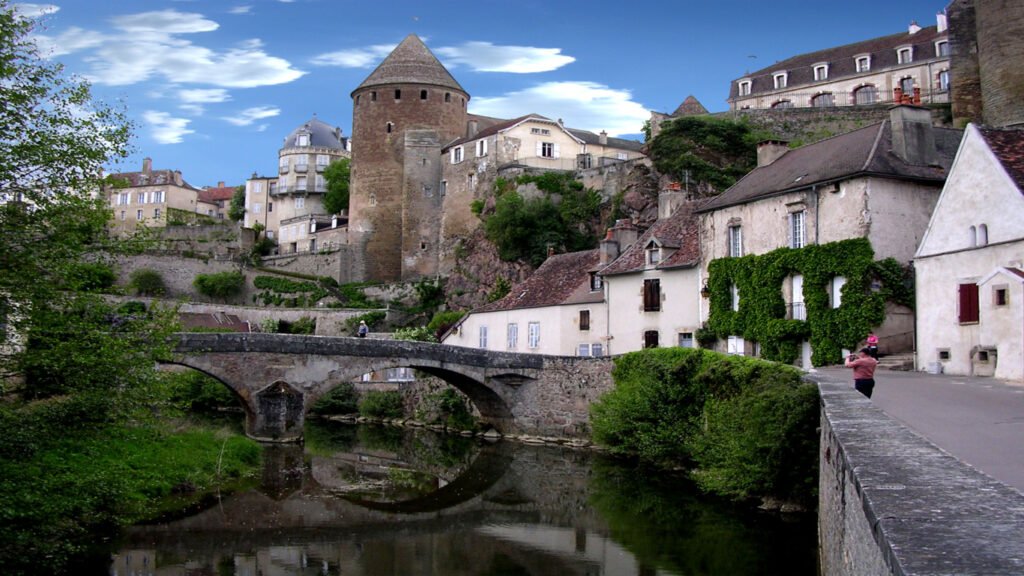
The medieval town sits above the Armançon River, with fortified gates, old stone houses and the huge round towers of its former keep rising above the narrow streets. Parts of the old ramparts remain, and the historic centre feels as though it has been dropped straight out of the Middle Ages.
We found a wonderfully odd little hotel built right into the old town walls.
The walls were crooked.
The floors sloped.
Nothing appeared to meet anything else at quite the angle you expected.
“This place has certainly seen some history,” I said to A.P. as we climbed the old staircase towards our room.
Our room looked out over the street, smelled slightly of mothballs and had a floor that seemed to lean gently towards one corner.
But it was clean.
And it had an enormous comfortable bed.
Really, what more does one need?
Food, apparently.
We had arrived in Burgundy and there was one dish I particularly wanted to eat.
Bœuf bourguignon.
Beef Burgundy.
The classic Burgundian dish of beef slowly cooked in red Burgundy wine, usually with onions, mushrooms and bacon until the meat is falling apart and everything has become rich and deeply flavoured.
Exactly what was required on a cold, damp evening.
So we went looking for it.
And looked.
And looked.
And looked some more.
Nothing.
In fact, there were hardly any restaurants open at all.
We wandered increasingly miserable streets in the drizzle peering into darkened windows, expecting that surely somewhere in Burgundy somebody would be serving bœuf bourguignon.
Apparently not.
Eventually hunger won.
We ended up in an Italian restaurant.
In Burgundy.
Eating pizza.
Bad pizza.
Very bad pizza.
How a country sharing a border with the country that invented pizza can be so consistently bad at making it remains one of life’s mysteries.
But there you go.
Back in our slightly crooked room, we held an emergency conference.
Burgundy, thus far, had been something of a disappointment.
The weather was grim.
Flavigny had been closed.
Semur appeared mostly closed.
And finding good food had become strangely difficult, which was particularly irritating after being completely spoiled for choice in the south.
Clearly there was only one sensible solution.
Move on.
So the next morning we did exactly that.
Destination: Avallon.
By the time we reached Avallon, things were already improving.
For one thing, the sun had come back.
For another, Avallon actually appeared to be awake.
We found a camping ground run by a very strange man who spent much of his time sitting on a balcony watching the campsite below and yelling at anyone who did something he considered incorrect.
What counted as incorrect was never entirely clear.
Apparently he knew.
Most odd.
We put the tent up and went into town.
Avallon sits dramatically on a granite spur above the Cousin Valley, surrounded by sections of its old ramparts and medieval towers. Inside the walls are cobbled streets, half-timbered houses, old gateways and the Saint-Lazare church, while below the town the countryside falls away into the valleys of the Morvan.
There is also much more recent history here.
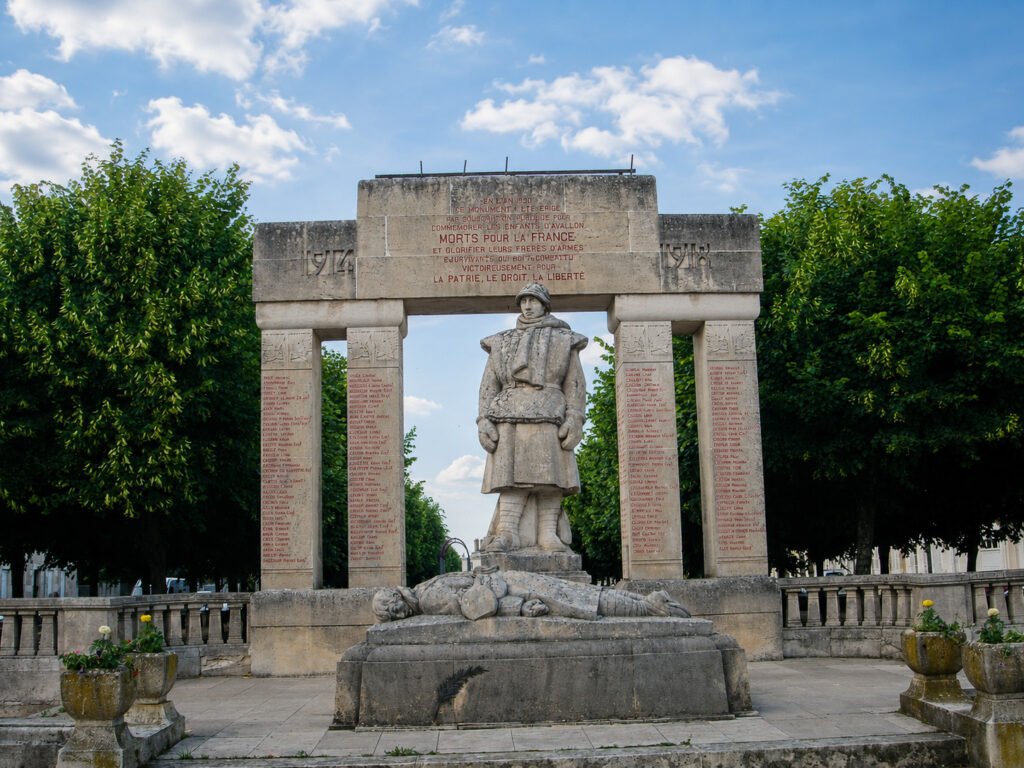
The Morvan had been an important centre of French Resistance activity during the Second World War, its forests and difficult terrain providing cover for large Maquis groups. Avallon was liberated in August 1944, and memorials around the town and surrounding roads remember both the Resistance and those killed during the fighting.
The memorials were a reminder that Avallon’s history had not ended with the medieval walls.
But what struck me most when we wandered back into town was how alive the place felt.
After several days of cold streets, closed restaurants and towns that seemed to have gone into hibernation, Avallon was a welcome change.
Restaurants were open.
Bars were open.
People were out.
There was a buzz about the streets.
I liked it.
We stayed for a few days, wandering around the town and happily making our own meals back at the camping ground from whatever fresh produce we had bought at the market.
This was more like it.
One day we headed out to nearby Vézelay.
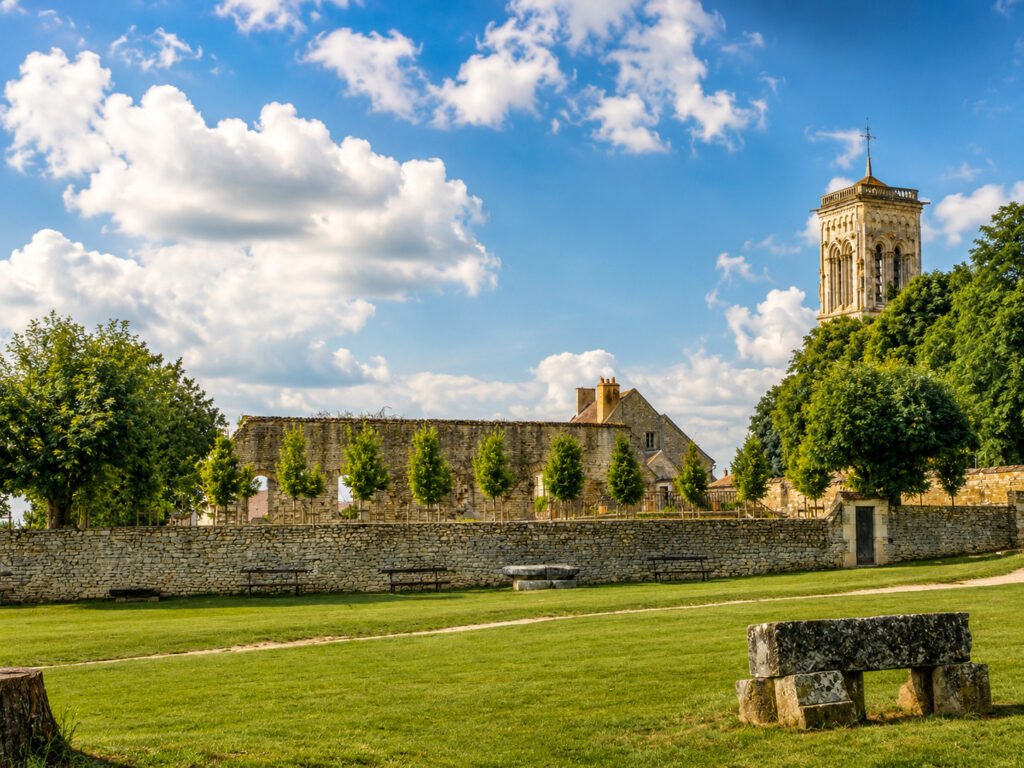
Vézelay sits on top of a hill with its houses climbing towards the great Basilique Sainte-Marie-Madeleine at the summit. For centuries it has been an important pilgrimage centre and one of the great gathering points on the route towards Santiago de Compostela.
It has also seen some fairly significant visitors.
In 1146 Saint Bernard preached the Second Crusade there.
Then, in 1190, King Philip II of France and Richard the Lionheart met at Vézelay with their armies before setting out together on the Third Crusade.
Nearby is the Château de Bazoches, sitting on a wooded hillside with a clear view back towards Vézelay.
Richard the Lionheart and Philip Augustus were among its early important visitors, staying at Bazoches when they left Vézelay for the Holy Land in 1190. Centuries later the château became the home of Vauban, Louis XIV’s great military engineer, who transformed it into his residence and working headquarters.
We stood in the grounds looking back across the countryside towards Vézelay.
It was impossible not to imagine it.
Richard the Lionheart, Philip Augustus and an enormous medieval army making their way across that landscape towards the château.
Thousands of men.
Horses.
Weapons.
Baggage.
Servants.
Priests.
Probably enough general chaos to make our little van seem positively inconspicuous.
It must have been quite a sight.
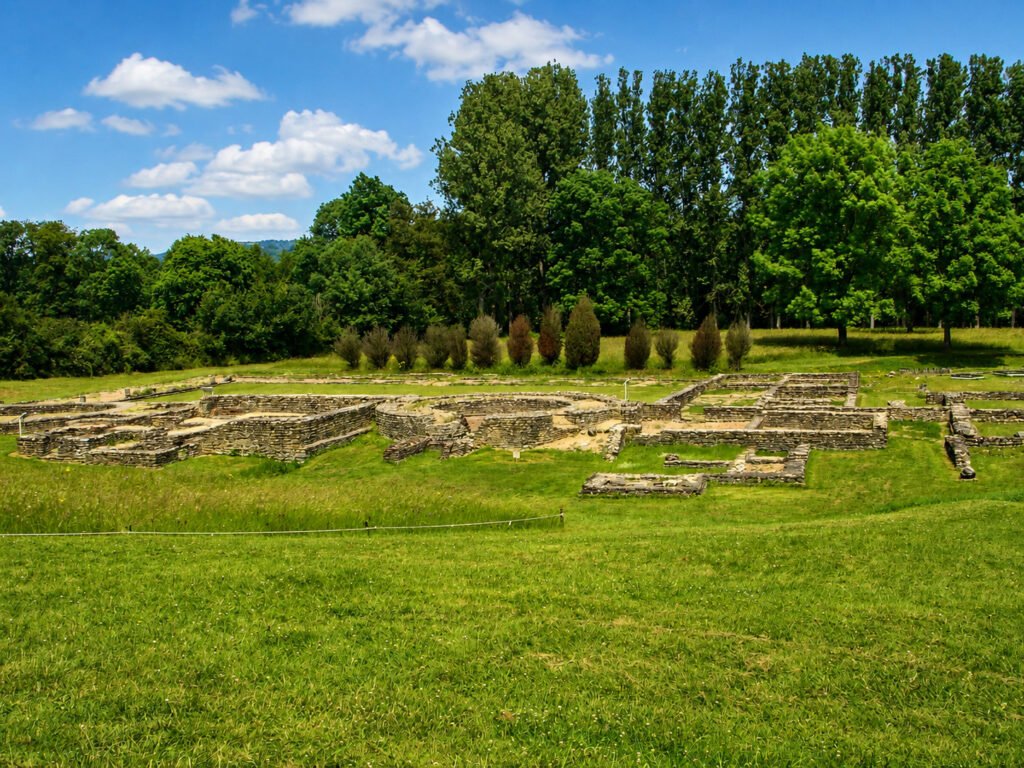
We also visited the nearby Fontaines Salées, an archaeological site near Saint-Père-sous-Vézelay.
People had been using the natural salt-water springs there for more than four thousand years, capturing the water in oak-lined wells whose remains are still visible. Much later, between roughly the first and third centuries AD, the Gallo-Romans built a substantial thermal-bath complex around the springs.
It was one of those places where different layers of history seemed piled on top of one another.
Prehistoric people using the springs.
Romans bathing there.
Medieval kings and armies passing through nearby.
Vauban sitting in his château designing fortifications.
And now the two of us wandering around looking at it all.
That evening, back at the campsite, we sat outside our little tent talking about everything we had seen and learned during the day.
The strange thing about travelling through France was that history never seemed particularly far away.
You could start the morning standing beside a Gallo-Roman bath, spend the afternoon in a château where Richard the Lionheart had apparently stayed on his way to a Crusade and finish the day in a town marked by events from the Second World War.
That is quite a lot to fit into one day.
The following morning we were up early, packed the tent away and loaded everything back into the van.
We were heading for the Loire Valley.
It would be the final region of our road trip through France.
And this time we were going to see some châteaux.