
What to Eat and Drink in Yunnan, China – A Food Lover’s Guide
Yunnan Province is one of China’s most fascinating destinations, not only for its spectacular landscapes, ancient towns and diverse cultures, but also for its extraordinary food.
Situated in southwestern China, bordering Myanmar, Laos and Vietnam, Yunnan has developed a cuisine quite different from that found in many other parts of the country. Its food reflects the region’s geography, climate and remarkable cultural diversity, with influences from numerous ethnic communities and neighbouring Southeast Asian countries.
From tropical lowlands to snow-covered mountains rising above 6,000 metres, Yunnan produces an incredible variety of ingredients. Wild mushrooms, fresh herbs, chillies, rice noodles, fermented vegetables, flowers, tea and highland barley all feature prominently in local cooking.
The province is home to 25 of China’s officially recognised ethnic minority groups, including the Bai, Naxi, Dai, Yi, Hani and Tibetan communities. Each has contributed its own ingredients, preparation methods and culinary traditions.
The result is a wonderfully varied food culture. Kunming is famous for rice noodles, mushrooms and roast duck, Dali for traditional Bai cheeses and flatbreads, Lijiang for Naxi specialities, and Shangri-La for the hearty food of the Tibetan-influenced highlands.
Further south, in Xishuangbanna, the flavours become distinctly tropical, with lemongrass, fresh herbs, sour sauces and sticky rice.
One of the great pleasures of travelling through Yunnan is discovering just how much the food changes from one town to the next. Here are the dishes, snacks and drinks worth seeking out along the way.
Yunnan’s Signature Dish – Crossing-the-Bridge Rice Noodles
Crossing-the-Bridge Rice Noodles
过桥米线 – Guò Qiáo Mǐ XiànIf there is one dish that Yunnan is famous for throughout China, it is Crossing-the-Bridge Rice Noodles.
Originating in Mengzi, in southern Yunnan, this traditional dish is now served across the province, particularly in Kunming.
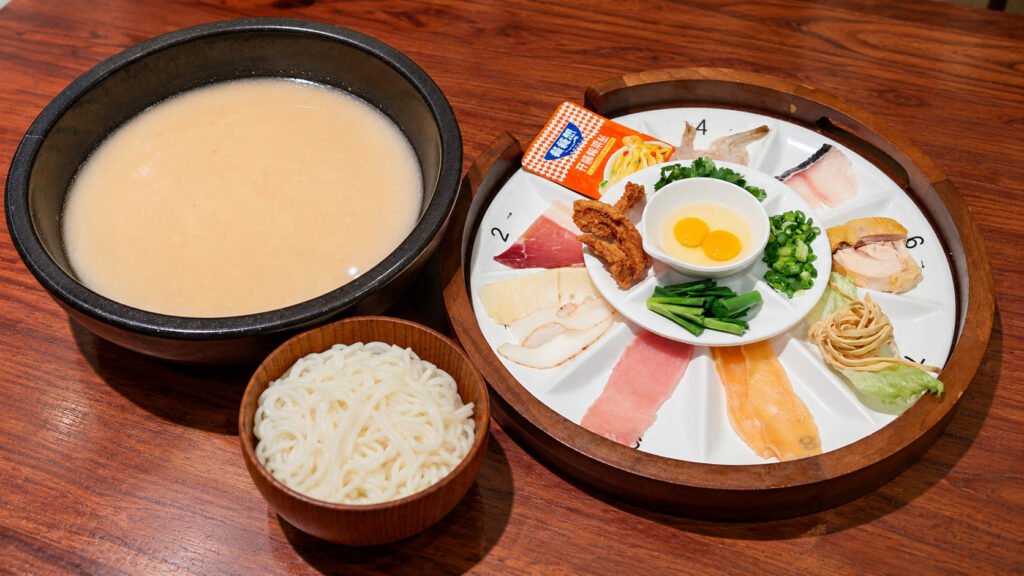
Unlike an ordinary bowl of noodle soup, Crossing-the-Bridge Rice Noodles arrive at the table as a collection of separate ingredients. A large bowl of extremely hot broth is accompanied by small plates of thinly sliced meat, vegetables, quail eggs, herbs and rice noodles.
The ingredients are added to the broth at the table, where the heat cooks them. The result is a wonderfully fragrant and satisfying meal, with the individual ingredients retaining their distinctive flavours and textures.
One of the most interesting aspects of the dish is its name.
According to local legend, a scholar was studying for his imperial examinations on an island, and his wife regularly crossed a bridge to deliver his meals. Unfortunately, by the time she arrived, the food was cold.
She eventually discovered that a layer of oil floating on top of the broth helped retain its heat. By transporting the soup and other ingredients separately, she could prepare a hot meal when she reached her husband.
Whether entirely true or not, the story has become inseparable from this famous Yunnan dish.
Where to try it: Kunming and Mengzi, although it is available throughout Yunnan.
Best eaten: Breakfast or lunch.
What to expect: A light, flavoursome broth with rice noodles, meat, vegetables and herbs.
Be Careful – The Broth Is Extremely Hot
The layer of oil floating on the surface of Crossing-the-Bridge Rice Noodles traps the heat, so the soup may look deceptively calm. Add the ingredients carefully and allow everything sufficient time to cook before eating.
Traditional Yunnan Dishes You Must Try
1. Wild Mushroom Hotpot
野生菌火锅 – Yě Shēng Jūn Huǒ GuōYunnan is famous throughout China for its extraordinary variety of wild mushrooms. The province’s forests and humid summer climate provide ideal growing conditions for numerous mushroom species.
During the rainy season, particularly between June and September, restaurants throughout Yunnan specialise in wild mushroom hotpot.
A bubbling pot of broth is brought to the table, often containing chicken, pork or other ingredients. A selection of fresh mushrooms is then added, creating a rich, earthy and wonderfully fragrant soup.
Among the varieties commonly used are porcini, chanterelles, matsutake and the highly prized jizong mushroom.
The mushrooms give the broth an intense, distinctive flavour that makes this one of Yunnan’s most memorable meals.
Where to try it: Kunming and mushroom restaurants throughout Yunnan.
Best eaten: June to September, during the main mushroom season.
What to expect: A rich, earthy broth with several varieties of mushrooms, usually enjoyed as a shared meal.
Wild Mushroom Safety
Some wild mushrooms contain toxins and must be correctly identified and thoroughly cooked. Reputable mushroom restaurants generally supervise the cooking process and specify how long the mushrooms must remain in the boiling broth.
Never sample mushrooms before the restaurant indicates they are ready, and avoid eating wild mushrooms of uncertain origin.
2. Steam-Pot Chicken
汽锅鸡 – Qì Guō JīOne of Yunnan’s best-known traditional dishes is Steam-Pot Chicken, a wonderfully aromatic chicken soup prepared using a distinctive clay cooking vessel.
The pot has a hollow central chimney that allows steam to enter from below. Chicken pieces, ginger and sometimes mushrooms or medicinal herbs are placed inside the pot, which sits above boiling water.
As steam rises through the central chimney, it circulates inside the sealed vessel, slowly cooking the chicken. The steam condenses to produce a delicate, intensely flavoured broth without the need to add much, if any, water directly to the chicken.
The finished dish is surprisingly light, with tender chicken and a clear, fragrant soup. Unlike Yunnan’s spicier dishes, Steam-Pot Chicken relies on gentle cooking and the natural flavours of the ingredients.
Where to try it: Kunming and restaurants specialising in traditional Yunnan cuisine.
Best eaten: Lunch or dinner.
What to expect: Tender chicken served in a delicate, nourishing broth.
3. Yiliang Roast Duck
宜良烤鸭 – Yí Liáng Kǎo YāYunnan has its own distinctive version of roast duck, and one of the best-known comes from Yiliang, near Kunming.
Yiliang Roast Duck has a long history and is particularly associated with the town’s traditional roasting methods. Although it is sometimes compared with Beijing’s famous Peking duck, the Yunnan preparation has its own character and flavour.
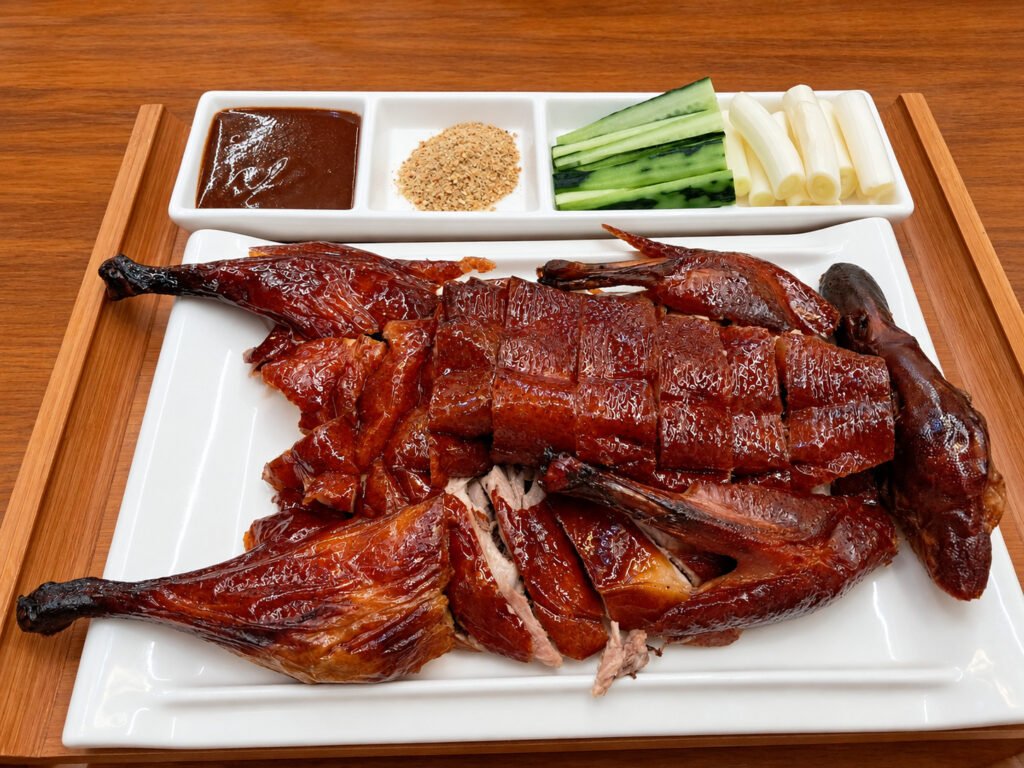
The duck is traditionally prepared using an earthen roasting oven, with pine branches or pine needles used as fuel in some traditional methods. Honey is applied to the skin, helping produce its distinctive golden to reddish-brown colour.
During roasting, the skin becomes crisp while the meat remains tender and juicy. The finished duck has a rich, savoury flavour, sometimes accompanied by a subtle smoky aroma from the traditional cooking process.
Unlike the elaborate table service often associated with Peking duck, Yiliang Roast Duck is commonly served chopped into pieces and enjoyed as part of a shared meal.
The contrast between the crisp skin and succulent meat makes this one of Yunnan’s most satisfying traditional dishes.
Where to try it: Yiliang County and traditional Yunnan restaurants in Kunming.
Best eaten: Lunch or dinner.
What to expect: Crisp, fragrant skin and tender, richly flavoured roast duck, often served chopped for sharing.
Yunnan Roast Duck Versus Peking Duck
Although both dishes feature beautifully roasted duck with crisp skin, Yiliang Roast Duck has its own traditional cooking methods and regional flavour.
The use of honey and traditional earthen ovens helps distinguish the Yunnan version. Rather than being defined by the pancakes, spring onions and sweet bean sauce associated with Peking duck, Yiliang Roast Duck is particularly celebrated for the flavour and texture of the roast meat itself.
4. Yak Meat Hotpot
牦牛肉火锅 – Máo Niú Ròu Huǒ GuōAs you travel north towards Shangri-La and the Tibetan Plateau, the cuisine changes considerably.
One of the region’s most popular dishes is yak meat hotpot.
Yaks are well adapted to the cold temperatures and high altitude of the Tibetan Plateau and have traditionally provided local communities with meat, milk, butter and other essential products.
Yak meat is generally leaner than ordinary beef and has a richer, distinctive flavour.
In Shangri-La, it is commonly served in a bubbling hotpot with vegetables, mushrooms, potatoes and local herbs. Some versions are spicy, while others use a milder broth that allows the flavour of the meat to dominate.
The meat is often cut into thin slices and cooked in the broth at the table, making it a wonderfully social dining experience.
On a cold evening in Shangri-La, a large pot of yak hotpot is a particularly satisfying meal.
Where to try it: Shangri-La, especially restaurants around Dukezong Old Town.
Best eaten: Dinner, particularly during the colder months.
What to expect: Rich, hearty meat served in a warming broth with vegetables.
5. Dai-Style Grilled Fish
香茅草烤鱼 – Xiāng Máo Cǎo Kǎo YúIn southern Yunnan, particularly Xishuangbanna, the food takes on a noticeably Southeast Asian character.
One of the region’s most distinctive dishes is Dai-style grilled fish, flavoured with lemongrass and fresh herbs.
The fish is typically stuffed with a mixture of herbs, chilli, garlic and spices before being secured with lemongrass and grilled over charcoal.
The result is wonderfully fragrant, with crisp skin and tender, aromatic flesh.
The use of lemongrass, coriander, chilli and other fresh ingredients reflects the close cultural and geographical connections between Dai communities and neighbouring Southeast Asian countries.
Where to try it: Jinghong and throughout Xishuangbanna.
Best eaten: Lunch or dinner.
What to expect: Chargrilled fish with fresh, citrusy and sometimes spicy flavours.
6. Xuanwei Ham
宣威火腿 – Xuān Wēi Huǒ TuǐYunnan’s answer to traditional cured ham comes from Xuanwei, a city in the province’s northeast.
Xuanwei Ham has been produced for centuries using pork that is salted and air-dried under local climatic conditions.
The curing process creates a distinctive flavour, and the ham is widely regarded as one of China’s most famous cured meat products.
It can be steamed, stir-fried, added to soups or used to flavour other traditional dishes.
The taste is rich, salty and savoury, somewhat comparable to European cured hams, although the preparation and final flavour are different.
Where to try it: Restaurants throughout Yunnan, particularly Kunming.
Best eaten: As part of a shared meal.
What to expect: Firm, richly flavoured cured pork.
Yunnan’s Famous Noodles, Breads and Street Food
7. Small-Pot Rice Noodles
小锅米线 – Xiǎo Guō Mǐ XiànWhile Crossing-the-Bridge Rice Noodles may be Yunnan’s most famous noodle dish, Small-Pot Rice Noodles are an everyday favourite in Kunming.
Prepared individually in a small copper pot, the noodles are cooked directly in broth with minced pork, pickled vegetables, garlic chives, chilli and other seasonings.
Unlike Crossing-the-Bridge Noodles, where ingredients are added at the table, everything is cooked together.
The result is a deeply flavoured bowl of noodles that is quick, inexpensive and wonderfully satisfying.
Where to try it: Kunming, particularly traditional noodle shops and local markets.
Best eaten: Breakfast or lunch.
8. Erkuai Rice Cakes
饵块 – Ěr KuàiErkuai is one of Yunnan’s most distinctive street foods.
Made from cooked rice that has been pounded into a smooth dough, erkuai is formed into flat sheets or blocks.
It can be grilled, fried or sliced into strips for stir-fried dishes.
A particularly popular breakfast snack is grilled erkuai, where a thin sheet of rice cake is heated until soft and slightly browned, then spread with sauces and wrapped around fillings.
Depending on the vendor, these can include chilli paste, fermented bean sauce, pickled vegetables or a crispy fried dough stick.
The result is a wonderfully chewy, savoury snack that is inexpensive and filling.
Where to try it: Kunming, Dali and street-food stalls throughout Yunnan.
Best eaten: Breakfast or as a snack.
9. Naxi Baba
纳西粑粑 – Nà Xī Bā BāIn Lijiang, one of the traditional foods worth trying is Naxi Baba, a type of flatbread associated with the local Naxi people.
Made from wheat flour, the bread is traditionally cooked on a griddle or in a pan.
There are both sweet and savoury versions.
The savoury varieties may contain meat or seasonings, while sweeter versions are often filled with sugar.
The outside is generally golden and slightly crisp, while the centre remains soft and layered.
Naxi Baba is particularly enjoyable when freshly prepared and still warm.
Where to try it: Lijiang Old Town and traditional Naxi restaurants.
Best eaten: Breakfast or as a snack.
10. Grilled Rushan Cheese
烤乳扇 – Kǎo Rǔ ShànOne of Dali’s most unusual local specialities is rushan, a traditional cheese made by the Bai community.
Unlike the cheeses commonly found in Western countries, rushan is stretched into thin sheets and dried.
These sheets can be grilled over charcoal until they become golden and slightly crisp.
Grilled rushan is often brushed with a sweet sauce or served with sugar, creating an unusual combination of salty dairy and sweetness.
The cheese has a mild, tangy flavour and a chewy texture.
It is a fascinating example of the dairy traditions found among some of Yunnan’s ethnic communities.
Where to try it: Dali Old Town and Xizhou.
Best eaten: As a street-food snack.
11. Xizhou Baba
喜洲粑粑 – Xǐ Zhōu Bā BāAnother speciality from the Dali region is Xizhou Baba, a large, round flatbread traditionally baked until crisp and golden.
The bread is named after Xizhou, a historic Bai town north of Dali.
Both sweet and savoury varieties are available.
Savoury versions may contain spring onions and cured pork, while sweet versions are filled with sugar and sometimes rose-flavoured ingredients.
Freshly baked Xizhou Baba has a delicious combination of crisp outer layers and a soft, doughy centre.
Where to try it: Xizhou, near Dali.
Best eaten: Breakfast or as an afternoon snack.
Unusual Yunnan Foods Worth Trying
12. Pineapple Sticky Rice
菠萝饭 – Bō Luó FànA speciality associated with Dai cuisine, pineapple sticky rice is particularly popular in Xishuangbanna.
Glutinous rice is cooked with pineapple, creating a fragrant dish with a balance of sweetness and fruit acidity.
It is often served inside a hollowed-out pineapple, making it one of the more colourful dishes on the table.
Some versions include raisins or other sweet ingredients.
Where to try it: Xishuangbanna and Dai restaurants throughout Yunnan.
13. Fried Insects
炸昆虫 – Zhà Kūn ChóngYunnan is also known for some more adventurous foods, particularly in areas where insects have traditionally formed part of the local diet.
Depending on the region and season, visitors may encounter fried grasshoppers, bamboo insects, silkworm pupae or other edible insects.
These are usually deep-fried until crisp and seasoned with salt, chilli or other spices.
While they may seem unusual to many international visitors, insects are part of established food traditions in several communities across southwestern China.
Where to try them: Selected markets and restaurants in southern Yunnan, particularly Xishuangbanna.
14. Flower Cakes
鲜花饼 – Xiān Huā BǐngYunnan is famous for its flowers, and one of its most popular edible souvenirs is the flower cake.
These small pastries are typically made with delicate layers of pastry surrounding a sweet filling flavoured with edible rose petals.
The filling is fragrant, slightly floral and sweet without necessarily being overpowering.
Flower cakes are available from bakeries and speciality shops throughout Yunnan, with some shops baking them fresh throughout the day.
They make an excellent snack with tea and are a popular gift to take home.
Where to try them: Kunming, Dali, Lijiang and Shangri-La.
Best eaten: Fresh from the bakery, preferably with tea.
15. Yunnan Wild Mushroom Dishes
野生菌 – Yě Shēng JūnAlthough mushroom hotpot is Yunnan’s most famous mushroom dish, there are many other ways to enjoy the province’s extraordinary fungi.
Depending on the season and availability, restaurants serve mushrooms stir-fried with garlic, cooked with chicken, added to rice dishes or prepared in soups.
One particularly prized variety is matsutake, a fragrant mushroom found in high-altitude forests, including areas around Shangri-La.
Its distinctive aroma makes it especially valuable in Chinese and Japanese cuisine.
During mushroom season, markets can display an astonishing variety of shapes, colours and sizes.
Where to try them: Throughout Yunnan, especially Kunming and Shangri-La.
Best eaten: June to September, depending on species and local conditions.
What to Drink in Yunnan
Yunnan’s drinks are almost as varied as its food, ranging from some of China’s most famous teas to traditional Tibetan beverages and locally produced coffee.
The province has an extraordinary tea-growing history, but it is also at the centre of China’s developing speciality coffee industry. Together with the traditional drinks of its ethnic communities, this makes Yunnan an especially interesting destination for anyone who enjoys exploring local drinking culture.
1. Pu’er Tea
普洱茶 – Pǔ Ěr CháNo discussion of Yunnan’s food and drink would be complete without Pu’er tea.
Named after the city of Pu’er in southern Yunnan, this famous tea has a long history closely linked to the ancient Tea Horse Road, when compressed tea was transported by merchants towards Tibet and other regions.
There are two main styles.
Sheng Pu’er, or raw Pu’er, develops its flavour through natural ageing. Younger varieties can have a fresh, sometimes bitter taste, while older examples develop more complex flavours.
Shou Pu’er, or ripe Pu’er, undergoes an accelerated microbial fermentation process, producing a darker tea with a smoother, earthier character.
Tea shops throughout Yunnan offer tastings, where visitors can learn about the different types, preparation methods and ageing processes.
Where to try it: Throughout Yunnan, particularly Kunming, Dali and Pu’er.
Best time: Any time of day, although stronger teas contain caffeine.
Pu’er Tea and the Ancient Tea Horse Road
For centuries, tea from Yunnan was transported along an extensive network of mountain trading routes linking southwestern China with Tibetan communities and beyond.
Tea was exchanged for horses and other goods, giving rise to the name Tea Horse Road. This trade helped shape the history of places such as Dali, Lijiang and Shangri-La.
Drinking Pu’er tea in Yunnan is therefore more than simply trying a local beverage. It is a connection to one of the region’s most fascinating chapters of history.
2. Tibetan Yak Butter Tea
酥油茶 – Sū Yóu CháOne of the most distinctive drinks in northern Yunnan is Tibetan butter tea.
Commonly served in Shangri-La and other Tibetan communities, butter tea is made by combining brewed tea with butter, salt and sometimes milk.
Traditionally, the ingredients are churned together to produce a rich, slightly creamy drink.
For visitors expecting something similar to ordinary tea with milk, the flavour can be quite surprising.
Butter tea is savoury rather than sweet, with a noticeable salty and buttery taste.
It has long been an important part of daily life on the Tibetan Plateau, where its energy-rich ingredients are suited to the cold climate.
The drink is commonly served alongside tsampa, roasted barley flour that is mixed with butter tea and shaped into small portions.
Where to try it: Shangri-La, particularly traditional Tibetan teahouses and restaurants.
Best time: Breakfast or during a cold afternoon.
3. Yunnan Coffee
云南咖啡 – Yún Nán Kā FēiAlthough China is better known for tea, Yunnan is also the country’s principal coffee-growing province.
Coffee cultivation is concentrated in warmer areas, particularly around Pu’er, Baoshan and Dehong.
The region’s climate and mountainous terrain are suitable for growing Arabica coffee.
Over recent years, Yunnan coffee has gained increasing recognition, with local producers focusing more on speciality coffee and improving bean quality.
Visitors will find cafés serving locally grown beans throughout the province, particularly in Kunming, Dali and Lijiang, where independent coffee shops have become increasingly popular.
Trying a cup of Yunnan-grown coffee offers an interesting contrast to the province’s ancient tea traditions and provides a glimpse of China’s developing coffee culture.
Where to try it: Kunming, Dali, Lijiang, Pu’er and speciality coffee shops throughout Yunnan.
What to try: Locally grown single-origin Yunnan Arabica.
Yunnan’s Changing Coffee Culture
Yunnan coffee is increasingly appearing on café menus throughout China, and speciality cafés are giving locally produced beans a much higher profile.
It creates an interesting contrast for travellers. You can spend the morning sampling tea with a history stretching back centuries and the afternoon enjoying a carefully prepared coffee made from beans grown in the very same province.
4. Highland Barley Wine
青稞酒 – Qīng Kē JiǔIn Shangri-La and Tibetan areas of Yunnan, highland barley is used to produce a traditional alcoholic drink commonly called barley wine.
Despite the English name, it is made from fermented barley rather than grapes.
The drink varies considerably depending on the production method, ranging from relatively mild fermented beverages to much stronger distilled spirits.
Traditional barley wine is associated with Tibetan celebrations, festivals and hospitality.
Visitors may encounter it in Tibetan restaurants or during organised cultural dinners.
Where to try it: Shangri-La and Tibetan communities in northern Yunnan.
5. Dali’s Three-Course Tea
白族三道茶 – Bái Zú Sān Dào CháOne of Yunnan’s most interesting tea traditions comes from the Bai community around Dali.
Known as Three-Course Tea, the ceremony involves serving three different teas, each traditionally representing a stage of life.
The first tea is bitter, symbolising the difficulties and hardships of life.
The second is sweet, representing happiness and the rewards that follow hard work.
The third combines different flavours, often including sweetness, bitterness and a lingering aftertaste, symbolising reflection on life’s experiences.
Traditionally associated with Bai hospitality and ceremonies, Three-Course Tea is now also presented to visitors at cultural venues around Dali.
Where to try it: Dali and Xizhou.
6. Fresh Fruit Juices and Tropical Drinks
鲜榨果汁 – Xiān Zhà Guǒ ZhīSouthern Yunnan’s warm climate supports a wide variety of tropical fruit.
In Xishuangbanna and other southern areas, visitors will find drinks made with pineapple, mango, passionfruit, watermelon and other seasonal fruits.
Fresh juices, fruit teas and smoothies are popular in markets and cafés.
The flavours and ingredients reflect the province’s proximity to Southeast Asia.
Where to try them: Xishuangbanna and markets throughout southern Yunnan.
More Regional Yunnan Foods Worth Trying
There are several other local specialities worth recognising on menus as you travel around the province.
Rubing Cheese
乳饼 – Rǔ BǐngA firm fresh cheese commonly associated with Bai cuisine, often made using goat’s milk. It may be fried or pan-seared and served with dipping sauces. Another interesting example of Yunnan’s traditional dairy culture.
Tsampa
糌粑 – Zān BāRoasted barley flour mixed with butter tea and shaped into small portions. Tsampa is an important traditional staple in Tibetan communities and is particularly associated with the highland regions around Shangri-La.
Nixi Clay-Pot Chicken
尼西土锅鸡 – Ní Xī Tǔ Guō JīA traditional Shangri-La speciality prepared in the distinctive black pottery produced around Nixi, north of the city. Chicken is slowly cooked in the clay vessel, producing a rich, aromatic dish that reflects the region’s local cooking traditions.
Dai-Style Bamboo Rice
竹筒饭 – Zhú Tǒng FànSticky rice cooked inside sections of bamboo, sometimes flavoured with coconut or other ingredients. The bamboo adds a subtle fragrance, and the dish is particularly associated with Dai communities in southern Yunnan.
Yunnan Mashed Potatoes
老奶洋芋 – Lǎo Nǎi Yáng YùA popular comfort dish made from potatoes that are mashed and fried with seasonings, sometimes translated as Grandma’s Potatoes. It is simple, filling and particularly satisfying in Yunnan’s cooler mountain towns.
Pea Jelly
豌豆粉 – Wān Dòu FěnA savoury jelly made from peas, sliced and served with chilli oil, vinegar, garlic and other seasonings. The cool, soft texture contrasts with the spicy, tangy dressing, making it a popular snack.
Where to Eat in Yunnan – A Regional Food Guide
Yunnan’s food varies enormously between regions. As you travel across the province, it is worth looking for the dishes most closely associated with each destination.
| Destination | Foods and Drinks to Try |
|---|---|
| Kunming and Yiliang | Crossing-the-Bridge Rice Noodles, Small-Pot Rice Noodles, Yiliang Roast Duck, Steam-Pot Chicken, wild mushroom hotpot and flower cakes. |
| Dali and Xizhou | Grilled rushan cheese, rubing cheese, Xizhou Baba, erkuai and Bai Three-Course Tea. |
| Lijiang | Naxi Baba, traditional Naxi dishes, cured meats, local hotpots and Yunnan coffee. |
| Shangri-La | Yak meat hotpot, butter tea, tsampa, matsutake mushrooms, Nixi Clay-Pot Chicken and barley wine. |
| Xishuangbanna | Dai grilled fish, pineapple sticky rice, bamboo rice, tropical fruit drinks and spicy herb-based dishes. |
| Pu’er | Pu’er tea, locally grown Yunnan coffee and regional mushroom dishes. |
Practical Tips for Eating in Yunnan
Spice levels vary considerably. Some traditional Yunnan dishes are relatively mild, while others are heavily seasoned with chillies. If you prefer less heat, ask for bù là (不辣), meaning not spicy.
Rice noodles are everywhere. They are inexpensive, filling and widely eaten for breakfast, lunch and dinner. They are an excellent option when looking for a quick local meal.
Visit local markets. Markets provide a fascinating insight into regional ingredients, particularly wild mushrooms, fresh vegetables, herbs, dried foods and local snacks.
Keep a translation app handy. Smaller restaurants may have menus entirely in Chinese. Photographs and a reliable mobile connection can make ordering considerably easier.
Look for seasonal foods. Wild mushrooms are most abundant during the summer rainy season, while certain fruits, vegetables and regional specialities are available only at particular times of year.
Order several dishes to share. Many meals are designed for sharing, and ordering a selection for the table is an excellent way to experience more of Yunnan’s regional flavours.
Take sensible food precautions. Choose busy restaurants where food is freshly prepared, make sure meats and wild mushrooms are thoroughly cooked, and take particular care with unfamiliar raw foods and untreated drinking water.
Final Thoughts – Discovering Yunnan Through Its Food
One of the most fascinating aspects of travelling through Yunnan is discovering how dramatically the cuisine changes as you move across the province.
From the rice noodles, roast duck and mushroom dishes of the Kunming region to the cheeses of Dali, traditional Naxi foods of Lijiang and yak hotpots of Shangri-La, each destination offers something different.
Further south, the tropical flavours of Xishuangbanna introduce yet another dimension, with fresh herbs, grilled fish, sticky rice and ingredients more commonly associated with neighbouring Southeast Asia.
Yunnan’s food tells the story of the province itself: its geography, cultural diversity, agricultural traditions and centuries of trade.
Whether you are sitting in a tiny noodle shop in Kunming, enjoying traditional roast duck, sampling freshly grilled cheese in Dali, drinking yak butter tea in Shangri-La or exploring a colourful market in Xishuangbanna, eating locally is one of the most rewarding ways to experience Yunnan.
And with such an extraordinary variety of dishes, there is always something new to discover.