
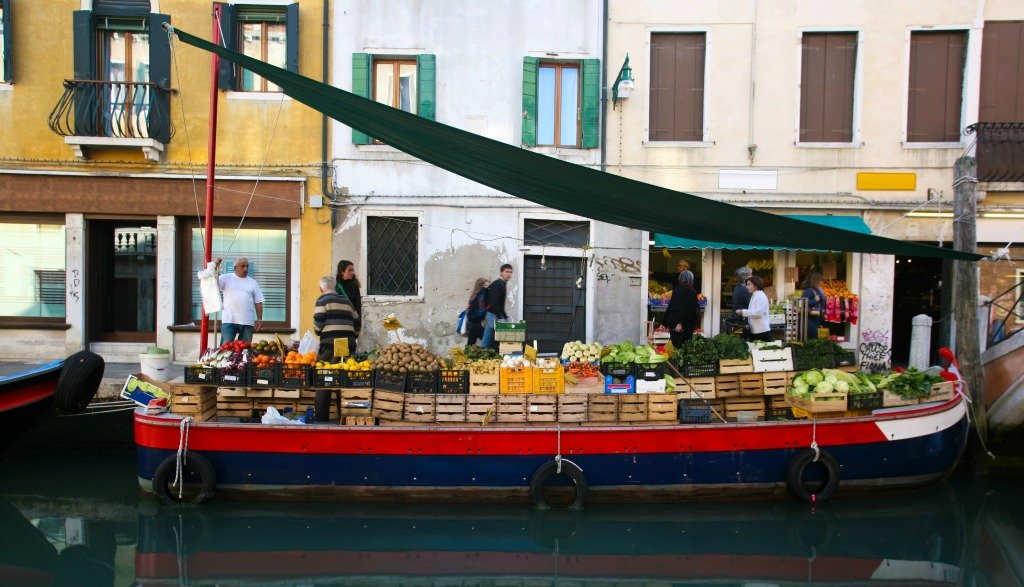
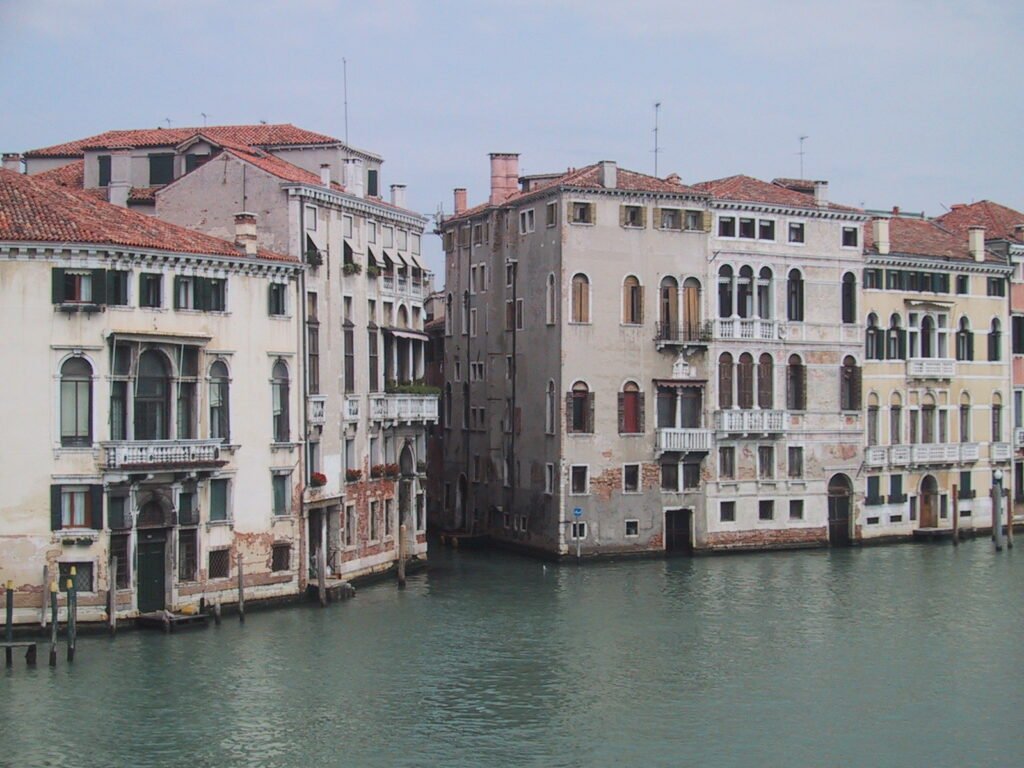
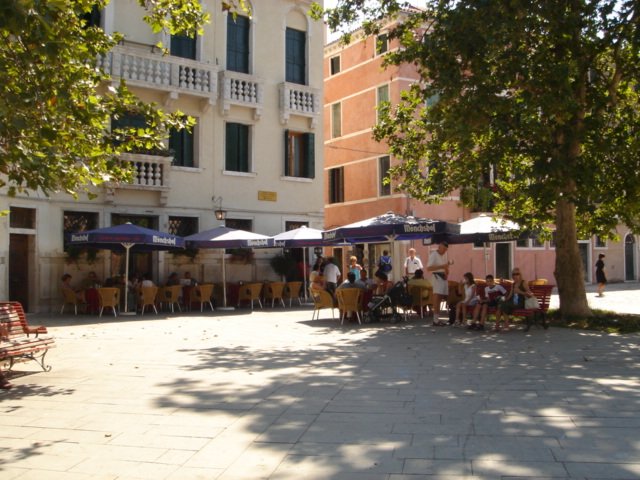
Back in Venice
Returning to La Serenissima and the city I once called home
We were up early and headed for Termini, Rome’s main train station. It took us rather longer to leave the B&B than planned because our hostess had decided we clearly weren’t capable of feeding ourselves on the journey. She busily stuffed pastries and fruit into my bag while talking at a mile a minute in rapid Italian, most of which went straight over my head.
I smiled, nodded and accepted the food.
I did, however, draw the line at the salami and the jug of wine her husband appeared with.
There are limits, even in Italy.
Eventually we escaped, made our way onto the metro and then onto the train bound for Venezia Santa Lucia — my bella Venice.
As the train headed north, we settled in and watched the countryside slide past the window. I knew this route so well. I had travelled it more times than I could remember when I lived in Venice. Firenze, Bologna, Padua — all places I had wandered around, eaten in, got lost in and found my way around again.
But not today.
Today we were going straight to Venice.
As we drew closer, the train attendant came over the announcement system.
Prossima stazione, Venezia Mestre.
Rapid-fire Italian, just as it should be.
Mestre is the station on the mainland, the stop before Venice proper. It is a perfectly nice place in its own right, but it is not Venice, and it is definitely not where most of the tourists on the train were trying to go.
Almost immediately, the usual uncertainty began.
People sat up a little straighter.
Maps came out.
There was whispering.
“Is this it?”
“Do we get off here?”
It always amused me, although not in a cruel way. Venice can be confusing the first time you arrive, and if you don’t know that Santa Lucia is the station actually in Venice, Mestre sounds entirely plausible.
If I happened to hear someone worrying about it, I would usually ask if they were going to Venice — the islands, proper Venice — and if they were, I’d tell them not to get off yet.
This had occasionally turned into something more involved. Once we arrived, I had shown people where the vaporetto stop was, helped them work out which boat they needed and, on more than one occasion, helped them buy tickets.
I didn’t mind.
Venice can be a little bewildering when you first arrive, and I knew my way around.
There had been one occasion, though, when I had been considerably less helpful.
On a previous trip, a particularly loud and obnoxious American had spent most of the journey from Florence talking absolute nonsense with enormous confidence. For reasons I never quite understood, a small group of passengers around him had decided he was some sort of expert.
He wasn’t.
He simply thought he was.
As we approached Mestre, he announced with great authority that this was Venice and that everyone needed to get off.
I knew perfectly well he was wrong.
I probably should have said something.
I didn’t.
There are moments in life when your better nature simply fails to arrive.
So I sat quietly while he gathered up his little group and marched them all off the train at Mestre.
As we pulled away, I looked out of the window and saw them standing on the platform, surrounded by luggage and looking increasingly confused.
The Italian woman sitting opposite me had clearly been following the whole thing.
She looked at me.
I looked at her.
We shared a smile.
Nothing needed to be said.
Back on our own journey, the train left Mestre and rolled onto the long bridge across the lagoon.
And there she was.
La Serenissima.
Venice stretched out across the water ahead of us, still as beautiful as I remembered her.
No matter how many times I had made that journey, seeing Venice appear across the lagoon never got old. There is something about arriving by train that I have always loved. For a while there is nothing but water and sky, and then suddenly the city begins to take shape in front of you.
The train eased into Venezia Santa Lucia and we gathered our bags, stepped down onto the platform and made our way through the station.
Then the doors opened and there was Venice.
The Grand Canal directly in front of us, boats moving across the water, people everywhere, buildings pressed together along the canal and all that familiar noise and movement.
We headed out of the station and crossed the Ponte degli Scalzi — the Bridge of the Barefoot. My Venetian friends had once told me it translated as the Bridge of Socks. Maybe it did. Maybe they were teasing me. With Venetians, both seemed entirely possible.
From there I slipped almost automatically back into old habits.
I wove my way through the calli, crossed bridges, cut across campi and turned down lanes that probably looked completely random to A.P., who followed as I moved through the maze on instinct.
I didn’t need a map.
I had lived here for two years and knew these streets like the back of my hand.
There were corners I recognised immediately, shops that were still there, buildings I remembered, and little shortcuts that came back to me without any thought at all.
It felt strangely normal.
As though I had been away for a week rather than years.
We crossed another bridge, turned down another calle and eventually made our way into the sestiere of San Polo.
Then came Campo San Polo.
And there it was.
Our home for the week.
The house that, for two years, had been my home.
I had spent so much time imagining what it would feel like to come back that I had almost expected some enormous emotional moment.
Instead, standing there with A.P. beside me and my bag over my shoulder, it simply felt wonderfully familiar.
I was back in Venice.
The next few days went by in a blur as I showed A.P. all my favourite places.
We did, of course, venture down to Piazza San Marco and some of the other Venice hotspots. You can hardly bring someone to Venice for the first time and refuse to show them St Mark’s Square on principle. But mostly I wanted to show him my Venice.
We went back to my café, where I was greeted so warmly it felt as though I had only been gone a few weeks. We ate at my favourite restaurants, wandered through familiar neighbourhoods and spent long stretches doing one of the things Venice is particularly good for — sitting in a campo in the spring sunshine with an Aperol Spritz, watching the world go by.
There was no need to rush anywhere.
I had spent two years living here. I wasn’t interested in racing around ticking off sights. I wanted to sit in the places where I had once sat, walk the streets I had once walked every day and introduce A.P. to the Venice I remembered.
And, of course, there was Bàcaro Jazz.
When I lived in Venice, it had been far more than simply a bar to me. It was owned by a wonderful family who, over time, had become my family too. I had spent countless hours there during those two years, and walking back through the door after being away for so long was one of the moments I had most looked forward to.
It was lovely to see them.
There was wine, talking, laughing and catching up on everything that had happened while I had been away. In some ways everything had changed, and in others nothing had changed at all.
That was how much of Venice felt to me.
Familiar enough to feel like home, but just different enough to remind me that I no longer lived there.
And then, far too quickly, it was time to leave.
We said our bittersweet farewells, gathered our bags and made our way back through the streets towards Santa Lucia station.
A few days earlier I had arrived desperate to be back. Now I was leaving again, which was considerably less exciting.
But there was another train to catch and another place ahead of us.
We climbed aboard, found our seats and Venice slowly slipped away behind us.
Next stop: Cinque Terre.