

Memento Park – Budapest
Lenin, Stalin’s boots and a very unusual collection of Hungarian history
After a few days exploring central Budapest, eating extremely well and becoming rather comfortable with our evening drinks in the square near the apartment, we decided it was time to head out to Memento Park.
This is where many of the large statues and monuments that once stood around Budapest during Hungary’s socialist period were moved after the political changes of 1989.
It sounded interesting.
And slightly odd.
So off we went.
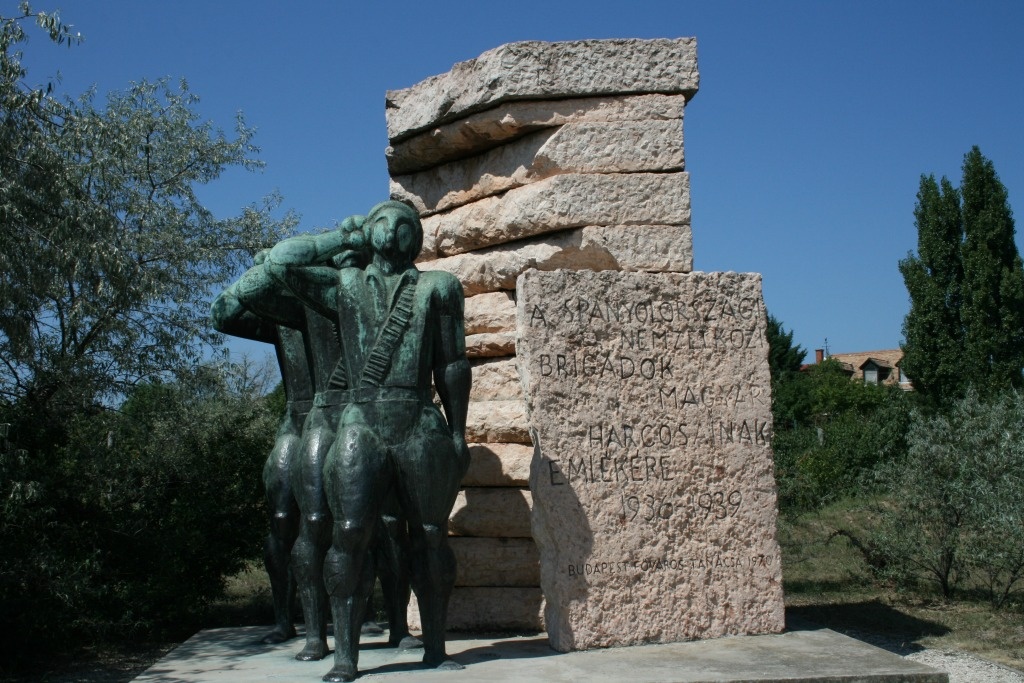
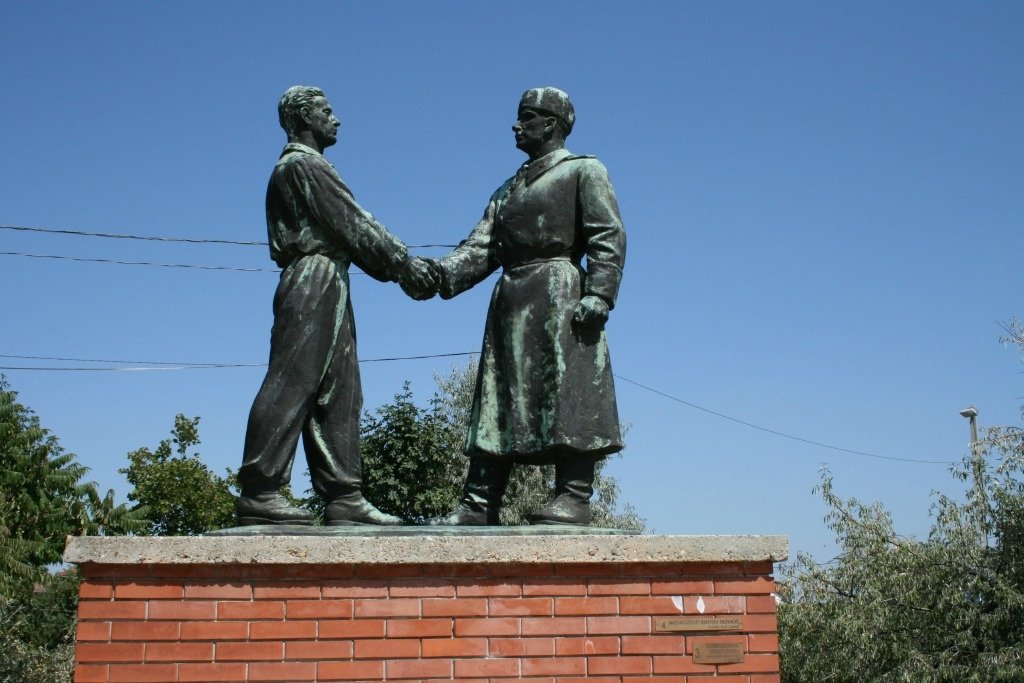
Memento Park sits on the outskirts of Budapest and contains a remarkable collection of political monuments from the period. Lenin is there, along with Marx and Engels, workers, soldiers, Hungarian political figures and a considerable number of people represented at a scale that suggests modesty was not high on the design brief.
The first thing that struck us was the sheer size of many of them.
These were statues designed for large public spaces, squares and major roads, so they were never intended to disappear quietly into the background.
A small discreet Lenin was clearly not what anyone had in mind.
When Hungary’s political system changed at the end of the 1980s and beginning of the 1990s, many of these monuments were removed from their original locations. Rather than simply losing them altogether, a selection was brought together in what became Memento Park, which opened in 1993.
I thought that was an interesting way of dealing with them.
The statues were no longer standing in the places for which they had originally been designed, but neither had they disappeared. They had simply acquired a very different setting and, with it, a very different context.
Walking around the park was slightly surreal.
There was Lenin, still looking determined.
Marx and Engels were nearby.
Workers marched purposefully towards somewhere.
Soldiers stared into the distance.
And tourists wandered between them taking photographs.
Whatever you think of the politics they represented, they are extraordinary pieces of public art and a very visible reminder of a period of Hungarian history that is still relatively recent.
Stalin’s BootsOne of the most memorable parts of the park is the reconstruction of Stalin’s Boots.
A huge statue of Stalin once stood in Budapest. During the Hungarian uprising of 1956, protesters pulled the statue down, leaving only the boots standing on the pedestal.
It is one of those historical images that stays with you.
An enormous statue reduced to a pair of equally enormous boots.
Whatever symbolism people choose to read into it, visually it is hard to forget.
The reconstruction at Memento Park gives some idea of the original scale of the monument and of just how large the statue must have been before the rest of Stalin disappeared.
The boots alone are impressive.
Which is not something I had expected to say about a pair of boots.
The ExhibitionThere is also a small exhibition area with photographs, documents and film relating to Hungary’s socialist period, the 1956 uprising and the political changes that followed decades later.
This gave some useful context to the statues outside.
Seeing old photographs of the monuments in their original locations around Budapest was particularly interesting, because it showed how completely different they looked when surrounded by the streets, buildings and public spaces for which they had been designed.
Standing together in Memento Park, they feel like museum pieces.
In the photographs, they were simply part of the city.
That, more than anything, made the place interesting to me.
It was not really about whether you admired or disliked the statues. It was about seeing objects from one period of Hungarian history collected together and being able to look at them in a completely different setting.
Leaving BudapestWe spent a couple of hours wandering around the park before heading back into Budapest.
Memento Park was unusual, fascinating and at times slightly absurd, particularly when you found yourself standing between several gigantic political figures all competing for attention.
But it was also one of the more interesting things we visited in Budapest, precisely because it did not try to hide the fact that the country had been through several very different political periods.
The statues were there.
The history happened.
And now you could walk around it.
Sadly, after a week in Budapest, our time in the city had come to an end.
We had liked Budapest enormously — bad drains and all — but it was time to move on again.
So we packed our bags, headed to the station and boarded the overnight train to Sighișoara in Romania.
As usual, the journey was not going to be entirely straightforward.