Da Lat, Vietnam: Night Buses, Broken Pipes and Bad Wine
From a Vietnamese sleeper bus to the cool hills of Da Lat
The Vietnamese night bus, my dear friends, is a truly remarkable thing.
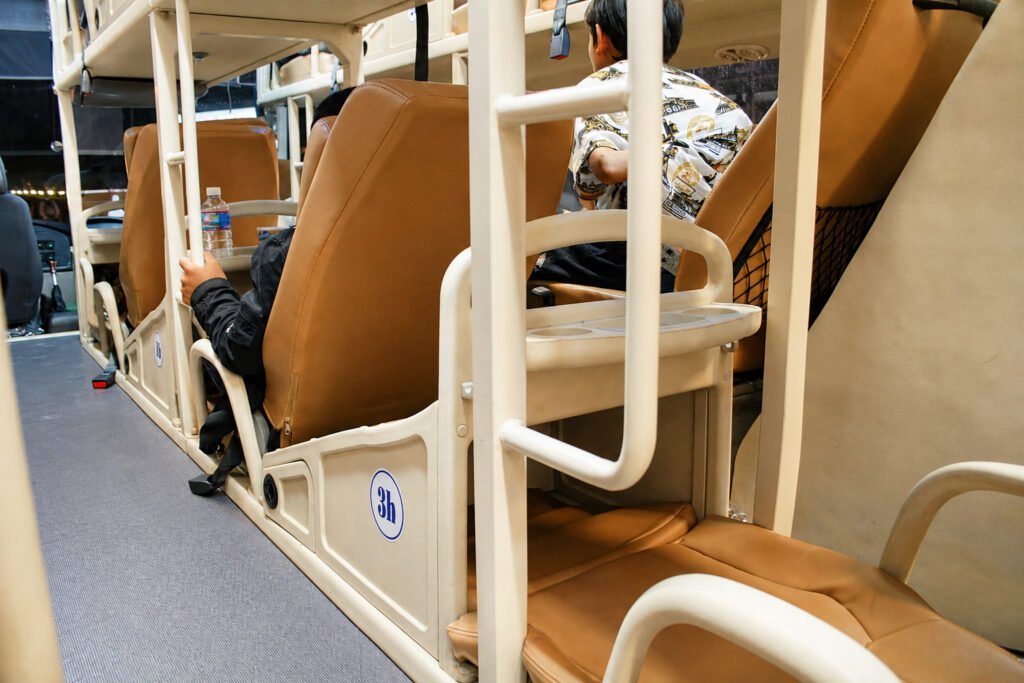
It is taller than your average bus and inside, instead of normal seats, there are rows of strange reclining bunks running down either side. I say bunks, but that is probably being generous. They are more like permanently reclined seats with a little compartment under the seat in front where your feet disappear. You are never really lying down, but you are not properly sitting up either.
Strange, slightly bizarre and, I have to say, rather fabulous.
We settled ourselves in for the night. We were due to arrive in Nha Trang at around six in the morning and, after a while, I managed to drift off to sleep.
At some point during the night I woke to discover that we appeared to be hurtling down the middle of the road at a speed I was fairly certain was well beyond anything sensible. I lay there watching for a while as the dark road rushed towards us, decided there was absolutely nothing I could do about it and went back to sleep.
Sometime around two in the morning the lights came on and the bus pulled into a roadside stop. Everyone climbed out to stretch their legs and wander around in that slightly dazed way people do when they have just been woken in the middle of the night.
Naturally, there was food.
There is something I have always loved about travelling in Asia. It doesn’t seem to matter where you are or what ridiculous hour of the day or night it might be, someone somewhere will be selling something to eat.
We bought some rice wrapped in banana leaves, ate it beside the bus and then climbed back into our strange little reclining compartments.
Before long we were rolling into Nha Trang.
We had no particular desire to stay. It looked busy and built-up and wasn’t really what we were looking for, so after a bowl of pho from a roadside stall near the bus station we boarded another bus, this one heading inland and up into the mountains towards Da Lat.
The journey was long and slow as the road twisted its way higher into the hills.
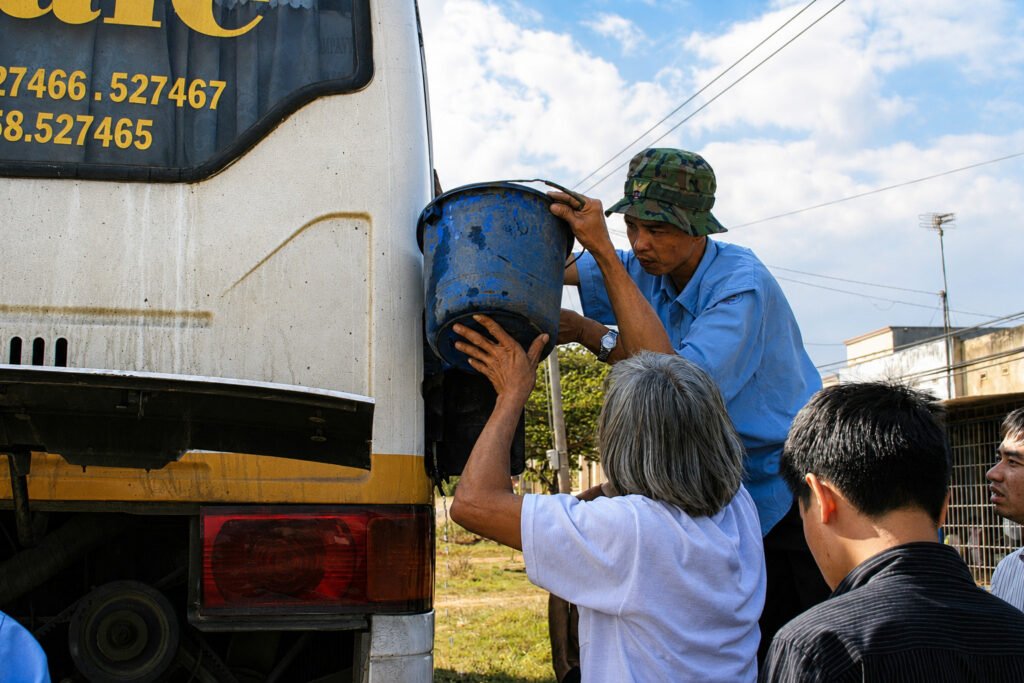
Then, about an hour outside Da Lat, there was an almighty bang.
The bus shuddered to a halt.
The driver and his mate climbed out looking concerned, which is never terribly reassuring, and naturally the rest of us followed them.
Apparently a water pipe had broken.
There was some discussion, some staring at the engine and then, within minutes, the driver’s mate flagged down a passing motorbike, climbed onto the back and disappeared up the road.
And that was that.
We all stood beside the bus watching him vanish into the distance.
Had he gone to find a replacement pipe? Had he gone for help? Had he simply decided he’d had enough and was going home?
Nobody appeared to know.
So we waited.
And waited.
There wasn’t much shade and after a night on one bus followed by several more hours on this one, we were tired, hot and becoming increasingly fed up with the whole affair.
Finally, after what seemed like an age, a motorbike appeared in the distance.
On the back was our missing man, although he had somehow returned on a completely different motorbike.
Even better, he was holding a length of pipe above his head like a trophy.
The entire busload applauded.
He climbed off grinning, got to work with the driver and a couple of helpful passengers and, remarkably, before too long the offending pipe had been replaced and we were all climbing back aboard.
And off we went again.
By the time we finally arrived at the bus station in Da Lat I was in no mood to admire anything.
We had been travelling for what felt like the better part of twenty-four hours. I was tired, hungry and completely over buses.
AP announced that our guest house was “nearby”.
I have learned over the years that AP’s definition of nearby is extremely flexible. It may mean fifty metres. It may mean two kilometres. There is really no way of knowing until you get there.
Off he went, compass in hand, with me following behind.
Up a hill.
Around a corner.
Down a lane.
Up another hill.
Down another hill.
Along another lane.
By this stage I was convinced we were walking in circles and getting grumpier by the minute.
Eventually AP stopped, looked up and pointed across the road.
“There it is,” he said triumphantly.
I said nothing.
I was beyond words.
I simply crossed the road.
Fortunately, the guest house was wonderful.
It was run by a lovely couple who could not have been more welcoming, and after our marathon journey it was exactly what we needed. They even kept Vegemite for their Australian guests, which struck me as an extraordinary level of hospitality.
After a proper night’s sleep and a good breakfast we were considerably more human and set out to explore Da Lat.
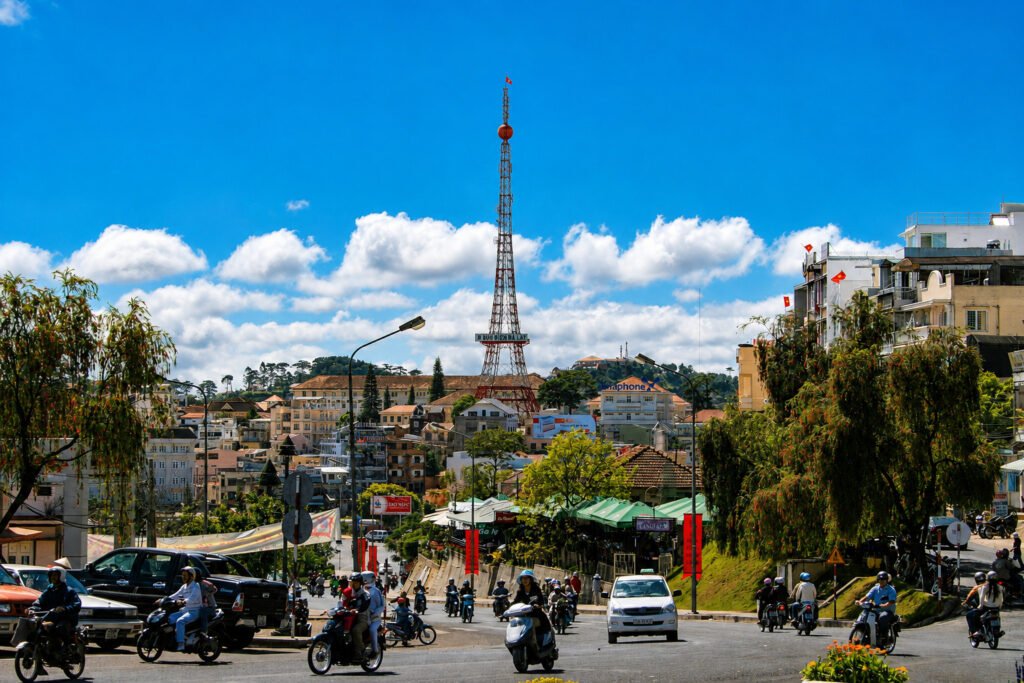
Da Lat is quite unlike the Vietnam we had seen along the coast. Sitting high in the Central Highlands, it was developed by the French during the colonial period as a hill station, somewhere they could escape the heat and humidity of the lowlands.
And you could immediately understand why.
The air was cooler, the hills were green and there were pine trees everywhere. French villas dotted the slopes and the whole place had a slightly different feel from anywhere else we had been in Vietnam.
The cooler climate also meant they could grow things here that would have struggled in the heat of the lowlands, including grapes. And in true French style, where there were grapes there was wine.
Naturally, we tried it.
It was not good.
Perhaps we chose a bad bottle, but whatever the reason it was not an experience we felt any pressing need to repeat. Still, you couldn’t come to a Vietnamese hill town shaped by the French, discover they made wine and then not try it.
So we did.
Once.
After weeks of heat, the cooler air was wonderful.
We wandered through town to Da Lat Cathedral, usually known as the Chicken Church because of the metal rooster perched on top of its bell tower. Built during the French colonial period in the 1930s and early 1940s, it looked distinctly European, which seemed slightly odd surrounded by the hills of central Vietnam.
From there we visited Bao Dai’s Summer Palace, one of the residences used by Bao Dai, Vietnam’s last emperor. Built in the 1930s, it was surprisingly restrained inside, with rooms still furnished much as they had been when the royal family used the house. Bedrooms, offices, sitting rooms and family photographs made it feel less like a grand palace and more like someone’s rather elegant home that everyone had unexpectedly moved out of.
We wandered around Xuan Huong Lake, the long man-made lake sitting right in the centre of town. Gardens and roads curved around the water and locals strolled along the shore, pedalled little boats across the lake and generally appeared to be making the most of the cooler weather.
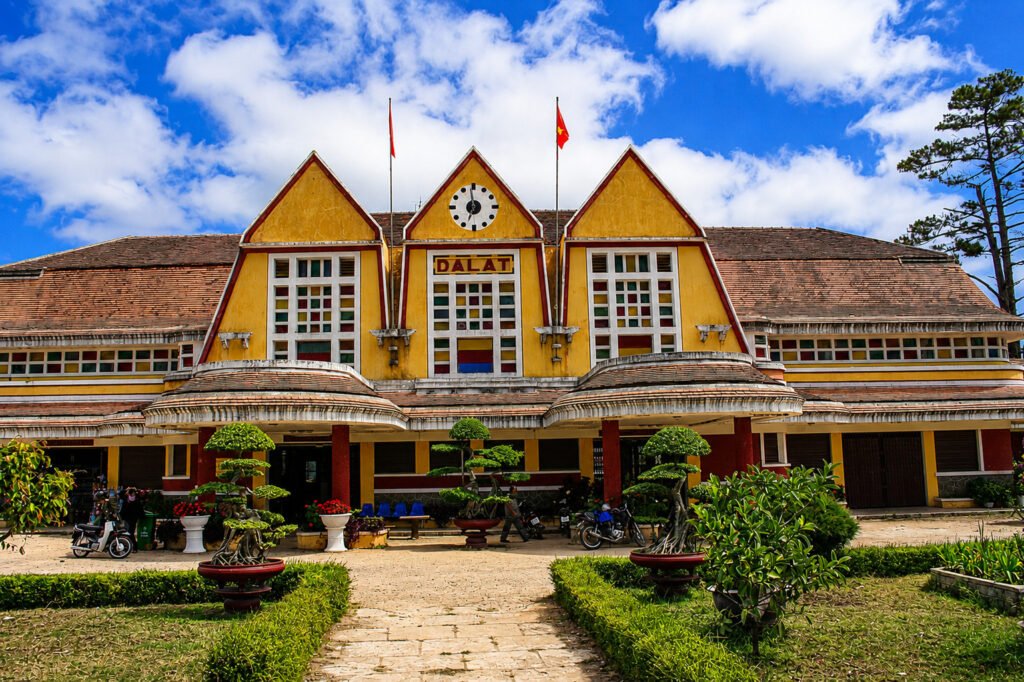
Da Lat’s historic railway station was another unexpected gem.
Built in the 1930s, the station has a wonderfully distinctive design with three pointed roofs said to echo the peaks of the nearby Lang Biang mountains. It was once part of the railway connecting Da Lat with the coast, including a remarkable rack railway built to cope with the steep mountain gradients. Much of the original line disappeared after the war, although a short section now runs tourist trains out to Trai Mat.
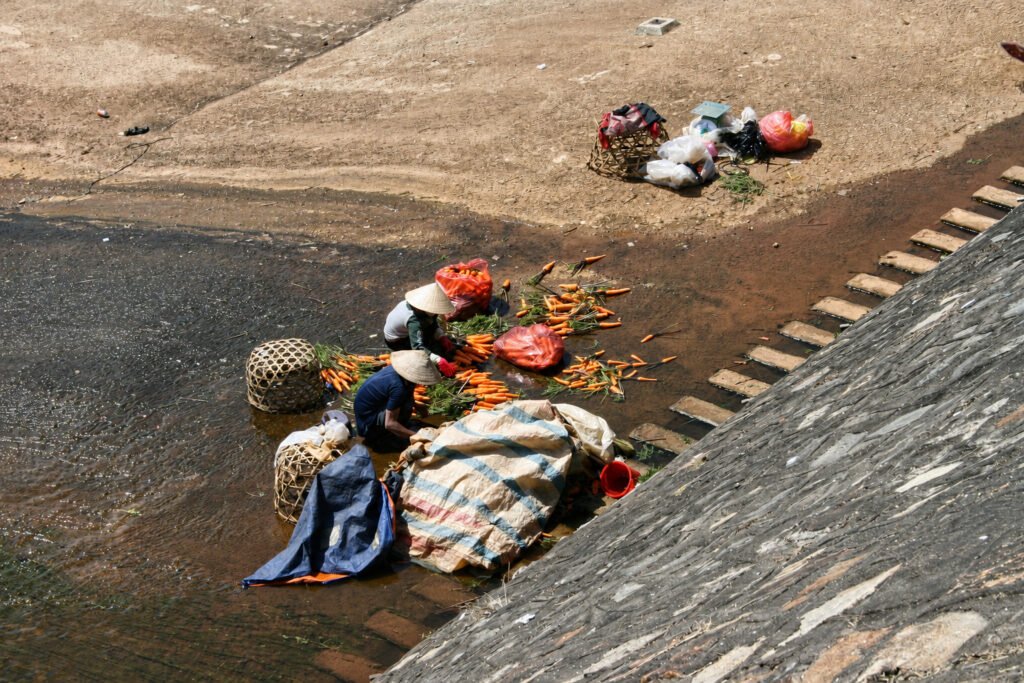
We visited the market, wandered through the streets and watched people washing great piles of vegetables in the river.
Da Lat is surrounded by farms and market gardens, helped by the cooler climate, and vegetables seemed to be everywhere. After the tropical heat of the coast, spending a few days somewhere green, mountainous and pleasantly cool made a very welcome change.
We liked Da Lat.
It was different, interesting and, perhaps most importantly by that stage of the trip, not unbearably hot.
But before long it was time to say goodbye to our lovely hosts, shoulder the backpacks again and return to the bus station.
There was one final journey ahead of us.
Saigon.
Our last stop in Vietnam.