

A Journey Through France
From Perpignan to Lyon via the Pyrenees, Dordogne and Jura
Our travels through France moved between the grand and the quietly unassuming, pairing ancient monuments with gentle countryside and the occasional moment of mild bewilderment. We began in Perpignan, where Salvador Dalí once declared the train station the centre of the universe. Standing outside Gare de Perpignan, it was difficult not to wonder whether the artist had been experiencing one of his more expansive mornings—or perhaps had simply enjoyed the local produce a little too enthusiastically. The station itself felt reassuringly ordinary.
From there we passed through rolling hills and clear streams in the Lot and Aveyron regions, admired the impressive engineering of the Millau Viaduct, and spent time in Avignon, once home to the Pope. Later we explored the peaceful Jura, where the scenery was lovely and the food occasionally surprising, before reaching Lyon, France’s celebrated gastronomic capital. Along the way we stayed in everything from simple forest campgrounds to beautifully restored manor houses, collecting a pleasing variety of experiences that showed just how many faces southern and central France can wear.
PerpignanPerpignan was really just a convenient place to collect our hire car. Salvador Dalí had famously announced that its train station was the centre of the universe, but when we stood in front of Gare de Perpignan it looked like a perfectly normal French railway station. We had chosen a hotel close by because my infected foot made any unnecessary walking seem like a very bad idea. A short wander into town for dinner gave the impression that Perpignan was rather pleasant. It sits near the famous anchovy waters of Collioure and serves as a sensible jumping-off point for the Camargue or the French Riviera.
The next morning we picked up the car, bought a few supplies and headed back toward Spain and the Pyrenees. Anyone wondering why we had travelled to France simply to hire a car and immediately drive back into Spain can rest assured there was a perfectly sensible reason: we planned to leave the vehicle in northern France at the end of our trip, and cross-border rentals arranged from the outset are eye-wateringly expensive.
We took a leisurely route through the lower mountains and arrived in Amélie-les-Bains, a small town on the banks of the Le Tech river at the foot of the Pyrenees. That evening we ate well in the town square — tortilla, sardines with basil, anchovies, mussels, calamari and tuna salad — all washed down with red wine. It was the perfect way to finish the day before falling into bed.
The Manoir and a Spanish DetourWe continued to a lovely old house near Barran in southwestern France where friends were already staying. The property had been tastefully converted and the surrounding land turned into a truffle orchard by its owner, a wine importer with an obvious appreciation for good food. For the next week we did very little except sit by the pool, eat excellent meals, drink wine and practise the fine art of doing nothing in particular.
We then joined our friends for a week-long drive back into Spain. We crossed the Pyrenees again and spent the first night in Aínsa, a pretty historic walled town. Next came Jaca, with its old citadel and interesting old quarter, where we stayed in a hotel just off the main square. The local apple cider was something we felt no pressing need to repeat, and the food was largely unremarkable.
San Sebastián followed. It turned out to be one of the more disappointing places I have visited. Arriving at the same time as a serious storm did not help matters; it rained heavily the entire time we were there. The town was also full of large groups of British men on stag weekends, and the pintxos struck us as both overpriced and rather overrated. We stayed one night and moved on.
On the way back toward Barran we stopped for a night in Saint-Jean-Pied-de-Port, where one of our friends had begun the Camino de Santiago a few years earlier. It is another attractive old walled town at the base of the mountains, though noticeably more touristy and expensive than many of the quieter places we had seen.
After a couple more relaxed days at the Manoir we said goodbye to our friends and headed north into the Dordogne. We spent about a week camping in a pleasant forest campground just outside Les Eyzies. The area offered good food and plenty to see, with a highlight being a canoe trip down the Dordogne river, drifting past imposing defensive châteaux and pretty medieval villages.
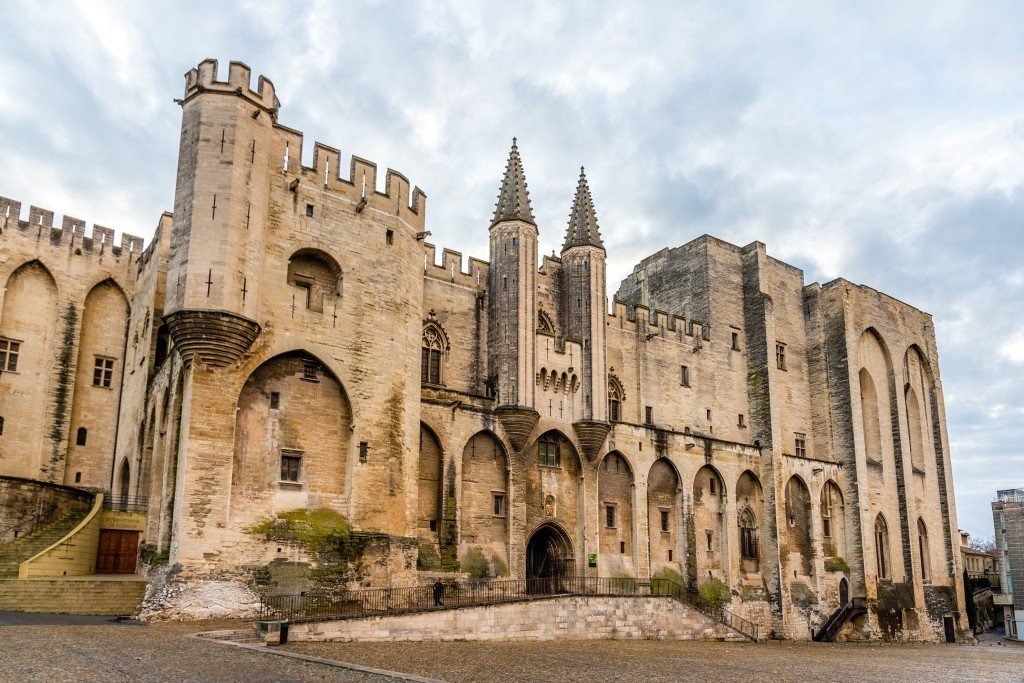
Exploring FranceWe continued in a generally easterly direction through the dramatic Gorges du Tarn and on to the walled city of Avignon, once home to the Pope and still one of our favourite places. Any visit to Avignon is best paired with a trip to the Pont du Gard, the remarkable Roman aqueduct built to supply water to Nîmes.
From there we moved on to Saint-Laurent-du-Pont, a rather scruffy town with a decent campground at the base of the Alps. Our plan had been to continue to Chamonix the next day and stay for a few nights. As often happens with travel plans, Chamonix was heaving with tourists when we arrived, and the campground pitches were on a steep slope. One wrong roll in the night and you could find yourself at the bottom of the hill. While the views of Mont Blanc were spectacular, the crowds made it feel a little too busy, so we kept going and crossed into Switzerland.
The campground we chose in Switzerland had a distinctly unusual atmosphere. Opposite us sat a man who appeared to meditate for most of the day. In the tent next door, our neighbours had built a miniature fence around their pitch using sticks, complete with a working little gate. When they returned from their day out they walked solemnly along the stone path they had laid, opened the tiny gate, stepped through, closed it behind them, took off their shoes and placed them neatly on a stick-built shoe rack. It was all rather peculiar. We wandered down to the bar to sample the area’s famous yellow wine, but that was about the extent of our engagement. The next morning we made a swift exit, did a quick loop around Lake Geneva and returned to France and the Jura.
The JuraThe Jura is a beautiful, rural region that shares a border with Switzerland. It was here that I first encountered Jésus sausage. Whether it was some form of cosmic payback for my decidedly non-religious outlook or simply unfortunate timing, the sausage did not agree with me at all.
We stayed at a charming one-star campground beside a babbling brook in the tiny village of Baume-les-Messieurs, which sits at the confluence of what were once three glacial valleys. Being August and peak French holiday season, the quiet campground made an excellent hiding place from the crowds swarming across the rest of the country. The only real downside was the squat toilets.
From here we made a short trip across the border to Freiburg in Germany to meet a friend. We enjoyed a very good schnitzel for lunch and later an excellent sausage in a bun from a roadside stall. Freiburg itself is a very old and attractive university town. We camped a few kilometres outside in what was easily the most pristine campground we have ever seen. After a couple of nights we returned to France, dropped the car in Lons-le-Saunier and caught the train to Lyon.
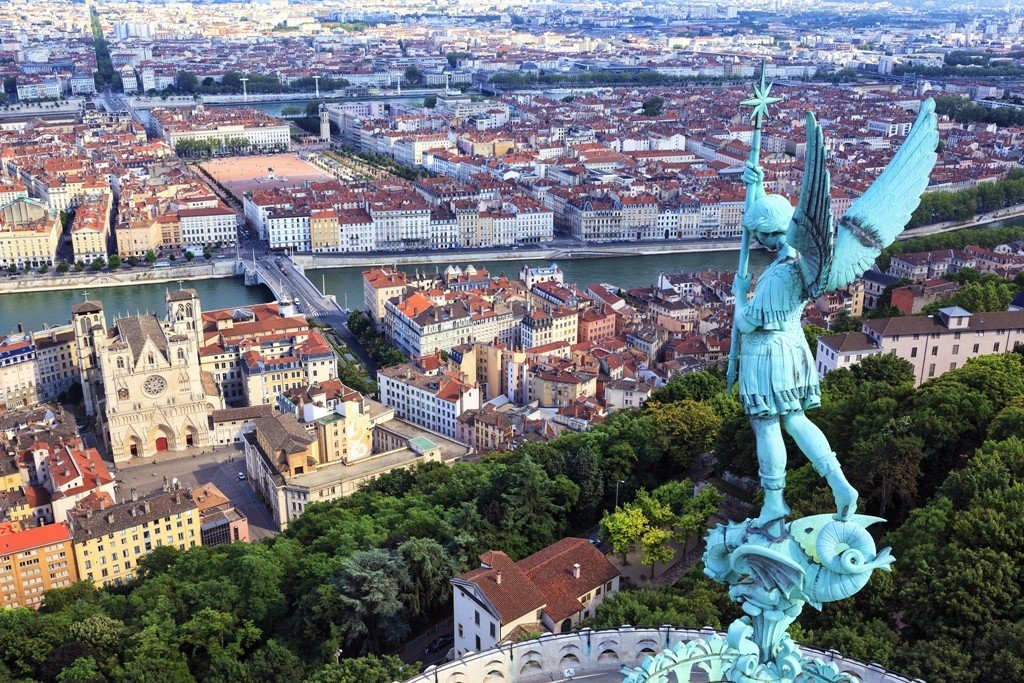
LyonWe arrived in Lyon to find the city almost deserted — everyone had left for their annual summer pilgrimage to the seaside or the mountains. We also arrived at the start of a heatwave, with temperatures around 40°C every day. Ancient French cities were built to retain warmth rather than to stay cool, so the heat felt particularly intense.
We stayed at the Hotel Iris, conveniently located near the Hôtel de Ville in a pleasant part of town. Lyon is the gastronomic heart of France and famous for its bouchons and traditional dishes, so we were keen to sample them despite the weather. My favourite was the pike quenelles. The city was once a major centre of silk production and is also home to the printing press. Today it is a large, busy metropolis that shares many of the social challenges seen in other big French cities.
France gave us a journey of pleasing contrasts — Dalí’s cosmic train station and quiet forest campgrounds, papal palaces and miniature stick fences, spectacular engineering and the occasional very strange sausage. We moved between dramatic gorges, historic cities, lazy weeks by a pool and eccentric campgrounds, all while navigating heatwaves, storms and the small practicalities of cross-border travel. It was rarely what we expected, and all the better for it.