
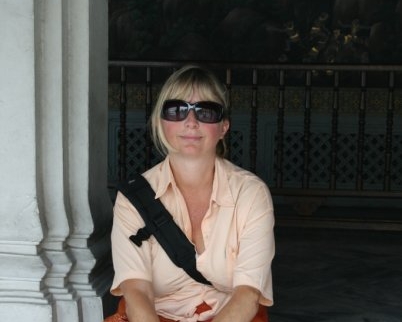


Bangkok, Thailand – The Beginning of a New Adventure
Homeless between Australia and France, with a month to spare and Bangkok beckoning
In 2011, we set off on what was to become the ultimate adventure. We had purchased a house in southwest France and were about to embark on an entirely new chapter of our lives. Now, that particular story is another tale for another time, but suffice to say we were rather excited about the whole thing. Possibly a little apprehensive too, although we were doing a good job of ignoring that part.
Our worldly goods were packed into a shipping container somewhere in the middle of the ocean, our Australian house was rented out, and we were effectively homeless until we could move into our new French house. It was an interesting position to find ourselves in, particularly as we had voluntarily arranged the whole situation. With a month or so to fill before we could take possession, we decided that Thailand would be an excellent place to wait out the time. After all, there are considerably worse places to be homeless.
Our first stop was Bangkok, a city we already knew and loved, and one that seemed a particularly good place to begin our temporary life of having no fixed address and very few responsibilities.
We headed straight to the Happy House in the Banglamphu area, the backpacker ghetto of Bangkok and a part of this incredible city that we have always loved. It is an area full of budget guesthouses, little restaurants, street vendors, travellers and the sort of organised chaos that Bangkok does so extraordinarily well.
Now, the Happy House was not posh. In fact, it could quite accurately be described as the complete opposite of posh. It was basically a room with a bed and a shower room on the balcony. And when I say shower room, think shower over the toilet, which is not an uncommon arrangement in budget accommodation in this part of the world. It does, at least, make cleaning the bathroom remarkably straightforward.
But it was relatively new, which meant it hadn’t yet reached the state of shabbiness that guesthouses in this area seem to achieve with quite astonishing speed. Everything worked, the bed was perfectly adequate, and we had no particular complaints. Luxury was not what we had come to Bangkok looking for.
It was also close to the river, which was a huge advantage. Bangkok’s river ferries are a wonderful way to get around the city, avoiding the horrendous traffic while providing a fascinating glimpse of life along the Chao Phraya River. Given the choice between sitting in a traffic jam and travelling along the river with a cooling breeze, there really isn’t much of a decision to make.
And, perhaps most importantly, the Happy House was close to one of our favourite restaurants, Hemlock, where of course we headed for dinner on our first evening.
Hemlock was a funny little restaurant. The outdoor-style furniture was extraordinarily uncomfortable, and there was a rather strange garden arrangement in the middle of the restaurant that I never quite understood. It seemed to serve no obvious purpose beyond taking up space and providing something to look at while attempting to find a comfortable position on the chairs. But the food was superb, and we loved it.
So, uncomfortable furniture and strange garden notwithstanding, Hemlock remained firmly on our list of favourite Bangkok restaurants. Good food can compensate for a surprising number of shortcomings, including furniture that appears to have been designed by someone with a personal grudge against the human spine.
While in Bangkok, we decided to visit the Grand Palace, which was only a short trip down the river. The Grand Palace is one of Bangkok’s most famous landmarks and an important part of Thailand’s royal and religious history. Construction began in 1782, when King Rama I established Bangkok as the new capital of Siam. For more than 150 years, the complex served as the principal residence of the Thai monarchy and the centre of royal administration.
The enormous walled complex contains magnificent royal buildings, throne halls, courtyards and temples, many decorated with elaborate mosaics, colourful tiles and an extraordinary amount of gold. It is the sort of place where you find yourself wondering how many people, and how many years, it took to create something quite so elaborate.
One of its most important buildings is Wat Phra Kaew, the Temple of the Emerald Buddha, which houses one of Thailand’s most sacred Buddhist images. Despite its name, the Emerald Buddha is actually carved from green stone, traditionally identified as jade, rather than emerald. Quite why nobody thought to correct the name somewhere along the way is anybody’s guess, although I suspect the Temple of the Green Stone Buddha might not have quite the same appeal.
So, one morning we set off for the river ferry, looking forward to exploring this magnificent complex. It promised to be a fascinating visit, and we were thoroughly looking forward to it.
When we arrived in the area surrounding the palace, the streets were crowded with people, tourists, tuk-tuks and the usual assortment of touts pushing for business. Bangkok is never particularly short of people trying to sell you something, and the area around the Grand Palace is certainly no exception.
And then there were the slightly dodgier characters who approached tourists to inform them that the Grand Palace was closed. Apparently, it was closed for a royal ceremony, a Buddhist holiday, maintenance or some other terribly important reason. But never fear, because they could take you somewhere equally beautiful in their tuk-tuk. What a stroke of luck that they happened to be standing there at precisely the right moment, ready to rescue disappointed tourists from an otherwise ruined day.
What they really meant, of course, was that they could take you to Uncle Somchai’s jewellery or gift shop, where they would earn a commission for delivering another unsuspecting tourist. Whether Uncle Somchai actually existed was beside the point. There was undoubtedly a shop somewhere that would be delighted to receive you.
It was an old scam, but apparently one that continued to work remarkably well. There always seemed to be someone willing to believe that a complete stranger standing outside one of Bangkok’s most famous attractions had unexpectedly taken a personal interest in their sightseeing arrangements. We ignored the lot of them and made our way to the palace gates, feeling rather pleased with ourselves for having avoided such an obvious tourist trap.
Unfortunately, having successfully avoided being taken for a ride by the local touts, I promptly encountered a problem entirely of my own making. It turned out my choice of clothing was completely inappropriate.
I was wearing knee-length shorts and a sleeveless T-shirt, which, as it happens, is not acceptable attire for visiting one of Thailand’s most sacred royal and religious sites. There was nothing particularly outrageous about my outfit by normal Bangkok sightseeing standards, but the Grand Palace has rather more exacting requirements.
Now, I should have known better. We had travelled extensively in Asia and were well aware that temples and other religious places generally require modest clothing. But clearly I had failed to engage my brain that morning, possibly distracted by the prospect of a pleasant ferry ride and an interesting day out.
The solution was to hire some suitable clothing. I was provided with a long sarong-style skirt and an extremely ugly polyester shirt, which had to be worn over my existing clothes. Clearly, whoever had selected this particular outfit had not been overly concerned with either fashion or comfort. The entire ensemble was hideous, and even worse, it was hot.
Bangkok is not exactly known for its cool and refreshing weather, and wandering around in several layers of clothing, including what felt like a polyester furnace, was not my idea of comfort. The humidity was doing its usual excellent job of making everything sticky, and my newly acquired outfit seemed specifically designed to prevent any possibility of ventilation.
I genuinely thought I might melt. Not in a dignified fashion either, but slowly and rather unpleasantly, leaving a small puddle somewhere among the palace courtyards. Still, it was my own fault, so I soldiered on. There was no point complaining, although that did not entirely prevent me from doing so.
And despite my unfortunate outfit, the palace was spectacular. The architecture was extraordinary, with magnificent gilded buildings, elaborate rooflines, enormous guardian statues and intricate decorations everywhere you looked. The sheer scale and craftsmanship were remarkable, and even my growing resemblance to an overheated laundry bundle could not detract from the experience.
We wandered through the complex, admiring the temples and beautifully maintained courtyards. Everywhere we turned, there seemed to be another extraordinary building or elaborate detail demanding our attention. We also watched a military parade, which added another interesting dimension to the visit and provided a welcome excuse to stand still for a while.
Eventually, having seen as much as we wanted and feeling as though I had lost several litres of fluid through perspiration, we decided it was time to leave. The palace had been magnificent, but I was beginning to think that remaining upright in my polyester ensemble might soon become a genuine challenge.
We wandered back towards the river and boarded a ferry for our little corner of Bangkok. The breeze coming off the water was wonderful, and I have rarely appreciated moving air quite so much. Our first priority was a cold beer at the Happy House. A very cold beer, preferably one that had spent a considerable amount of time in the refrigerator rather than merely passing through it on the way to the table.
And then, suitably refreshed and restored to something resembling normal human functioning, we headed out for dinner. At Hemlock. Again. Yes, we know there are thousands of restaurants in Bangkok, offering an extraordinary variety of wonderful food, but when you find somewhere you love, why not go back? Besides, we had already established that the chairs were uncomfortable and the garden was peculiar, so there was little chance of any unpleasant surprises.
On another day, we decided to escape the madness of central Bangkok and take a boat trip to one of the famous floating markets. Thailand’s floating markets have long been part of life along the country’s rivers and canals, where boats were once the most practical way of transporting people, produce and just about everything else. These days, many of the better-known markets cater as much to tourists as they do to locals, but they remain a colourful and fascinating sight.
We set off by boat, leaving behind the busy streets and heading into a network of canals, or khlongs as they are known locally. It was a wonderful way to see another side of Bangkok and its surrounding waterways. Houses stood right on the water’s edge, some beautifully maintained and others looking as though they were being held together by little more than optimism. Washing hung from balconies, small boats were tied up outside homes, and everyday life carried on around us. It was a world away from the traffic, shopping centres and general chaos of central Bangkok.
As we travelled further along the waterways, we began to encounter more boats, some carrying passengers and others piled high with fruit, vegetables, flowers and all manner of things for sale. Eventually, we reached the floating market itself, where the waterways were crowded with little wooden boats, many manoeuvred with considerable skill by women wearing traditional wide-brimmed straw hats.
It was a wonderful sight. Boats laden with colourful tropical fruit jostled alongside others selling freshly cooked food, drinks, souvenirs and things we couldn’t immediately identify. The vendors seemed perfectly capable of steering their boats, preparing food, handling money and negotiating with customers all at the same time. I struggle to do two things at once while standing on solid ground, so I found the whole performance rather impressive.
There was plenty of noise and activity, with vendors calling out to passing boats, tourists attempting to photograph everything in sight, and boat drivers somehow managing to squeeze through gaps that didn’t appear large enough to accommodate a floating coconut, let alone another boat. Every so often, two boats would become temporarily wedged together, resulting in a great deal of discussion, some energetic manoeuvring and absolutely no apparent concern from the people involved.
Of course, being a popular tourist attraction, there was no shortage of people keen to sell us something. We were offered fruit, food, drinks, handicrafts and a remarkable assortment of souvenirs, most of which we had absolutely no use for. But it was all part of the experience, and we thoroughly enjoyed watching the colourful chaos unfold around us.
One of the highlights was simply being on the water, watching the market operate around us. There was something quite extraordinary about seeing an entire little commercial world functioning from boats. Transactions were conducted across narrow stretches of water, purchases were passed from boat to boat, and everyone seemed to know exactly what they were doing. Everyone, that is, except the tourists, who were generally too busy taking photographs to notice that their boat was about to collide with another one.
Eventually, we left the market and made our way back along the canals, enjoying another glimpse of life beside the water. It had been a fascinating day, and although the floating market was undoubtedly geared towards visitors, we were glad we had made the trip. It was colourful, busy, slightly chaotic and thoroughly entertaining. In other words, very much in keeping with the rest of our Bangkok experience.
Back in the city, there was really only one sensible way to finish the day. A cold drink, a shower and another excellent meal. And given our established lack of imagination when it came to choosing restaurants, I suspect you can probably guess where we ended up. Hemlock had clearly become something of a habit, although there are considerably worse habits to acquire.
We only had a few days in Bangkok before it was time to continue our journey. It had been a short visit, but long enough to remind us why we had always enjoyed spending time in this extraordinary city.
We have always loved Bangkok. It is chaotic, noisy, hot and occasionally completely mad, but there is something about the place that keeps drawing us back. Perhaps it is the river, the wonderful food, the street life or the sheer energy of the city. Whatever it is, Bangkok has always appealed to us. There is always something happening, always something interesting around the next corner, and rarely a dull moment.
But it was time to head north. Our next destination was Chiang Mai, often described as the backpacker paradise of northern Thailand. We were looking forward to discovering what made it so popular, and whether it could possibly live up to its reputation. As it turned out, Chiang Mai was not quite what we expected. But then, the places that surprise you often make for the most interesting stories.