
Uzès, Avignon & Pont du Gard, France
Market towns, Roman engineering, the Mistral and a final stop before Italy
We left Millau after breakfast and headed south, climbing back across the high plateau before dropping into a series of beautiful, isolated valleys around the headwaters of the Hérault River.
It was wonderful driving country. Mountains, deep valleys, tiny villages and great stretches where there seemed to be nobody around at all. This was sheep country too, home to the milk used to make Roquefort, so there were sheep scattered across the hillsides doing their bit for French cheese production.
By lunchtime we had reached Uzès.
Unfortunately, so had everybody else.
It was Saturday, which meant market day, and the usually peaceful medieval town was heaving. Traffic crawled through the streets and finding somewhere to park became the first major challenge of the day.
Eventually we abandoned the car and walked into the centre.
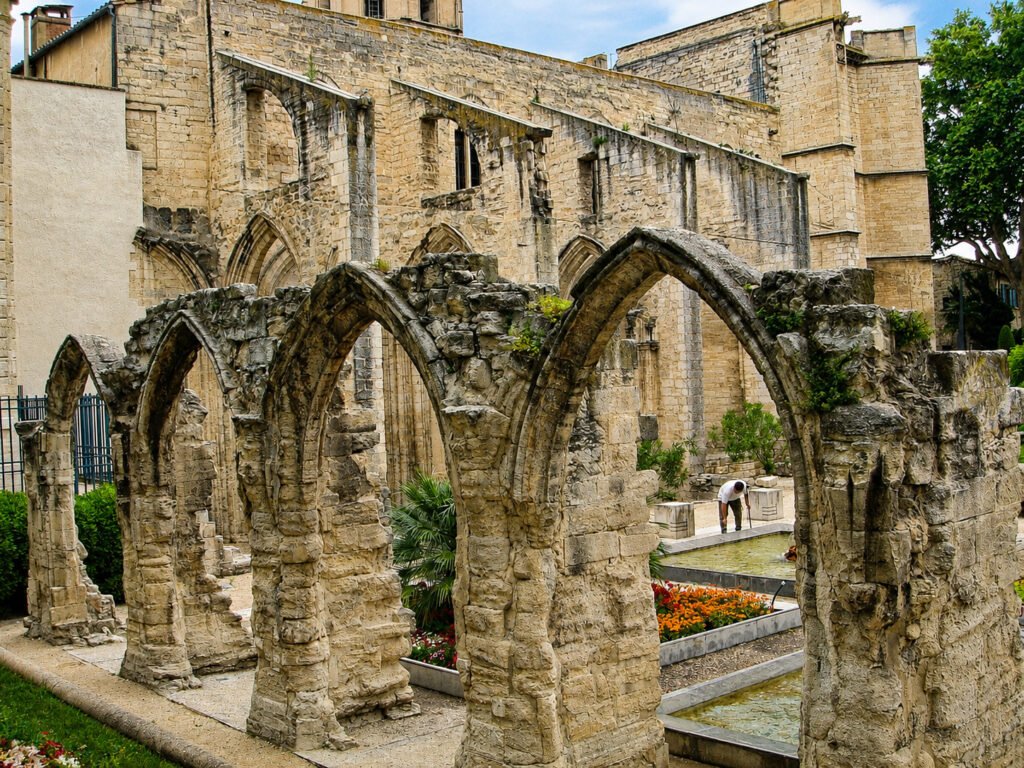
Uzès is a lovely old town, with narrow streets, pale stone buildings and a large square shaded by plane trees. It began life as a small Gallo-Roman settlement and still has plenty of reminders of its long history, including the distinctive Tour Fenestrelle, an 11th-century round bell tower that rises above the rooftops.
On market day the square was full of stalls, people, tables and chairs, so we found ourselves a spot for lunch and ordered a very respectable Niçoise salad.
Fed and considerably happier, we headed on to the Pont du Gard.
This was my second visit and it was every bit as impressive as I remembered, although considerably busier and, inevitably, more expensive.
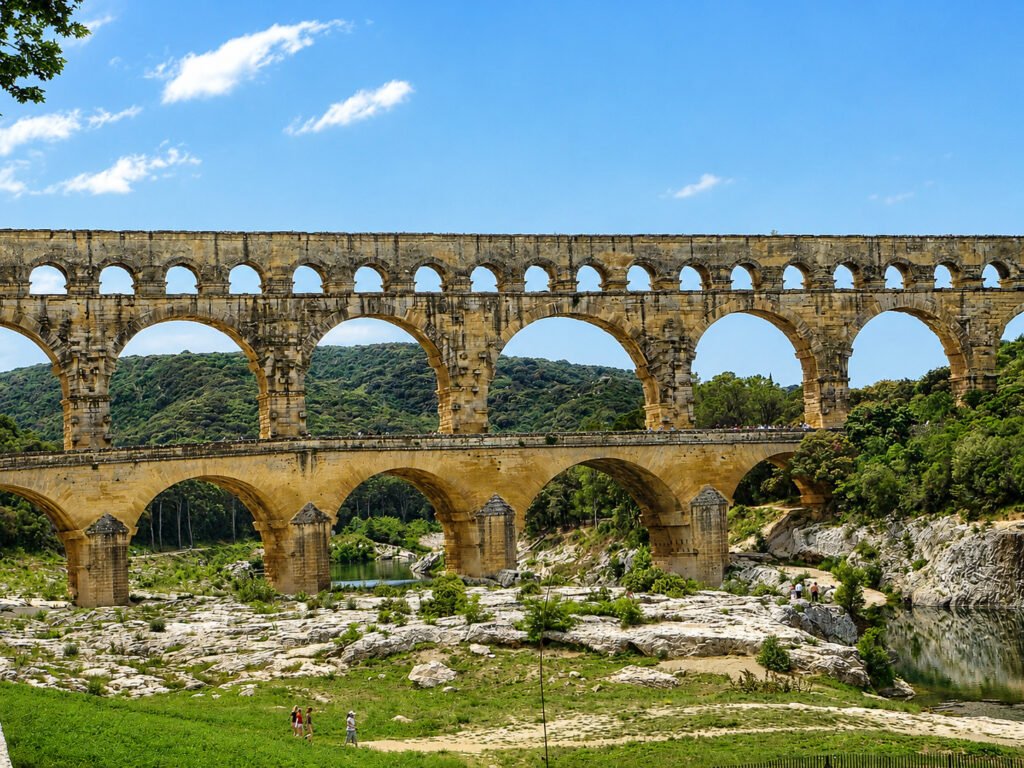
The Romans built the aqueduct to carry water some fifty kilometres from springs near Uzès to Nîmes, and the Pont du Gard was the spectacular bit needed to get it across the Gardon River. Nearly two thousand years later it is still standing there, three enormous tiers of stone arches stretching across the valley.
You do have to admire the Romans.
Give them a river, a valley and a city that needs water and they apparently saw no reason not to build something enormous across the lot of it.
The only thing taking the edge off the visit was the Mistral.
The famous wind that barrels down the Rhône Valley had arrived in full force and was doing its best to remove hats, rearrange hairstyles and generally make standing outside less pleasant than it should have been.
By late afternoon we gave up fighting it and continued on to Avignon.
We were staying at the Hotel Mignon, right in the heart of the old city. It was one of those excellent little budget hotels we tended to find in France: rooms on the small side, nothing particularly glamorous, but clean, comfortable and exactly where you wanted it to be.
Our original plan had been to find a table outside in one of Avignon’s squares and spend the evening eating and drinking while watching the world go by.
The Mistral had other ideas.
By then it was blowing even harder, so outdoor dining lost much of its appeal and we retreated inside for a typically French dinner before calling it a night.
The following morning we set off to see the Palais des Papes.
There is nothing subtle about the place.
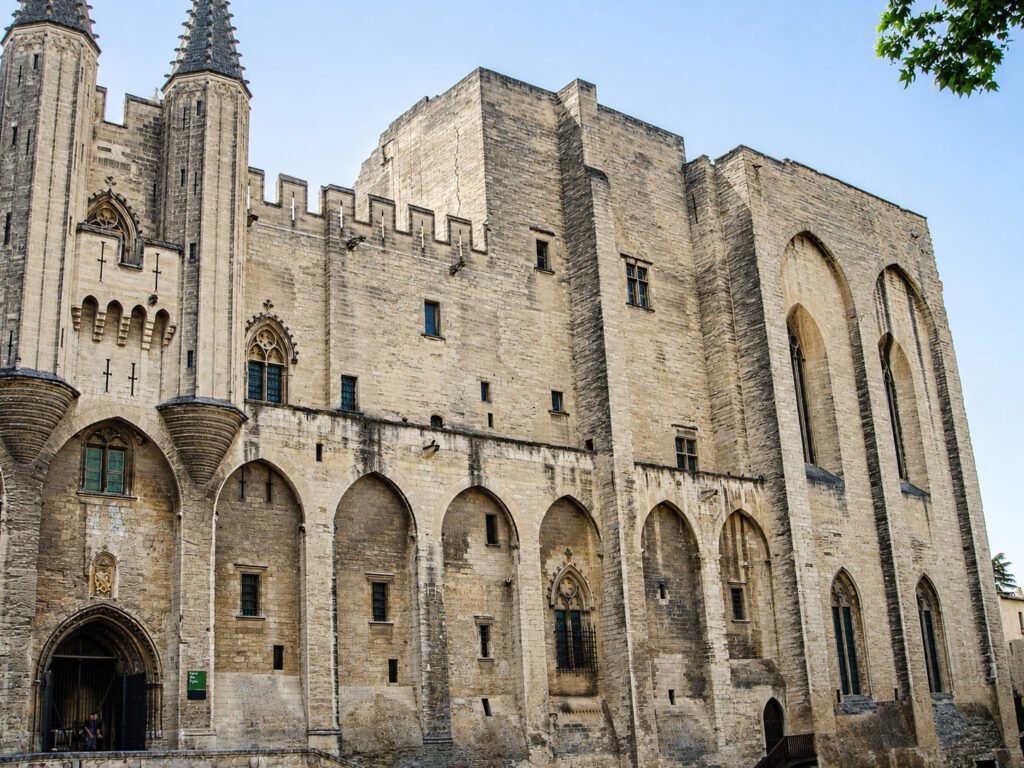
The Popes’ Palace is enormous, rising above the old city like a medieval fortress, which in many ways is exactly what it was. During the 14th century the papacy moved from Rome to Avignon, and a succession of popes built and expanded the palace until it became one of the largest Gothic buildings in Europe.
Inside were vast halls, chapels, staircases and rooms that gave some idea of the extraordinary wealth and power of the medieval Church.
Avignon itself is still surrounded by its old walls, and between the palace, narrow streets, squares and the remains of the famous bridge stretching partway across the Rhône, there is history almost everywhere you look.
With Avignon explored, we collected the car and continued east towards Menton.
Menton sits right on the Italian border and, for us, its main attraction was practical rather than romantic. We needed somewhere to return the hire car and catch a train into Italy.
It is an attractive enough seaside town, with pastel buildings climbing the hills and a distinctly Italian feel creeping in as you get closer to the border.
But I have never entirely understood the great love affair with the Côte d’Azur.
The sea is certainly blue and the towns are undeniably pretty, but there are also stony beaches, dusty hillsides, traffic and an astonishing number of people attempting to enjoy the same small piece of coastline at the same time.
Perhaps I am missing something.
In Menton we stayed at Hotel Lemon, another budget find that turned out to be excellent, and finished the day with a very satisfying steak dinner at a restaurant nearby.
The following morning we would hand back the car, shoulder the bags again and catch the train across the border.
Italy was next.