
West to the Coast – Caminha
Leaving the heat of inland Portugal for the Minho and the Atlantic
After five days in Bragança, we had had enough of the heat.
And the dust.
Especially the dust.
So we packed up the tent, shook out as much fine red Portuguese dirt as we could and headed west.
Vaguely in the direction of the coast.
As usual, we had a destination.
Sort of.
The drive across northern Portugal was beautiful.
The countryside remained mountainous and rugged, with forested hills, deep valleys and villages scattered across the slopes.
The roads, however, continued their apparent campaign to keep us alert.
They were narrow.
They were winding.
They climbed steeply and then descended just as steeply.
And occasionally they produced a corner that seemed to have been designed by someone who considered visibility an unnecessary luxury.
It was challenging driving at times.
But absolutely worth it.
The views were magnificent.
Forested valleys opened beneath us, villages clung to hillsides and every so often the road would crest a ridge and reveal another enormous sweep of countryside ahead.
Gradually the landscape began to soften.
The hard, dry feel of the interior gave way to greener countryside.
More trees appeared.
The air felt different.
And eventually we began to feel that the Atlantic could not be too far away.
Our destination was Caminha.
Why Caminha?
No particularly good reason.
It sounded nice.
It was roughly where we wanted to go.
And there was a campsite.
That was more than enough.
This is, after all, how quite a few of our favourite places have been discovered.
We arrived at Camping Orbitur Caminha, just outside the town.
And immediately decided we had done rather well.
The campsite sat between the River Minho and the coast, with Spain visible across the water.
After the baked earth and red dust of Bragança, our pitch looked almost luxurious.
Grass.
Actual green grass.
Trees.
Shade.
Soft ground beneath the tent.
Perfect.
The weather was superb.
Warm and sunny during the day, but without the exhausting heat of the interior.
And in the evenings it cooled enough that sitting outside the tent became a pleasure rather than an endurance event.
We liked the place immediately.
The setting was lovely.
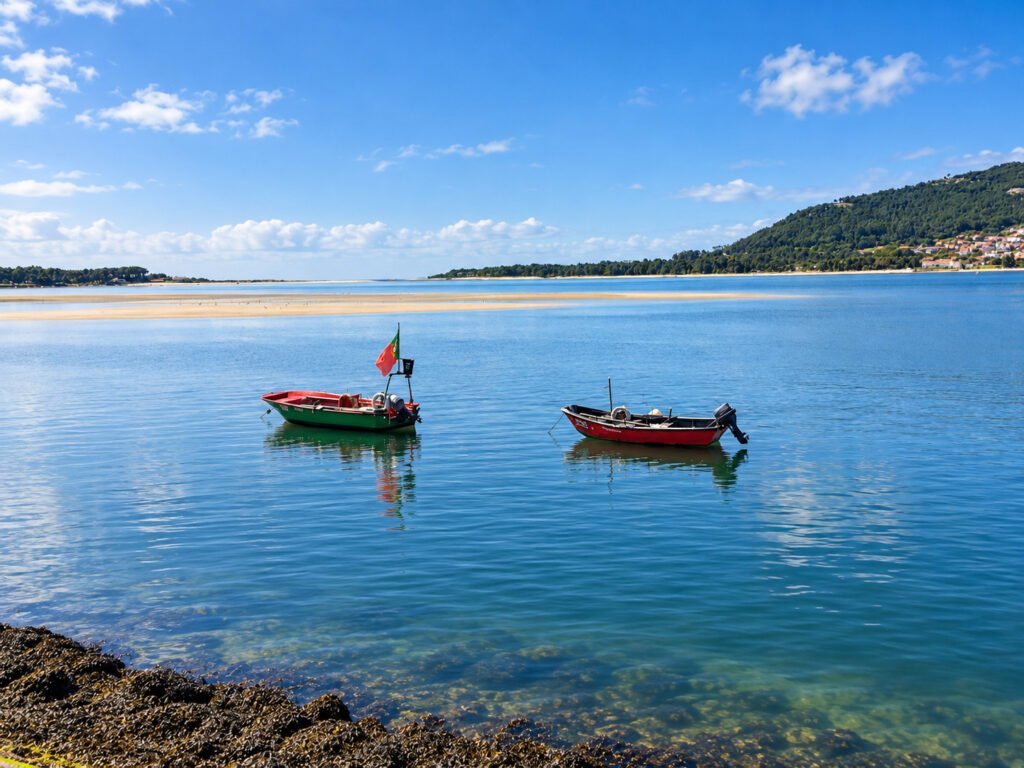
On one side was the broad River Minho, with Galicia sitting quietly across the water.
Small fishing boats bobbed gently on the river, their reflections moving across the calm surface.
It was peaceful.
Almost ridiculously peaceful.
The beach was just as inviting.
Although we were on the Atlantic coast, this particular stretch of water was sheltered by the headland to the north.
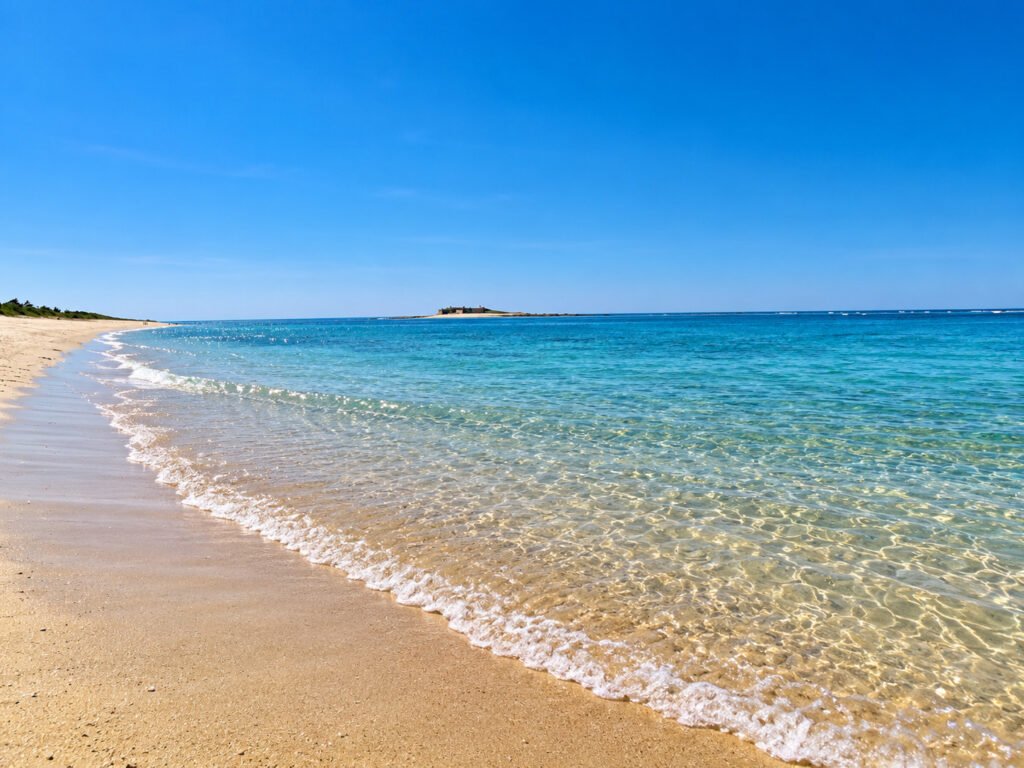
Instead of huge Atlantic breakers rolling directly onto the beach, the water here was calm and gentle.
Perfect for swimming.
The beach itself was broad and sandy, with dunes behind it and long views along the coast.
It became one of those places where you could quite happily wander down for half an hour and return considerably later.
There was something very easy about it.
River on one side.
Beach on the other.
Spain across the water.
And our little tent sitting beneath the trees in the middle of it all.
Caminha itself was only about a kilometre away.
An easy walk along the river took us straight into town.
So most days that was exactly what we did.
Sometimes for coffee.
Sometimes for lunch.
Usually both.
Caminha sits at the mouth of the Minho, right on Portugal’s northern frontier with Spain.
For centuries that position made the town strategically important.
This was not just a pretty riverside settlement.
It was a border town.
And border towns generally acquire walls.
Caminha was fortified during the medieval period and later strengthened as Portugal continued to defend its northern frontier.
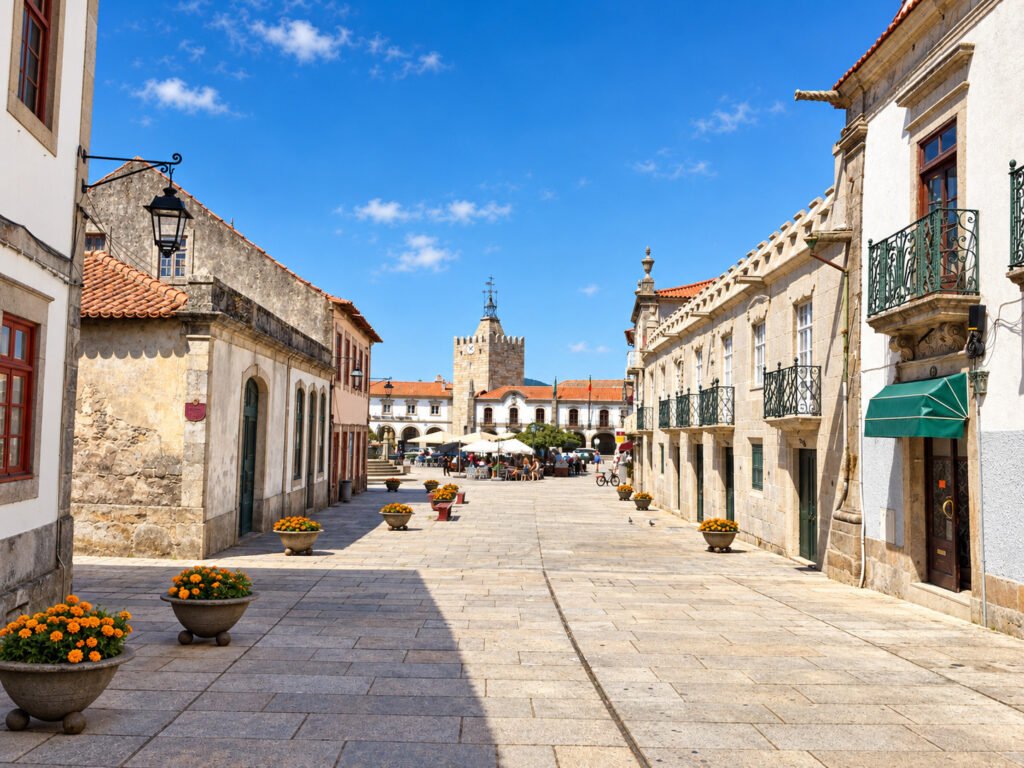
Parts of those old defences still survive, and the Clock Tower remains one of the most distinctive reminders of the town’s past.
Out in the estuary sits the small Fort of Ínsua, built offshore to help defend the mouth of the river.
These days the atmosphere is considerably more relaxed.
The old centre opens onto a broad square filled with cafés and restaurants.
Tables spill out beneath umbrellas.
People sit over coffee.
Lunch drifts into the afternoon.
And the whole place has that slightly effortless Portuguese habit of making doing very little seem like an entirely reasonable way to spend a day.
We approved.
Very much.
Our days quickly settled into a routine.
Walk into town.
Find coffee.
Wander around.
Have lunch.
Walk back beside the river.
Go down to the beach.
Perhaps swim.
Then head back to the campsite.
There was absolutely nothing complicated about any of it.
Which was precisely why it was so enjoyable.
In the evenings we would sit outside the tent beneath the trees.
The campsite would gradually quieten.
The light would fade.
And the sounds of the day would slowly disappear.
It was lovely.
Really lovely.
Caminha was one of those places we had chosen almost by accident and immediately wished we had more time for.
But eventually reality intruded.
Our guests at the house in France were due to leave.
Which meant that, inconveniently, we needed to go home.
And home was still a very long way away.
We had no intention of driving all the way back in one enormous motorway slog.
Where would be the fun in that?
Instead we planned to take several days.
We would head north, cross the border back into Spain, make our way towards the northern coast and then follow it east before eventually turning back towards France.
That was the plan.
It sounded perfectly sensible.
Which, in our experience, is usually when things become interesting.
Caminha had been exactly what we needed after the heat and dust of inland Portugal: green grass, shady trees, a calm sandy beach, the beautiful Minho and a lively little town within walking distance. We could easily have stayed longer. But France was calling, so once again the tent came down, the Kangoo was packed and we pointed ourselves north. Back to Spain.