
What to Eat and Drink in Sichuan, China – A Food Lover’s Guide
Sichuan Province, in southwestern China, is home to one of the world’s most famous and distinctive cuisines. Known for bold flavours, fragrant spices and fiery chillies, Sichuan food is an essential part of any visit to the region.
But there is much more to Sichuan cuisine than simply being spicy.
From the bubbling hotpots of Chengdu to delicate dumplings, smoky duck, fragrant noodle dishes and centuries-old tea traditions, Sichuan offers an extraordinary variety of food and drink.
The province has a long culinary history shaped by its fertile agricultural land, mountain landscapes, trading routes and the communities that have lived here for centuries.
Sichuan cuisine, known locally as Chuan Cai (川菜), is recognised as one of China’s Eight Great Culinary Traditions. Its reputation extends far beyond China, with Sichuan restaurants found throughout the world.
Chengdu, the provincial capital, was designated a UNESCO City of Gastronomy in 2010, recognising the city’s rich culinary heritage and vibrant food culture.
One of the defining features of Sichuan cuisine is the combination of chillies and Sichuan peppercorns, which creates the distinctive sensation known as málà (麻辣).
The word má describes the tingling, numbing sensation produced by Sichuan peppercorns, while là refers to the heat of chilli peppers.
Interestingly, Sichuan peppercorns are not actually peppercorns. They are the dried husks of plants in the citrus family, which explains their distinctive floral, slightly lemony aroma.
Although Sichuan is famous for intense flavours, its traditional cooking includes sweet, sour, salty, smoky, fragrant and savoury dishes.
For travellers interested in discovering local food, few destinations in China are more rewarding.
Sichuan’s Most Famous Food Experience
1. Sichuan Hotpot – A Fiery Culinary Tradition
四川火锅 – Sì Chuān Huǒ Guō
No visit to Sichuan would be complete without experiencing traditional Sichuan hotpot.
Hotpot is one of the province’s most famous meals and an important part of its social dining culture.
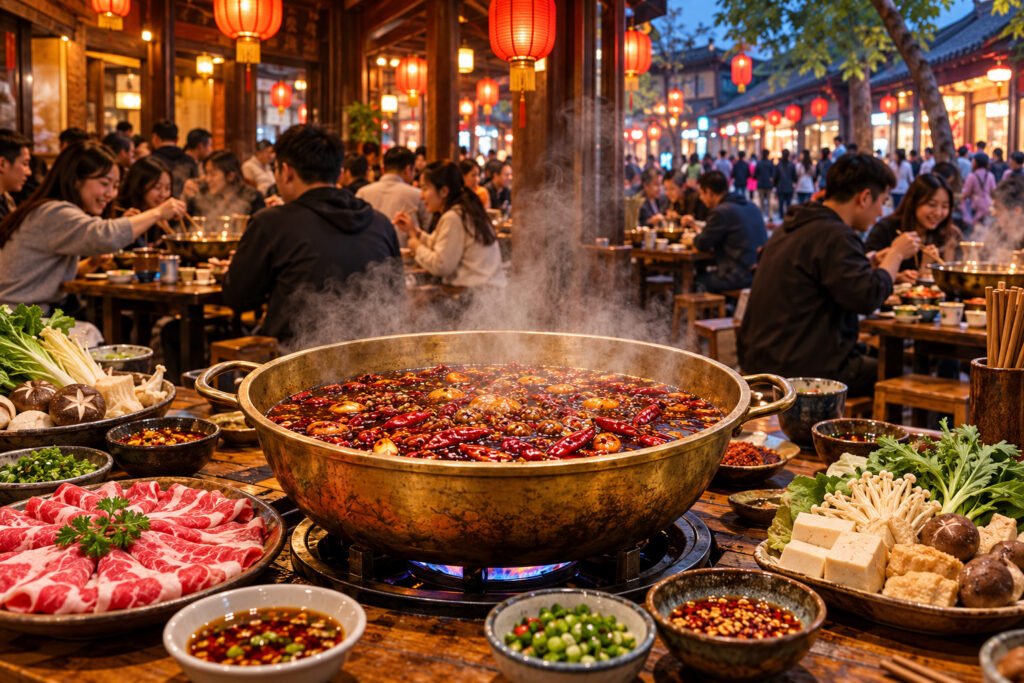
A large pot of bubbling broth is placed in the centre of the table, surrounded by plates of thinly sliced meat, vegetables, mushrooms, tofu and noodles.
Diners cook their ingredients in the broth, removing them when ready and dipping them into their preferred sauces.
The meal is interactive, informal and frequently lasts for several hours.
What Makes Sichuan Hotpot Different?
Traditional Sichuan hotpot is famous for its intensely flavoured red broth.
The broth is often prepared with beef tallow, dried chillies, Sichuan peppercorns and a mixture of aromatic spices.
The result is a rich, fragrant and often extremely spicy soup base.
The combination of chilli heat and the tingling sensation of Sichuan peppercorns produces the characteristic málà flavour.
For anyone unfamiliar with Sichuan peppercorns, the numbing sensation can be quite surprising. It is different from the ordinary heat produced by chilli peppers.
The broth is intended primarily for cooking the ingredients rather than being consumed as a bowl of soup.
The Divided Hotpot – Something for Everyone
One of the most popular options is a divided hotpot, known as yuanyang guo (鸳鸯锅).
The pot contains two separate broths, usually one spicy and one mild.
This allows diners to cook their ingredients in whichever broth they prefer.
It is an excellent option for groups with different tolerances for chilli heat.
Restaurants generally offer a wide selection of ingredients, including:
- Thinly sliced beef, pork and lamb.
- Mushrooms and leafy vegetables.
- Tofu and bean-curd products.
- Potatoes, lotus root and other vegetables.
- Fish balls, meatballs and seafood.
- Noodles and other starches.
- Traditional offal and speciality meats.
Hotpot as a Social Experience
Hotpot is much more than simply a meal.
Friends, families and colleagues gather around the table to cook, eat, talk and enjoy an evening together.
Restaurants can be lively, noisy and filled with the fragrance of bubbling chilli oil.
It is one of the most enjoyable ways to experience Chengdu’s food culture.
And if the spicy broth proves a little ambitious, the milder half of a divided hotpot offers a convenient escape.
Where to Try It
Hotpot restaurants throughout Sichuan, particularly Chengdu. Traditional neighbourhood restaurants provide an excellent experience.
What to Expect
An interactive meal with bubbling broths, a large selection of ingredients and the distinctive numbing heat of Sichuan peppercorns.
Pro Tip
Choose a divided hotpot if you are unsure about the chilli heat. Start with a modest amount of spicy broth and remember that ingredients continue absorbing flavour as they cook.
Traditional Sichuan Dishes You Must Try
2. Mapo Tofu
麻婆豆腐 – Má Pó Dòu Fu
One of Sichuan’s most internationally recognised dishes is Mapo Tofu.
Originating in Chengdu during the Qing Dynasty, the dish is traditionally associated with a woman known as Chen Mapo, who operated a small restaurant serving tofu to local customers.
The name is commonly translated as Pockmarked Old Woman’s Tofu, referring to the nickname of its supposed creator.
Soft tofu is cooked in a rich sauce made with fermented chilli-bean paste, Sichuan peppercorns and minced meat, traditionally beef.
The combination creates an intensely savoury dish with the characteristic numbing heat of Sichuan cuisine.
A good Mapo Tofu should have a balance of heat, fragrance, saltiness and deep umami flavour rather than simply being overpoweringly spicy.
It is usually served with steamed rice, which helps absorb the sauce.
Where to Try It
Chengdu and traditional Sichuan restaurants throughout the province.
What to Expect
Soft tofu in a rich, savoury, spicy sauce with Sichuan peppercorns and fermented chilli-bean paste.
3. Tea-Smoked Duck
樟茶鸭 – Zhāng Chá Yā
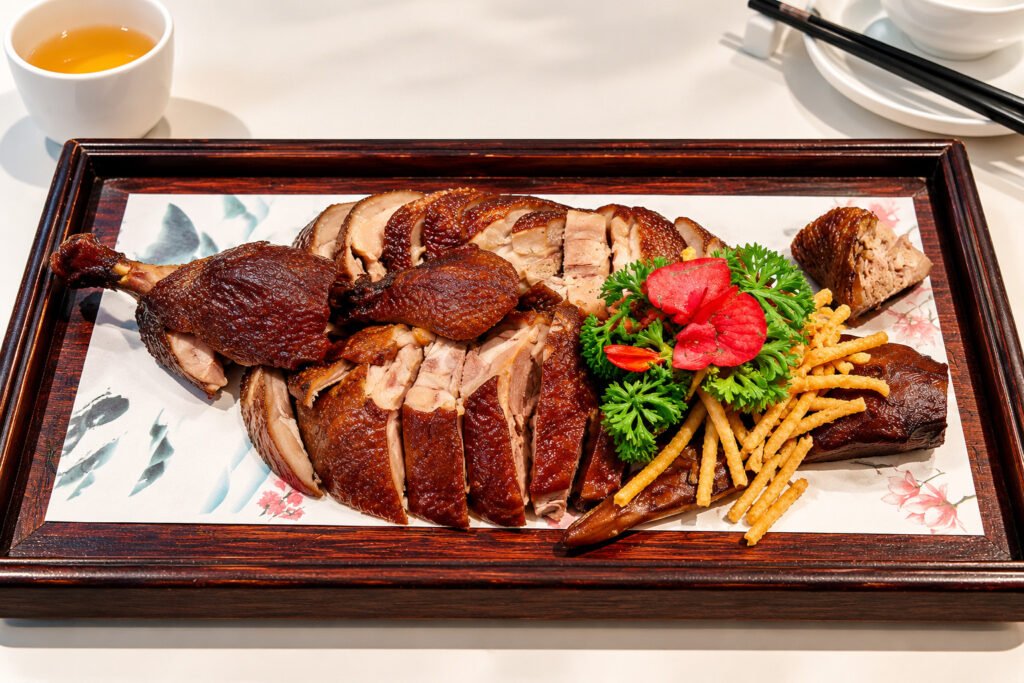
Tea-Smoked Duck is one of Sichuan’s most distinctive traditional dishes and a wonderful example of the province’s more subtle and aromatic cooking techniques.
Also known as Camphor-Tea Smoked Duck, it combines fragrant smoking ingredients with traditional Chinese methods of preparing duck.
The duck is first seasoned with salt, Sichuan peppercorns and other spices.
It is then smoked using a mixture that traditionally includes tea leaves and aromatic materials such as camphor wood or leaves, depending on the recipe.
Some preparations also use rice, sugar and other ingredients to help produce the distinctive fragrance.
After smoking, the duck is often steamed until tender before being finished at high heat or fried to develop crisp skin.
The result is beautifully fragrant meat with a smoky aroma, tender texture and crisp exterior.
Unlike Sichuan’s chilli-heavy dishes, Tea-Smoked Duck is appreciated primarily for its balance of savoury seasoning, smoke and aromatic flavour.
It is traditionally associated with Sichuan banquet cooking and is particularly worth seeking out for visitors who want to discover a different side of the province’s cuisine.
Where to Try It
Traditional Sichuan restaurants in Chengdu, particularly establishments serving classic regional or banquet-style dishes.
What to Expect
Tender duck with crisp skin, aromatic spices and a distinctive tea-smoked fragrance.
Pro Tip
Tea-Smoked Duck is a particularly good choice when you want a break from Sichuan’s chilli-heavy dishes without sacrificing flavour.
4. Kung Pao Chicken
宫保鸡丁 – Gōng Bǎo Jī Dīng
Kung Pao Chicken is one of Sichuan’s most famous dishes, although the traditional preparation can be quite different from the sweeter versions served in Western Chinese restaurants.
The dish combines diced chicken, dried chillies, peanuts and spring onions in a savoury sauce balanced with vinegar and a little sugar.
Its name is associated with Ding Baozhen, a nineteenth-century Qing Dynasty official who served as governor of Sichuan.
Unlike some of Sichuan’s hotter dishes, Kung Pao Chicken is characterised by a balance of sweetness, sourness and chilli heat.
The peanuts provide crunch, while the chicken remains tender.
Where to Try It
Traditional Sichuan restaurants throughout the province, especially Chengdu.
What to Expect
Tender chicken, crunchy peanuts and a savoury sauce with balanced sweet, sour and spicy flavours.
5. Twice-Cooked Pork
回锅肉 – Huí Guō Ròu
Twice-Cooked Pork is one of Sichuan’s most popular traditional home-style dishes.
As its name suggests, the pork is cooked twice.
First, pork belly is simmered until tender. It is then sliced and stir-fried with ingredients such as fermented chilli-bean paste, garlic shoots and sometimes fermented black beans.
The second cooking develops a rich flavour and gives the edges of the pork a slightly caramelised texture.
The combination of tender meat, fragrant sauce and fresh vegetables makes this one of Sichuan’s most satisfying traditional dishes.
Where to Try It
Traditional Sichuan restaurants throughout the province.
What to Expect
Tender slices of pork with lightly caramelised edges and a rich, savoury chilli-bean sauce.
6. Fish-Fragrant Aubergine
鱼香茄子 – Yú Xiāng Qié Zi
Despite its name, Fish-Fragrant Aubergine usually contains no fish.
The name refers to a traditional Sichuan seasoning style historically associated with preparing fish.
Aubergine is cooked in a fragrant sauce made with garlic, ginger, chilli-bean paste, vinegar, sugar and spring onions.
The finished dish combines sweet, sour, savoury and spicy flavours.
The soft aubergine absorbs the sauce, making it particularly delicious with steamed rice.
It is an excellent dish for visitors wanting to experience Sichuan’s complex seasoning without necessarily ordering meat, although the ingredients should be checked if a strictly vegetarian dish is required.
Where to Try It
Sichuan restaurants throughout the province.
What to Expect
Soft aubergine coated in a fragrant, sweet, sour and spicy sauce.
7. Sichuan Boiled Fish
水煮鱼 – Shuǐ Zhǔ Yú
Sichuan Boiled Fish is one of the region’s most visually dramatic dishes.
Thinly sliced fish is cooked in a seasoned broth and served beneath a generous layer of dried chillies and Sichuan peppercorns.
Despite its English name, this is anything but plain boiled fish.
The combination of chilli oil, garlic, peppercorns and fragrant spices creates an intensely flavoured dish.
The fish itself is generally tender, contrasting with the powerful seasoning surrounding it.
A similar dish, Sichuan Boiled Beef (水煮牛肉), uses slices of beef instead.
Where to Try It
Sichuan restaurants throughout the province.
What to Expect
Tender fish in a richly seasoned broth with plenty of chillies and Sichuan peppercorns.
Pro Tip
This is a substantial dish best shared with others and accompanied by steamed rice.
Sichuan’s Famous Noodles, Dumplings and Street Food
8. Dan Dan Noodles
担担面 – Dàn Dàn Miàn
Dan Dan Noodles are one of Sichuan’s best-known noodle dishes.
The name comes from the carrying pole, or dan dan, traditionally used by street vendors to transport their noodles and cooking equipment.
The dish generally consists of wheat noodles served with a spicy, savoury sauce containing chilli oil, Sichuan peppercorns, minced pork and preserved vegetables.
Some versions include sesame paste, although preparation varies between restaurants.
The noodles are mixed thoroughly before eating, allowing the sauce to coat each strand.
In Sichuan, Dan Dan Noodles are often served in relatively small bowls, making them ideal for sampling alongside other snacks.
Where to Try It
Chengdu noodle shops and traditional snack restaurants.
What to Expect
Wheat noodles with chilli oil, preserved vegetables and a rich, savoury sauce.
9. Zhong Dumplings
钟水饺 – Zhōng Shuǐ Jiǎo
Chengdu is famous for its traditional dumplings, and Zhong Dumplings are among the most popular.
These small dumplings are usually filled with seasoned minced pork and boiled until tender.
What makes them distinctive is the sauce.
Rather than being served in soup, Zhong Dumplings are coated in a rich mixture of sweetened soy sauce, garlic and chilli oil.
The combination of sweetness, savouriness and gentle heat creates a wonderfully balanced flavour.
Where to Try It
Traditional snack restaurants in Chengdu.
What to Expect
Tender pork dumplings with sweetened soy sauce, garlic and chilli oil.
10. Long Chao Shou – Sichuan Wontons
龙抄手 – Lóng Chāo Shǒu
Another Chengdu speciality is Long Chao Shou, a type of delicate wonton.
The wontons are filled with seasoned meat and wrapped in thin sheets of dough.
They may be served in a clear broth or with a spicy red chilli-oil sauce.
The name comes from a famous Chengdu restaurant established in the 1940s.
Today, Long Chao Shou has become closely associated with Chengdu’s traditional snack culture.
For visitors who prefer milder food, the clear-broth version is an excellent choice.
Where to Try It
Chengdu snack restaurants.
What to Expect
Delicate meat-filled wontons served in clear broth or a spicy red-oil sauce.
11. Sweet Water Noodles
甜水面 – Tián Shuǐ Miàn
One of Chengdu’s more unusual noodle specialities is Sweet Water Noodles.
Unlike ordinary thin noodles, these are thick, chewy strands made from wheat flour.
They are served with a sauce combining sweetened soy sauce, chilli oil, garlic and sesame.
The result is a distinctive balance of sweet, spicy and savoury flavours.
The noodles have a particularly firm, chewy texture that sets them apart from other Sichuan noodle dishes.
Where to Try It
Traditional noodle and snack shops in Chengdu.
What to Expect
Thick, chewy noodles with a distinctive sweet, spicy and savoury sauce.
12. Yibin Burning Noodles
宜宾燃面 – Yí Bīn Rán Miàn
The city of Yibin, in southern Sichuan, is famous for its Burning Noodles.
These dry-style noodles are tossed with chilli oil, sesame oil, peanuts, preserved vegetables and other seasonings.
Unlike noodle soups, the dish contains very little liquid.
The name Burning Noodles is often explained by the noodles’ low moisture and generous coating of oil, although it should not be taken as an invitation to test whether they will actually burn.
The finished dish is fragrant, rich and full of contrasting textures.
Where to Try It
Yibin, with versions also available in Chengdu.
What to Expect
Dry-style noodles with chilli oil, peanuts and preserved vegetables.
13. Bobo Chicken
钵钵鸡 – Bō Bō Jī
Despite its name, Bobo Chicken is not simply a chicken dish.
Originating in the Leshan region, it consists of skewered ingredients served in a large bowl of seasoned chilli oil or broth.
The ingredients can include chicken, vegetables, mushrooms, tofu and other meats.
Customers select their preferred skewers, which are usually already cooked and served coated in the flavoured dressing.
Some restaurants offer a spicy red-oil version, while others prepare a fragrant green-peppercorn dressing.
It is a particularly enjoyable street-food experience because it allows visitors to sample many different ingredients.
Where to Try It
Leshan and Chengdu.
What to Expect
Cooked skewers coated in a spicy, aromatic dressing, often served chilled or at room temperature.
14. Spicy Rabbit Head
麻辣兔头 – Má Là Tù Tóu
One of Chengdu’s more unusual specialities is spicy rabbit head.
Rabbit is a traditional ingredient in Sichuan cuisine, and the heads are commonly braised or cooked with chillies, Sichuan peppercorns and aromatic spices.
The finished dish is generally eaten by hand, with diners working around the bones to remove the meat.
Although it may be confronting for visitors unfamiliar with the dish, rabbit head is a popular snack among many Chengdu residents.
It is often enjoyed with beer during an evening out.
Where to Try It
Chengdu snack shops and speciality rabbit restaurants.
What to Expect
Richly seasoned rabbit head with chilli and Sichuan peppercorns, traditionally eaten by hand.
15. Cold-Eating Rabbit
冷吃兔 – Lěng Chī Tù
Another rabbit speciality comes from Zigong, a city with a long history of salt production.
Cold-Eating Rabbit consists of small pieces of rabbit meat cooked with dried chillies, Sichuan peppercorns, ginger and other spices.
The dish is often served at room temperature or cold, allowing the flavours to develop.
Despite the name, the rabbit is thoroughly cooked before being cooled.
The finished meat is spicy, fragrant and slightly chewy.
Where to Try It
Zigong and restaurants specialising in southern Sichuan cuisine.
What to Expect
Small pieces of rabbit coated in fragrant chilli oil and Sichuan peppercorns.
More Regional Sichuan Foods Worth Trying
16. Sweet-Skin Duck
甜皮鸭 – Tián Pí Yā
A speciality of Leshan, Sweet-Skin Duck is prepared by cooking duck with aromatic seasonings before finishing it with a sweet glaze.
The skin develops a glossy appearance and a distinctive combination of sweetness and savoury flavour.
It is sold in restaurants and takeaway shops and is popular as both a snack and a shared dish.
Where to Try It
Leshan, particularly local takeaway shops and traditional restaurants.
What to Expect
Tender duck with glossy, sweet-savoury skin.
17. Qiaojiao Beef Soup
跷脚牛肉 – Qiāo Jiǎo Niú Ròu
Another Leshan speciality is Qiaojiao Beef, a comforting soup containing thinly sliced beef and sometimes assorted beef offal.
The broth is flavoured with a mixture of herbs and spices.
Compared with Sichuan’s chilli-heavy dishes, the soup can be surprisingly delicate.
It is often served with separate dipping sauces, allowing diners to add extra heat.
Where to Try It
Leshan.
What to Expect
A fragrant beef broth, often served with slices of meat and optional offal.
18. Sichuan Spicy Cold Noodles
凉面 – Liáng Miàn
Cold noodles are particularly popular during Sichuan’s hot summer months.
Wheat noodles are cooked, cooled and tossed with chilli oil, vinegar, garlic, soy sauce and sometimes sesame paste.
They are often topped with shredded cucumber, bean sprouts or other vegetables.
The combination of cool noodles and spicy dressing is wonderfully refreshing.
Where to Try It
Street-food stalls and noodle shops throughout Sichuan.
What to Expect
Cool wheat noodles with a spicy, tangy dressing.
19. Fuqi Feipian – Sliced Beef in Chilli Oil
夫妻肺片 – Fū Qī Fèi Piàn
One of Chengdu’s best-known cold dishes is Fuqi Feipian.
The name is often translated as Husband and Wife Lung Slices, although modern versions commonly feature sliced beef and various beef offal rather than lung.
The meat is served cold in a richly seasoned sauce containing chilli oil, Sichuan peppercorns, garlic and other spices.
It has a distinctive combination of tender meat, aromatic dressing and numbing heat.
The dish is associated with a husband-and-wife team who popularised their version in Chengdu during the twentieth century.
Where to Try It
Chengdu and Sichuan restaurants throughout the province.
What to Expect
Cold slices of beef and sometimes offal in a richly spiced chilli-oil dressing.
What to Drink in Sichuan
1. Traditional Sichuan Gaiwan Tea
盖碗茶 – Gài Wǎn Chá
Perhaps the most enjoyable drink-related experience in Sichuan is visiting a traditional Chengdu teahouse.
Tea drinking has been an important part of everyday life in the city for centuries.
Locals gather to socialise, play mahjong, read newspapers or simply watch the world go by.
Tea is often served in a gaiwan, a traditional three-piece vessel consisting of a cup, lid and saucer.
The lid is used to hold back the tea leaves while drinking.
Jasmine tea and green tea are popular choices, although teahouses offer a range of varieties.
Some traditional establishments have attendants who refill cups using long-spouted metal kettles, sometimes pouring the hot water from an impressive distance.
One of the best places to experience this tradition is People’s Park in Chengdu.
Where to Try It
Traditional Chengdu teahouses, particularly Heming Teahouse in People’s Park.
Best Time
Morning or afternoon, when local teahouses are busy with everyday activity.
Pro Tip
Order a pot of tea and allow at least an hour. Watching the activity around you is as much a part of the experience as the tea itself.
2. Sichuan Green Tea
四川绿茶 – Sì Chuān Lǜ Chá
Sichuan has a long history of tea cultivation, supported by its humid climate and mountainous terrain.
One of the province’s famous teas is Mengding Ganlu, produced around Mengding Mountain near Ya’an.
This delicate green tea is known for its fresh aroma and smooth flavour.
Tea cultivation in the Mengding region has a history extending back many centuries, and the mountain remains one of China’s historically significant tea-growing areas.
Another well-known tea is Zhuyeqing, or Bamboo Leaf Green, associated with Mount Emei.
Where to Try It
Teahouses and specialist tea shops throughout Sichuan, particularly around Ya’an and Mount Emei.
What to Expect
Fragrant green teas ranging from delicate and refreshing to fuller, more vegetal flavours.
3. Wuliangye Baijiu
五粮液 – Wǔ Liáng Yè
Sichuan is one of China’s most important centres for baijiu, the country’s traditional distilled spirit.
Among its most famous brands is Wuliangye, produced in Yibin.
The name translates to Five Grains Liquid, reflecting the mixture of grains traditionally used in its production.
Wuliangye is a strong-aroma baijiu known for its complex fragrance and powerful flavour.
It is usually served in small glasses and consumed during meals or celebrations.
Standard Wuliangye products are commonly around 52% alcohol by volume, considerably stronger than most Western wines or beers.
Where to Try It
Restaurants and specialist liquor shops throughout Sichuan, particularly Yibin.
What to Expect
A powerful, aromatic distilled spirit traditionally served in small glasses.
4. Luzhou Laojiao Baijiu
泸州老窖 – Lú Zhōu Lǎo Jiào
Another famous Sichuan spirit comes from Luzhou, a city with a centuries-old distilling tradition.
Luzhou Laojiao is particularly associated with its historic fermentation cellars, some of which date back to the Ming Dynasty.
The traditional production process uses fermented grains and underground mud cellars to develop the distinctive aromas associated with strong-aroma baijiu.
The drink has considerable cultural importance in Sichuan and remains one of China’s most recognisable baijiu brands.
Where to Try It
Luzhou and restaurants throughout Sichuan.
What to Expect
A strong, highly aromatic traditional Chinese distilled spirit.
5. Sichuan Craft Beer
四川精酿啤酒 – Sì Chuān Jīng Niàng Pí Jiǔ
Although tea and baijiu have much longer histories in Sichuan, craft beer has become increasingly popular in Chengdu.
The city has a growing selection of breweries, beer bars and restaurants offering locally produced beers.
Styles range from light lagers to IPAs, wheat beers and darker varieties.
Beer is particularly popular alongside hotpot, grilled skewers and other spicy dishes.
Where to Try It
Chengdu’s bars, restaurants and craft breweries.
What to Expect
A range of locally brewed styles, from refreshing lagers to more strongly flavoured craft beers.
6. Sour Plum Drink
酸梅汤 – Suān Méi Tāng
One of the most refreshing non-alcoholic drinks commonly available in Sichuan is sour plum drink.
Made using smoked plums, sugar and sometimes herbs such as liquorice or hawthorn, it has a distinctive sweet-and-sour flavour.
Usually served chilled, it is especially popular during hot weather.
Although not unique to Sichuan, it is widely available in restaurants and makes a refreshing accompaniment to spicy food.
Where to Try It
Hotpot restaurants, noodle shops and traditional eateries throughout Sichuan.
What to Expect
A chilled, sweet-and-sour drink with a lightly smoky plum flavour.
7. Bingfen – Sichuan Ice Jelly
冰粉 – Bīng Fěn
Although technically a dessert rather than a drink, Bingfen deserves a place in any discussion of Sichuan refreshments.
This popular local speciality consists of a delicate, translucent jelly served chilled with brown sugar syrup.
Depending on the vendor, toppings may include crushed peanuts, sesame seeds, raisins, fruit or small sticky-rice balls.
Traditional ice jelly is made using seeds from the Nicandra physalodes plant, although modern commercial versions may use prepared jelly mixes.
The finished dessert is light, cooling and refreshing.
It is particularly popular after a spicy hotpot meal.
Where to Try It
Chengdu street-food stalls, dessert shops and hotpot restaurants.
What to Expect
A light, chilled jelly with brown sugar syrup and optional toppings.
Pro Tip
Try Bingfen after hotpot. Its cool, delicate texture provides a welcome contrast to an intensely spicy meal.
A Regional Food Guide to Sichuan
Where to Find Sichuan’s Regional Specialities
Although Sichuan cuisine is often described as a single style, food traditions vary considerably across the province.
Chengdu is famous for hotpot, noodles and traditional snacks, while Leshan, Zigong, Yibin and Luzhou have their own distinctive regional dishes and drinks.
| Destination | Foods and Drinks to Try |
|---|---|
| Chengdu | Sichuan hotpot, Mapo Tofu, Tea-Smoked Duck, Dan Dan Noodles, Zhong Dumplings, rabbit head and gaiwan tea. |
| Leshan | Bobo Chicken, Sweet-Skin Duck, Qiaojiao Beef and traditional tofu dishes. |
| Zigong | Cold-Eating Rabbit, spicy beef and traditional salt-merchant cuisine. |
| Yibin | Burning Noodles, regional preserved vegetables and Wuliangye baijiu. |
| Luzhou | Traditional Sichuan dishes, strong-aroma baijiu and Luzhou Laojiao. |
| Ya’an and Mount Emei | Mengding green tea, Bamboo Leaf Green tea and local mountain specialities. |
Worth Knowing
Chongqing is also famous for hotpot and spicy cuisine. Although historically part of Sichuan, it has been a separate municipality since 1997. Its culinary traditions remain closely related to those of Sichuan.
Practical Tips for Eating in Sichuan
Understanding Sichuan’s Spicy Food
Do not assume every Sichuan dish will be extremely spicy.
The cuisine includes many different flavour combinations, and dishes such as Kung Pao Chicken, clear-broth wontons and traditional soups can be relatively mild.
It is also useful to understand the difference between chilli heat and Sichuan peppercorns.
Chillies provide the familiar burning heat, while Sichuan peppercorns produce a tingling, numbing sensation that can initially feel quite unusual.
The combination is known as málà and is one of the defining features of Sichuan cuisine.
Pro Tip
If you are uncertain about the heat level, order a dish with mild seasoning first. A divided hotpot is also an excellent introduction to Sichuan’s spicier flavours.
Ordering Food in Sichuan
Some of the best meals are served in small neighbourhood restaurants and noodle shops where English menus are uncommon.
Keep the Chinese names of the dishes you want to try saved on your phone.
A translation app is extremely useful, particularly when asking about ingredients or explaining dietary requirements.
Photographs on menus can also make ordering easier, although it is worth checking what is actually included in each dish.
Pro Tip
Look for busy neighbourhood restaurants where local residents are eating. These can be excellent places to discover traditional dishes beyond the main tourist areas.
Sharing Dishes
Many Sichuan meals are designed for sharing.
Rather than ordering one main course per person, diners often select several dishes to place in the centre of the table.
This is a particularly good way to experience the variety of Sichuan cooking.
Choose a mixture of meat, vegetables, noodles and milder dishes to balance the stronger flavours.
For travellers eating alone, traditional noodle shops and snack restaurants are excellent options because many dishes are served in smaller portions.
Pro Tip
Order several different dishes when eating with others. Sichuan cuisine is best appreciated through its contrasting flavours rather than a single speciality.
When and Where to Eat
Breakfast in Sichuan often includes noodles, wontons, steamed buns and other simple dishes.
Lunch is a good opportunity to visit noodle shops or restaurants serving traditional home-style meals.
Hotpot is particularly popular in the evening, when friends and families gather for longer meals.
Street-food stalls and snack shops provide opportunities to sample local dishes throughout the day.
Food availability can vary by neighbourhood, season and restaurant opening hours.
Pro Tip
Do not overlook Chengdu’s traditional snack restaurants. They are ideal for trying several small dishes such as Zhong Dumplings, Long Chao Shou and Dan Dan Noodles.
Final Thoughts – Discovering Sichuan Through Its Food
Sichuan is one of the world’s great food destinations, offering an extraordinary combination of flavours, culinary traditions and regional specialities.
Although the province is famous for chillies and Sichuan peppercorns, its cuisine is far more varied than its reputation for fiery food might suggest.
Traditional Sichuan hotpot remains one of the essential experiences, combining rich, aromatic broths with the pleasure of sharing a meal around the table.
Mapo Tofu, Dan Dan Noodles, Kung Pao Chicken and Twice-Cooked Pork demonstrate the distinctive seasoning techniques that have made Sichuan cuisine famous around the world.
But dishes such as Tea-Smoked Duck reveal another side of the region’s cooking, where delicate smoking techniques, fragrant spices and careful preparation are just as important as chilli heat.
Regional specialities add even more variety, from Leshan’s Bobo Chicken and Sweet-Skin Duck to Yibin Burning Noodles and Zigong’s Cold-Eating Rabbit.
And beyond the food itself, Sichuan’s drinking culture is equally fascinating.
Traditional Chengdu teahouses remain important social spaces, while the province’s famous green teas and historic baijiu distilleries reflect centuries of agricultural and cultural history.
For visitors, discovering Sichuan through its food is one of the most rewarding parts of travelling in southwestern China.
Whether you are sitting in a traditional Chengdu teahouse, sharing a bubbling hotpot with friends or sampling a bowl of noodles in a neighbourhood restaurant, Sichuan’s food culture offers experiences that go far beyond simply eating.
It is an essential part of understanding the province and one of the best reasons to return.
Food traditions, ingredients and preparations vary by restaurant and region. Some dishes contain pork, beef, offal, peanuts, sesame or other allergens. Always confirm ingredients when necessary. Alcoholic drinks, particularly baijiu, can be considerably stronger than beer or wine.