
What to Eat and Drink in Shangri-La – Tibetan Food and a Surprising French Wine Connection
As you travel north through Yunnan towards Shangri-La, the food changes noticeably. The rice noodles, spices and tropical ingredients common in other parts of the province give way to the hearty dishes of the Tibetan Plateau.
At approximately 3,200 metres above sea level, Shangri-La has a much colder climate than Kunming or Dali. Traditional food reflects this environment, with yak meat, highland barley, potatoes, dairy products and warming soups forming an important part of the local diet.
The region’s food traditions have developed over centuries, influenced by Tibetan culture, mountain agriculture and the ancient trading routes that connected Yunnan with Tibet.
But Shangri-La also has a culinary surprise: a tradition of producing red wine introduced by European Catholic missionaries more than a century ago.
From traditional yak yoghurt and Nixi Clay-Pot Chicken to fragrant matsutake mushrooms and locally produced red wine, here are eight foods and drinks worth discovering in Shangri-La.
Shangri-La’s Most Surprising Food Story
1. Shangri-La Red Wine – A Legacy of French Missionaries
香格里拉葡萄酒 – Xiāng Gé Lǐ Lā Pú Táo Jiǔ
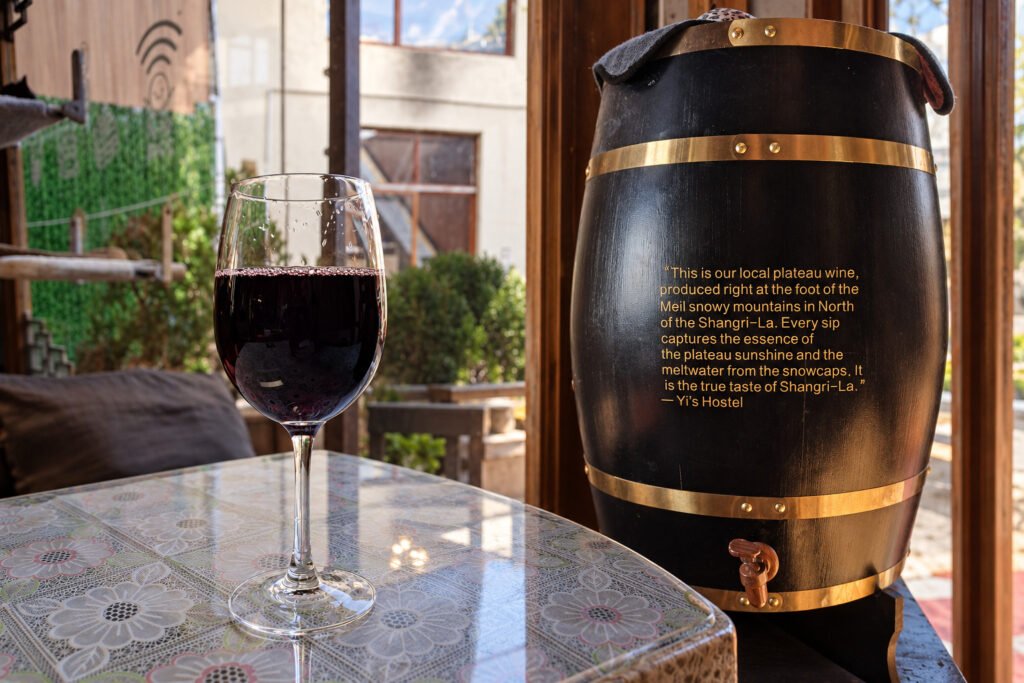
One of the most unexpected discoveries in Shangri-La is its locally produced red wine.
Although China is not traditionally associated with the famous wine regions of Europe, the mountainous valleys of northwestern Yunnan have a winemaking history stretching back more than a century.
The story begins in the nineteenth century, when French Catholic missionaries travelled into the remote Tibetan areas of northwestern Yunnan.
Missionaries from the Paris Foreign Missions Society established religious communities in the region and introduced European grapevines, partly to produce wine for Catholic Mass.
The French Missionaries and the Vineyards of Cizhong
One of the most important centres of this winemaking tradition was Cizhong, a small village in the Lancang River valley near Deqin, north of Shangri-La.
Catholic missionary activity developed in the area during the nineteenth century. The present Cizhong church was constructed in the early twentieth century following the destruction of an earlier mission during unrest in 1905.
French missionaries, later joined by Swiss missionaries, introduced grape cultivation and European winemaking techniques to local communities.
Remarkably, grape cultivation survived long after the missionaries departed China in the middle of the twentieth century.
Local families preserved elements of the winemaking tradition, and commercial vineyard development expanded in the region during the late twentieth century.
Wine Production in the Mountains of Yunnan
Today, the wider Shangri-La region has developed into one of China’s most unusual wine-producing areas.
Vineyards are planted in mountain valleys at elevations that vary considerably according to location. Intense sunlight, relatively cool temperatures and significant differences between daytime and nighttime conditions can create favourable growing conditions for wine grapes.
Red wines are produced using varieties including Cabernet Sauvignon and Cabernet Franc.
One of the region’s best-known modern wines is Ao Yun (敖云), a premium red wine produced in northwestern Yunnan by a winery associated with the French luxury group LVMH.
However, visitors do not need to purchase an expensive bottle of Ao Yun to experience the region’s winemaking tradition.
More modestly priced local red wines can be found in selected restaurants, wine shops and specialist stores around Shangri-La.
Why the French Connection Is So Interesting
For travellers familiar with France and its long winemaking traditions, the story is particularly fascinating.
European missionaries travelled into one of China’s most remote mountain regions, planted grapevines for religious purposes and helped establish a tradition that survived political upheaval, changing communities and the departure of the missionaries themselves.
Today, the vineyards around Cizhong and Deqin represent an unusual combination of French missionary history, Tibetan cultural heritage and modern Chinese winemaking.
It is a remarkable story to discover while enjoying a glass of red wine in Shangri-La.
Where to Try It
Wine shops and selected restaurants in Dukezong Old Town, Shangri-La. The historic vineyards around Cizhong and Deqin offer a deeper insight into the region’s winemaking heritage.
What to Expect
Red wines vary considerably by producer, from relatively approachable local bottles to structured, premium Cabernet-based blends.
Worth Knowing
The historic French missionary vineyards were centred around Cizhong and neighbouring valleys, not in Dukezong Old Town itself. Wines marketed under the Shangri-La name may come from vineyards some distance from the city.
Traditional Foods to Try in Shangri-La
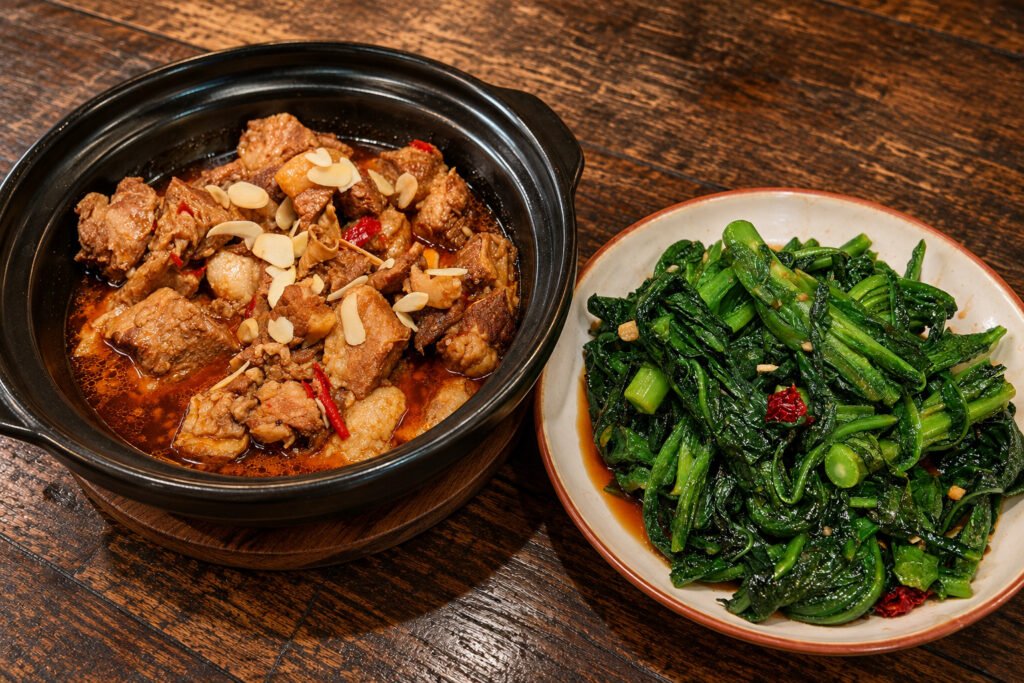
2. Nixi Clay-Pot Chicken
尼西土锅鸡 – Ní Xī Tǔ Guō Jī
One of Shangri-La’s most distinctive local dishes is Nixi Clay-Pot Chicken, named after Nixi Township, north of the city.
Nixi is famous for producing traditional black pottery, made using local clay and firing techniques passed down through generations.
The pottery is not simply decorative. It is also used for preparing food, including the region’s famous chicken dish.
Chicken is slowly cooked in a traditional black clay pot with ingredients such as ginger, herbs and sometimes local mushrooms.
The result is tender meat and a wonderfully rich, warming broth.
The clay pot retains heat and is traditionally brought directly to the table.
Although the dish is available in Shangri-La restaurants, visiting Nixi provides an opportunity to see the pottery workshops and understand the craftsmanship behind these distinctive cooking vessels.
Where to Try It
Tibetan restaurants in Shangri-La or Nixi Township.
What to Expect
Tender chicken served in a rich, aromatic broth, traditionally cooked in a black clay pot.
Pro Tip
If you have time, visit a Nixi pottery workshop to see how the traditional black cooking pots are made.
3. Pipa Meat – Traditional Tibetan Cured Pork
琵琶肉 – Pí Pá Ròu
One of Shangri-La’s more unusual traditional foods is Pipa Meat, a type of cured pork associated with Tibetan communities in northwestern Yunnan.
The name comes from the finished meat’s resemblance to a pipa, a traditional Chinese stringed musical instrument.
The pork is salted and seasoned before being air-dried and preserved.
Historically, this method allowed families to store meat for extended periods, an important consideration in remote mountain communities where refrigeration was unavailable.
The finished meat has a firm texture and a rich, salty flavour.
It may be sliced and served as part of a shared meal or cooked with vegetables and other ingredients.
Pipa Meat is also associated with hospitality and traditional celebrations.
Where to Try It
Traditional Tibetan restaurants in Shangri-La, particularly those specialising in regional dishes.
What to Expect
Firm, salty preserved pork, sometimes served in thin slices or cooked as part of a larger dish.
4. Yak Yoghurt – A Highland Dairy Speciality
牦牛酸奶 – Máo Niú Suān Nǎi
Yaks are an important part of life on the Tibetan Plateau, providing meat, milk, butter and other dairy products.
One of the most enjoyable local foods to try is yak yoghurt.
Made from yak milk, it is generally thicker and richer than ordinary yoghurt, with a distinctive tangy flavour.
Traditionally, the yoghurt can be quite sour, although versions served to visitors are frequently sweetened with sugar or honey.
It is often presented in small bowls and enjoyed as a snack or dessert.
Yak yoghurt is widely available around Shangri-La, making it one of the easiest local specialities to try.
Where to Try It
Dukezong Old Town, Tibetan restaurants and local dairy shops.
What to Expect
Thick, creamy yoghurt with a pleasantly tangy flavour. Some versions are sweetened with sugar or honey.
Pro Tip
Try a plain version first if available. It provides a better introduction to the natural flavour of yak-milk yoghurt.
5. Air-Dried Yak Meat – A Traditional Mountain Snack
风干牦牛肉 – Fēng Gān Máo Niú Ròu
Another popular Shangri-La speciality is air-dried yak meat.
Similar in concept to beef jerky, it is produced by drying strips of yak meat to preserve them.
The process creates a firm, chewy texture and concentrates the flavour of the meat.
Some varieties are relatively plain, while others are seasoned with chilli, pepper and local spices.
Dried yak meat has traditionally been a convenient food for travelling and working in mountainous environments.
Today, it is sold in packets throughout Shangri-La and is a popular local snack and souvenir.
Where to Try It
Food shops, markets and souvenir stores around Dukezong Old Town.
What to Expect
Chewy, strongly flavoured dried meat, sometimes seasoned with chilli and other spices.
6. Highland Barley Cakes and Tsampa
青稞饼 – Qīng Kē Bǐng
糌粑 – Zān Bā
Highland barley is one of the most important traditional crops grown across the Tibetan Plateau.
Unlike many other grains, it grows well in cold, high-altitude conditions and has been central to Tibetan food traditions for centuries.
In Shangri-La, barley is used in several forms.
Highland barley cakes are a popular snack, often prepared as flatbreads or small baked cakes.
They have a slightly nutty flavour and are commonly served warm.
Tsampa is another important traditional food made from roasted barley flour.
The flour is typically mixed with butter tea and kneaded into a soft dough that can be eaten by hand.
Although simple, tsampa has long been a staple food for Tibetan herders, travellers and families.
Where to Try It
Traditional Tibetan restaurants and bakeries around Shangri-La.
What to Expect
Barley cakes have a slightly nutty flavour. Tsampa is denser and is traditionally mixed with butter tea.
7. Matsutake Mushrooms – A Seasonal Mountain Delicacy
松茸 – Sōng Róng
The mountain forests surrounding Shangri-La are renowned for producing matsutake mushrooms.
These highly prized wild mushrooms grow in association with forest trees and are particularly valued for their distinctive aroma.
Matsutake mushrooms command high prices in Chinese and Japanese markets.
During the summer mushroom season, they appear in local restaurants, where they may be grilled, stir-fried, added to soups or cooked with chicken.
Some restaurants serve matsutake in hotpots, allowing the mushrooms to flavour the broth.
Their distinctive fragrance makes them one of the region’s most sought-after seasonal ingredients.
Where to Try It
Restaurants in Shangri-La specialising in local mushrooms and seasonal Yunnan cuisine.
Best Season
Usually July to September, depending on rainfall and growing conditions.
Food Safety
Wild mushrooms should only be eaten when properly identified and safely prepared by experienced cooks. Never collect or prepare unfamiliar wild mushrooms yourself.
8. Suolima – Traditional Tibetan Barley Drink
索里玛酒 – Suǒ Lǐ Mǎ Jiǔ
Alongside butter tea and locally produced grape wine, another traditional drink worth looking out for is Suolima.
This Tibetan beverage is made from fermented grains, commonly including highland barley.
Depending on the preparation, it can have a mildly sweet, sour or yeasty flavour, with alcohol content varying considerably.
Suolima is associated with local hospitality, family gatherings and celebrations.
Unlike modern bottled beer or wine, it is traditionally produced using methods passed down through families and communities.
It offers another way to experience the food and drink traditions of the Tibetan Plateau.
Where to Try It
Traditional Tibetan restaurants, guesthouses and cultural dining experiences around Shangri-La.
What to Expect
A fermented grain drink with flavours ranging from mildly sweet to sour and yeasty. Alcohol content varies by preparation.
Worth Knowing
Suolima is not necessarily alcohol-free. Ask about the preparation if you need to avoid alcohol.
Tips for Eating and Drinking in Shangri-La
Look Beyond the Main Tourist Streets
Dukezong Old Town has plenty of restaurants serving Tibetan and Yunnan specialities, but some are aimed primarily at visitors.
Explore quieter streets and look for restaurants serving local families and groups.
Menus may be predominantly in Chinese, so a translation app is extremely useful.
Pro Tip
Keep the Chinese names of the dishes you want to try saved on your phone. Showing the name to restaurant staff is often easier than explaining it in English.
Expect Hearty Highland Food
Traditional food in Shangri-La reflects the colder mountain environment.
Yak meat, potatoes, barley, dairy products and soups are common ingredients, while preserved meat and fermented foods have longstanding roles in local food traditions.
Many dishes are filling and warming, particularly welcome during Shangri-La’s cold evenings.
Pro Tip
Shangri-La can be cold even outside winter. A warming soup or clay-pot dish makes an excellent evening meal after a day exploring the monasteries and grasslands.
Final Thoughts – Shangri-La’s Unique Food Culture
Shangri-La offers a completely different culinary experience from much of the rest of Yunnan.
Its food reflects the cold climate, high altitude and Tibetan traditions of the region, with yak meat, barley, dairy products and preserved foods playing an important role.
Dishes such as Nixi Clay-Pot Chicken, Pipa Meat and yak yoghurt are particularly worth seeking out, while seasonal matsutake mushrooms are a highlight for travellers visiting during the summer.
But perhaps the most surprising discovery is the region’s red wine.
The fact that French Catholic missionaries introduced European grapevines into these remote mountain valleys more than a century ago adds an unexpected chapter to Shangri-La’s cultural history.
Today, drinking a glass of locally produced red wine in Shangri-La is not simply an opportunity to sample a Chinese wine. It is also a connection to the remarkable history of religion, trade and cultural exchange that has shaped this part of Yunnan.
From humble barley cakes and tangy yak yoghurt to slow-cooked chicken and mountain-grown wine, Shangri-La’s food culture is as interesting and varied as the landscape surrounding it.
Food traditions and availability vary by restaurant, season and locality. Matsutake mushrooms are seasonal, local wines differ by producer, and traditional fermented drinks may contain alcohol. Historical information about the Cizhong winemaking tradition draws on published academic research into Catholic missions and viticulture in northwestern Yunnan.