
Apparently Six Months of Travelling Wasn’t Enough
The Dordogne to Oloron-Sainte-Marie – and the road to Spain
Having spent the previous six months travelling across half the world, much of it on trains, you might have thought we would be ready to stay put for a while.
Apparently not.
We had arrived back at our house in France, but there was one small problem.
It still had guests in it.
So, faced with the terrible prospect of having nowhere in particular we needed to be, we decided there was really only one sensible solution.
Go travelling again.
This time by car.
We had seen very little of northern Spain and had never really explored northern Portugal, so the beginnings of a plan formed.
We would pack the camping gear into the Kangoo, point ourselves towards Spain and see where we ended up.
It seemed like a good idea.
Most of our plans do at this stage.
So we loaded the car with the tent, sleeping bags, cooking gear and all the other things required to temporarily recreate a considerably less comfortable version of home, and set off.
Our route took us west through the Dordogne and towards Bergerac.
The Dordogne is beautiful at almost any time of year, but early autumn is particularly lovely.
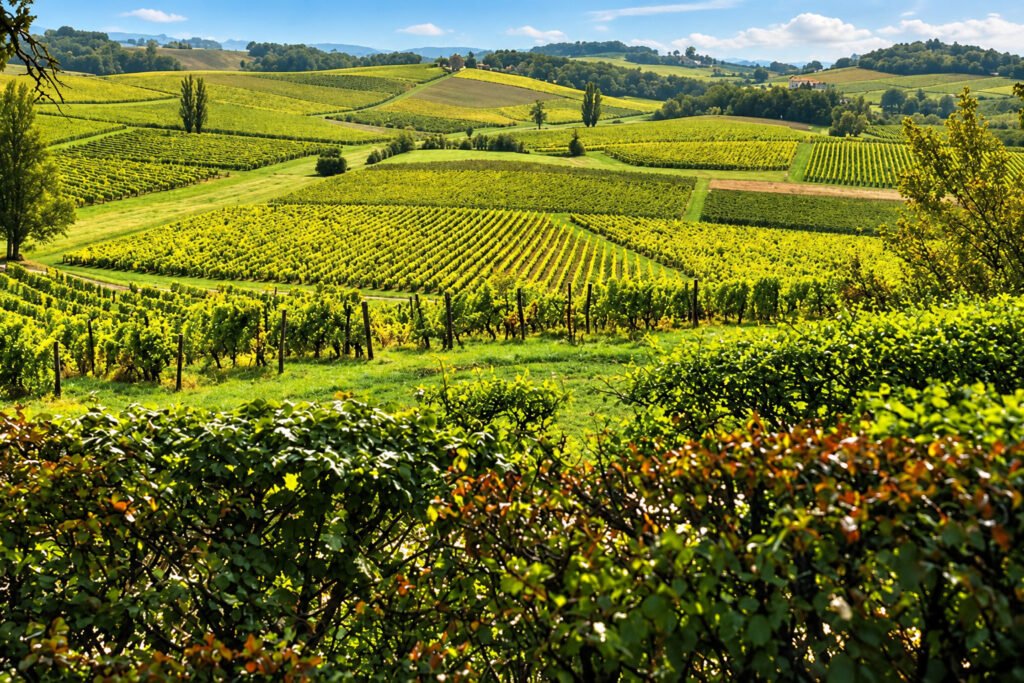
The vineyards around Bergerac seemed to go on forever.
Mile after mile of vines rolled across the countryside, their leaves just beginning to turn from green to gold, rust and red.
There were neat rows climbing hillsides, little roads disappearing between them and occasional stone farmhouses tucked amongst the vines.
It was one of those drives where the journey itself was every bit as good as wherever you happened to be going.
Which was fortunate, because we still had quite a long way to go.
Our first overnight stop was Oloron-Sainte-Marie, tucked into the foothills of the Pyrenees and not far from the Spanish border.
Oloron is an interesting place.
And a beautiful one.
But there was something slightly melancholy about it.
For centuries its position on the routes through the Pyrenees made it an important trading town, particularly for commerce with Spain.
Then textiles became a major source of prosperity.
From the eighteenth century onwards, wool and textile production played an increasingly important part in the town’s economy. The fast-flowing rivers provided power for mills and workshops, and Oloron became known for producing everything from cloth and blankets to hosiery, sandals and, perhaps most famously, berets.
For a long time there was money here.
And you can still see it.
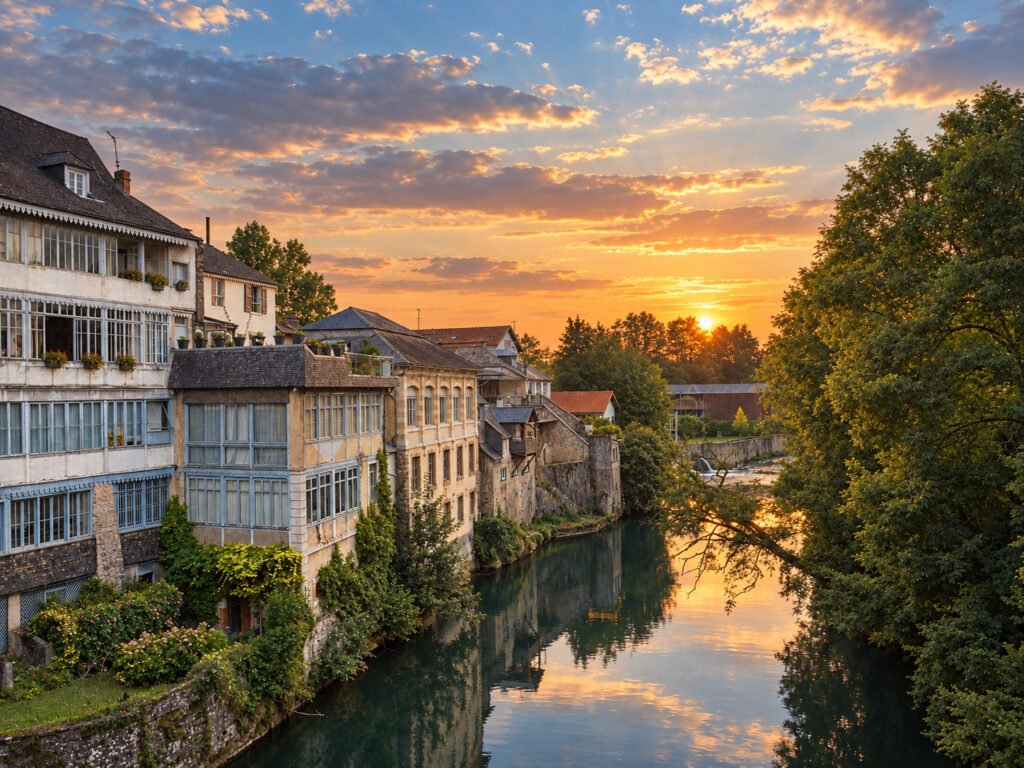
Large houses line the river and stand along streets that must once have been extremely grand.
But industries change.
Textile manufacturing gradually declined, businesses disappeared and many of the old buildings lost the purpose — and the money — that had once maintained them.
Some have been beautifully restored.
Others haven’t.
As we wandered through town we passed elegant old houses with shuttered windows, peeling paint and tired façades, some apparently empty and slowly surrendering themselves to time.
It was something we had seen in quite a few French towns.
Beautiful buildings.
Wonderful locations.
And nobody quite sure what to do with them anymore.
We arrived in the early evening and checked into our hotel.
It was right in the centre of town, fairly simple and just a little dusty.
Not catastrophically dusty.
Just dusty enough to notice.
We dropped our bags and headed out for a wander.
Oloron sits where two mountain rivers meet, and some of its finest old houses seem almost to rise directly from the riverbanks.
In the fading evening light it was lovely.
The water reflected the old buildings, the hills rose behind the town and the last of the sun disappeared through the clouds.
Eventually, sightseeing gave way to a more immediate concern.
Dinner.
There did not appear to be an enormous range of possibilities.
In fact, after wandering around for a while, our options seemed to have narrowed to two.
A kebab.
Or a restaurant.
We chose the restaurant.
The meal was perfectly nice.
It was also rather expensive for what eventually arrived on the plates.
Still, we had been fed.
Sometimes that is victory enough.
After dinner we headed back to the slightly dusty hotel and had an early night.
We had a long drive ahead of us the following day.
My final impression of Oloron was that of a grand old lady who had once dressed extremely well and entertained important guests.
She was still beautiful.
But these days she looked a little tired around the edges.
Perhaps that was part of her charm.
The following morning we packed the Kangoo again and headed south.
The Pyrenees were waiting.
And somewhere on the other side was Spain.
Our first day on the road had taken us through the autumn vineyards of Bergerac and into the foothills of the Pyrenees. Oloron-Sainte-Marie had been beautiful, faded and slightly melancholy — a town where the past was still very easy to see. The next morning we pointed the Kangoo towards the mountains. France was behind us. Spain was next.