
Into Portugal – Heat, Dust and Bragança
Puebla de Sanabria to Bragança through the mountains
From Puebla de Sanabria we turned south towards Portugal.
On the map it didn’t look particularly dramatic.
The road had other ideas.
Almost immediately we found ourselves winding through mountains and deep valleys, the road twisting around hillsides and dropping steeply towards small villages tucked into the folds of the landscape.
It was beautiful.
It was also, at times, slightly terrifying.
There were long climbs followed by steep descents, tight bends, narrow stretches and the occasional moment when the road appeared to be heading directly towards nothing at all.
The views, however, were magnificent.
Wooded slopes fell away beneath us, rocky hills rose in the distance and tiny settlements appeared far below, surrounded by fields that looked as though they had been worked for generations.
This was the sort of countryside where driving twenty kilometres could take considerably longer than expected.
Partly because of the road.
Partly because there was always another view worth looking at.
And partly because I am not particularly keen on hurtling around blind mountain corners simply because someone behind me thinks we should.
Eventually hunger intervened.
We pulled into a small roadside restaurant and ordered a selection of tapas.
It was excellent.
Simple food, cold drinks and absolutely no need to negotiate another hairpin bend for a while.
Perfect.
Then it was back into the Kangoo.
Onwards.
Eventually we crossed the border and arrived in Bragança.
We were now properly in the Portuguese interior.
And it was hot.
Very hot.
The soft early-autumn weather we had enjoyed in France seemed to have disappeared somewhere behind us.
Here the countryside was dry and dusty and summer appeared to have absolutely no intention of leaving.
We found a campsite on the outskirts of town and set about pitching our little tent.
The campsite was pleasant enough.
There were trees.
There was shade.
Both increasingly important features.
But after a long, hot summer the ground was baked hard and covered in fine reddish dust.
Within a surprisingly short time the dust was in the tent.
In the car.
In our shoes.
In the chairs.
And presumably in several places it had absolutely no business being.
We also discovered that the campsite restaurant was closed.
The season, apparently, was over.
This seemed rather optimistic considering it was still hot enough to fry an egg on the bonnet of the Kangoo.
But closed it was.
Which meant eating at the tent unless we wanted to drive into town.
Cooking wasn’t a problem.
Food storage was.
Our refrigeration system consisted of an icebox.
Technically refrigeration.
For a while.
So most days involved driving the ten kilometres or so into Bragança to buy whatever we needed.
Ah well.
There are worse hardships.
And fortunately Bragança turned out to be a town we liked very much.
It sits in the far north-east of Portugal, in the historic region of Trás-os-Montes, close to the Spanish border.
Its position made it strategically important for centuries, guarding one of the approaches into Portugal from Spain.
The town’s history stretches back well before the creation of Portugal itself, but it was during the medieval period that Bragança became particularly important.
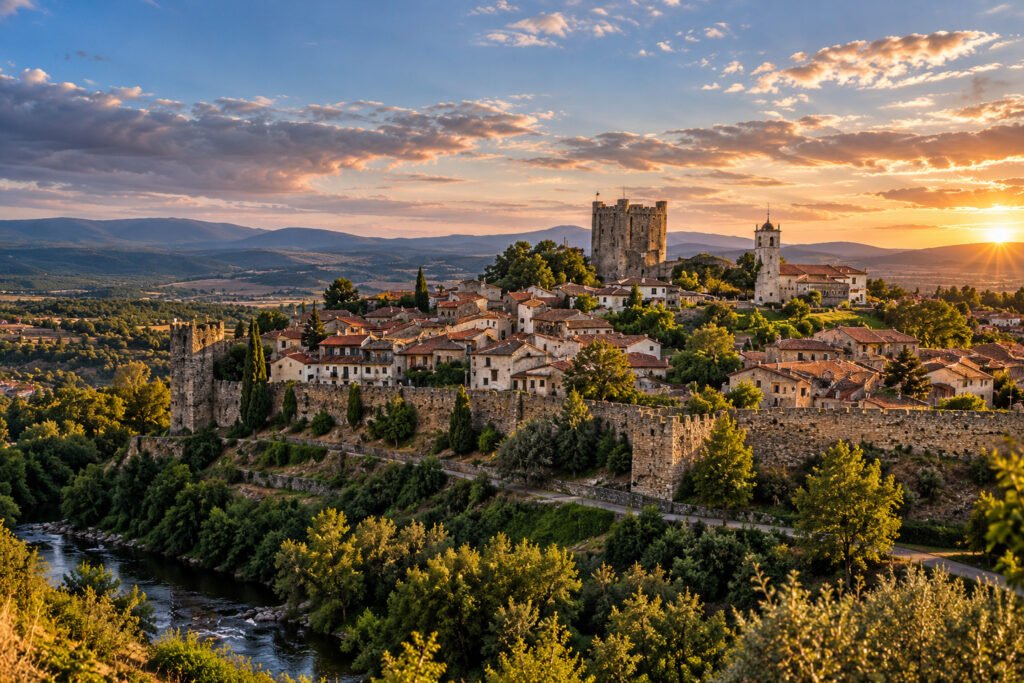
High above the modern town sits the old fortified citadel.
Its massive stone walls enclose narrow lanes, old houses and one of the most impressive medieval castles in northern Portugal.
The castle developed over several centuries, with much of what survives today dating from the Middle Ages, when this frontier region needed rather substantial defences.
The town also gave its name to the powerful House of Braganza, the dynasty that eventually supplied Portugal with kings from the seventeenth century onwards.
There was clearly rather more history here than we had expected when we chose it as somewhere convenient to camp.
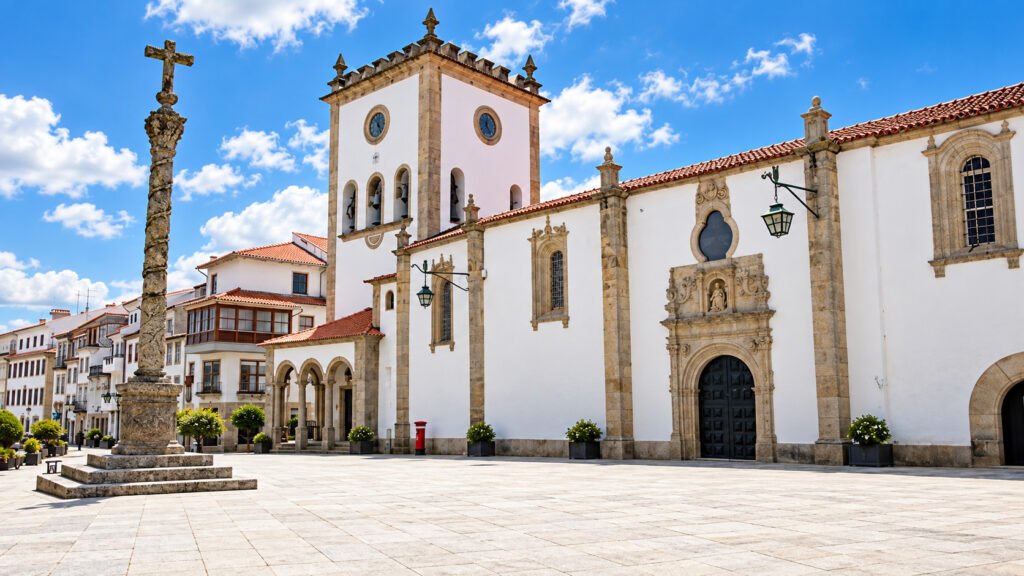
We spent our days wandering around the old town and exploring the citadel.
The castle dominates everything.
Its great square keep rises above the rooftops while the old walls look out across an enormous sweep of countryside towards the mountains.
Inside the walls it felt much quieter.
Stone houses lined the narrow streets, flowers appeared in windows and there were little corners where almost nothing seemed to have changed for a very long time.
Then we would head back down into the modern town.
Usually in search of lunch.
We found several good restaurants and quickly settled into a pleasant routine.
Drive into town.
Wander around.
Look at something historic.
Have lunch.
Buy food.
Drive back to the campsite.
It wasn’t a bad life.
Evenings were simple.
We would sit outside the tent as the heat finally began to disappear, make something easy for dinner and watch the light fade through the trees.
For a few days it was lovely.
Then the heat began to wear us down.
So did the dust.
Especially the dust.
After five days we seemed to be carrying a substantial percentage of inland Portugal around with us.
Fine red dirt had worked its way into almost everything we owned.
And eventually we reached a decision.
We had enjoyed Bragança.
Very much.
But we had had enough of being hot and dusty.
It was time for a change.
Somewhere cooler.
Somewhere greener.
Somewhere with water.
We packed the tent, shook out as much of Portugal as we could and loaded everything back into the Kangoo.
We were heading west.
Towards the Atlantic coast.
Bragança had been an unexpected pleasure: a magnificent medieval citadel, good food and a landscape very different from the France we had left behind. But five days of heat, hard ground and fine red dust were enough. The mountains and dry interior had been wonderful. Now we wanted sea air.