
Shangri-La China
Shangri-La China Travel Guide
Welcome to Shangri-La, one of the most fascinating and culturally distinctive destinations in China’s Yunnan Province. Situated more than 3,000 metres above sea level on the eastern edge of the Tibetan Plateau, Shangri-La is famous for its Tibetan heritage, ancient Buddhist monasteries, traditional architecture and spectacular mountain landscapes. Surrounded by high-altitude grasslands, lakes and distant snow-covered peaks, the town offers visitors a remarkable introduction to the culture and scenery of this beautiful region of southwestern China.
From wandering through the cobbled streets of Dukezong Ancient Town and turning the enormous golden prayer wheel overlooking the town to exploring the magnificent Songzanlin Monastery, discovering the grasslands surrounding Napa Lake and visiting the extraordinary white limestone terraces of Baishuitai, Shangri-La offers an unforgettable combination of history, culture and natural beauty. Whether you’re sampling traditional Tibetan food, discovering the region’s unexpected wine-making heritage or exploring the dramatic mountain landscapes beyond the town, Shangri-La is a destination best enjoyed slowly, allowing time to acclimatise to the altitude and appreciate its unique character.
Best China Itineraries


Shangri-La Itineraries
Choose the perfect itinerary based on how much time you have
3 Days in Shangri-La
Essential Shangri-LaBest for: First-time visitors wanting to experience Shangri-La’s Tibetan culture, historic Old Town and beautiful mountain scenery.
- Explore Dukezong Ancient Town, with its traditional Tibetan-style buildings, cobbled streets and colourful prayer flags
- Visit Guishan Park and turn the enormous golden prayer wheel overlooking the Old Town
- Discover Songzanlin Monastery, one of Yunnan’s most important Tibetan Buddhist monasteries
- Explore Napa Lake and the surrounding grasslands, where yaks and horses graze against a spectacular mountain backdrop
- Enjoy traditional Tibetan food, including yak meat dishes, butter tea and local specialities, while exploring Shangri-La’s cafés and restaurants
Tip: Shangri-La sits approximately 3,200 metres above sea level. Take things slowly on your first day, drink plenty of water and allow time to acclimatise before undertaking strenuous activities.
5–7 Days in Shangri-La & Around
RecommendedBest for: Travellers wanting to explore Shangri-La at a relaxed pace while discovering the surrounding Tibetan villages, lakes, monasteries and remarkable natural landscapes.
- Spend 2 days exploring Dukezong Ancient Town, Guishan Park, local markets and Shangri-La’s traditional Tibetan culture
- Visit Songzanlin Monastery and explore the surrounding village and countryside
- Spend time around Napa Lake, enjoying the high-altitude grasslands, wetlands and views of the surrounding mountains
- Visit Pudacuo National Park, known for its alpine lakes, forests, meadows and beautiful mountain scenery
- Take a day trip to the remarkable white limestone terraces of Baishuitai, one of the region’s most unusual natural attractions
- Discover local Tibetan food, traditional architecture and Shangri-La’s unexpected wine-making heritage
Tip: Baishuitai is a considerable distance from Shangri-La, so allow a full day for the journey. A private driver offers flexibility to stop at viewpoints and villages along the way. Weather and mountain road conditions can affect travel times.
10–14 Days Shangri-La & Northern Yunnan
Best of YunnanBest for: Travellers wanting to experience the dramatic landscapes, historic towns and fascinating cultural traditions of northwestern Yunnan.
- Spend 3–4 days exploring Shangri-La, including Dukezong Ancient Town, Songzanlin Monastery, Napa Lake and Pudacuo National Park
- Visit Baishuitai to see its extraordinary white mineral terraces cascading down the mountainside
- Travel south to Tiger Leaping Gorge, one of China’s most dramatic river gorges, with spectacular views of the Jinsha River and surrounding mountains
- Continue to Lijiang and spend several days exploring its UNESCO World Heritage-listed Old Town, traditional Naxi culture and historic architecture
- Visit Jade Dragon Snow Mountain and the beautiful turquoise waters of Blue Moon Valley
- Explore the traditional villages of Shuhe and Baisha, known for their historic Naxi architecture and mountain scenery
- If time permits, continue to Dali and Erhai Lake to discover another fascinating part of Yunnan’s cultural heritage and natural beauty
Tip: High-speed trains connect Shangri-La with Lijiang and Dali, making independent travel relatively straightforward. Tiger Leaping Gorge and Baishuitai require road transport. Travelling from lower elevations towards Shangri-La can provide more time to adjust to the altitude.
Transport
How to Get to & Around Shangri-La
Best ways to reach Shangri-La and explore the spectacular landscapes of northern Yunnan
By Air
Diqing Shangri-La Airport (DIG) is approximately 5–6 km from the town centre and serves domestic flights connecting Shangri-La with other Chinese cities.
The airport is conveniently located for travellers staying in or near Dukezong Ancient Town.
Airport Transfers: A taxi or Didi is generally the easiest way to reach your accommodation. The journey usually takes around 15–20 minutes, depending on traffic and location.
Important: Shangri-La sits at approximately 3,200 metres above sea level. If arriving by air from a low-altitude destination, allow time to adjust before undertaking strenuous activities.
Local Transport
Shangri-La is considerably smaller than cities such as Chengdu or Kunming and does not have a metro system.
Walking: Dukezong Ancient Town is best explored on foot. Its cobbled streets, traditional Tibetan-style buildings, temples and cafés are concentrated within a relatively compact area.
Public Buses: Local buses connect parts of the town with nearby attractions, including Songzanlin Monastery. Fares are inexpensive, although routes and timetables can be difficult to navigate without Chinese.
Taxis and Didi: Convenient for travelling between your accommodation, the railway station, airport and attractions outside the Old Town.
Trains
Shangri-La is connected to China’s railway network by the scenic Lijiang–Shangri-La railway, which opened in 2023.
Shangri-La Railway Station: Located outside the Old Town, approximately 15–20 minutes from Dukezong by taxi or Didi.
Lijiang: Direct train services make travelling between Lijiang and Shangri-La straightforward, with journeys generally taking around 1–1.5 hours.
Dali and Kunming: Rail connections allow travellers to continue south through Yunnan. Check individual services, as some journeys may require a change of train.
Tickets: Book through Trip.com or the official China Railway 12306 platform. Tickets are linked to your passport.
Car Rental & Taxi
Didi and local taxis are practical options for shorter journeys around Shangri-La.
For attractions outside town, hiring a private driver can be particularly useful.
Popular Destinations:
- Songzanlin Monastery
- Napa Lake and surrounding grasslands
- Potatso (Pudacuo) National Park
- Baishuitai White Terraces
- Traditional Tibetan villages and mountain viewpoints
Private Drivers: Particularly convenient for visiting several attractions in one day or reaching remote destinations such as Baishuitai, where public transport is limited.
Car Rental: Foreign visitors must meet China’s driving-licence requirements. An International Driving Permit alone is not sufficient.
Top Things to See & Experiences in Shangri-La


Top Attractions in Shangri-La
Six must-visit places showcasing the Tibetan culture, ancient traditions and spectacular landscapes of northern Yunnan
Dukezong Ancient Town
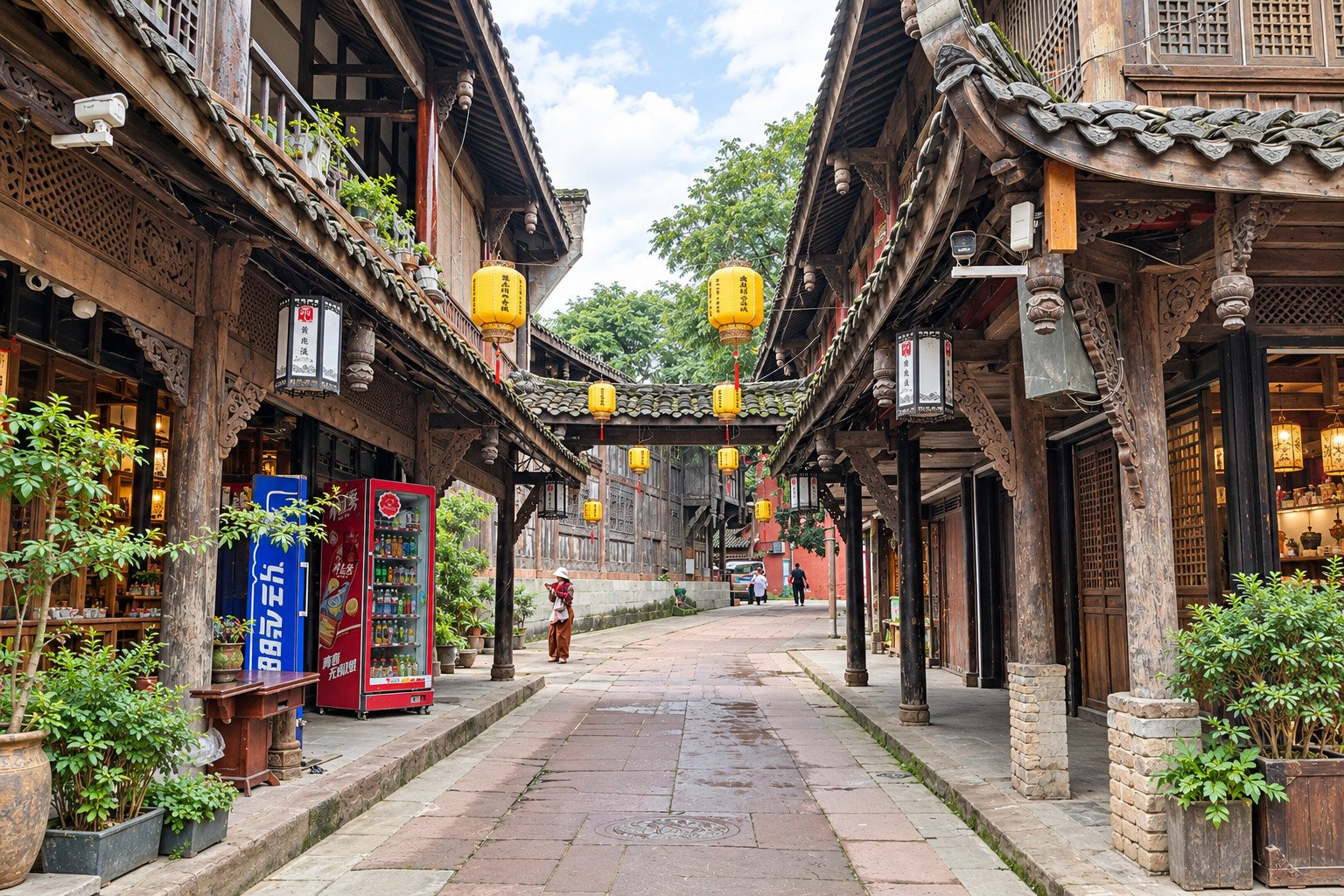
The historic heart of Shangri-La, Dukezong Ancient Town is a fascinating collection of traditional Tibetan-style buildings, cobbled streets, temples and colourful prayer flags. Although much of the town was rebuilt following a devastating fire in 2014, it remains an atmospheric place to explore, particularly in the early morning and evening.
- Traditional Tibetan-style architecture and cobbled streets
- Guishan Park and the enormous golden prayer wheel
- Moonlight Square and its historic surroundings
- Traditional shops, cafés and Tibetan restaurants
Our Tip: Visit Guishan Park in the late afternoon for beautiful views over the Old Town. Stay until evening when locals gather around Moonlight Square and the illuminated prayer wheel becomes particularly impressive.
Songzanlin Monastery
Often described as the Little Potala Palace, Songzanlin Monastery is the largest Tibetan Buddhist monastery in Yunnan Province. Founded in the seventeenth century, its magnificent golden roofs, colourful prayer halls and hillside location make it one of the most impressive cultural attractions in Shangri-La.
- Magnificent golden-roofed monastery buildings
- Traditional Tibetan Buddhist prayer halls and religious artwork
- Panoramic views across the surrounding valley
- Lamuyangcuo Lake and its monastery reflections
Our Tip: Visit early in the morning to avoid the busiest periods. The monastery involves climbing numerous steps at high altitude, so take your time and allow plenty of opportunities to stop and admire the views.
Napa Lake & Grasslands
Napa Lake, also known as Napahai, is a beautiful high-altitude wetland surrounded by vast grasslands, traditional Tibetan villages and distant mountain ranges. The landscape changes dramatically with the seasons, transforming from a broad lake during wetter months into expansive grasslands when water levels recede.
- Spectacular views across the lake and surrounding mountains
- Yaks, horses and grazing livestock on the grasslands
- Traditional Tibetan villages and rural landscapes
- Seasonal wetlands and birdlife
Our Tip: Hire a driver or arrange a taxi to explore the area surrounding Napa Lake. The scenery changes considerably as you travel around the wetlands, and stopping at different viewpoints is part of the experience.
Potatso (Pudacuo) National Park
One of Shangri-La’s most beautiful natural attractions, Potatso National Park protects a remarkable landscape of alpine lakes, forests, wetlands and high-altitude meadows. Located on the eastern edge of the Tibetan Plateau, the park offers an opportunity to experience the extraordinary natural environment surrounding Shangri-La.
- Shudu Lake and its beautiful alpine surroundings
- Wooden boardwalks through forests and wetlands
- Traditional high-altitude grasslands
- Mountain scenery, wildlife and seasonal wildflowers
Our Tip: Allow at least half a day for your visit. The park is at an even higher altitude than Shangri-La, so walk slowly, carry water and dress warmly. Check which areas and walking routes are open before travelling.
Baishuitai White Terraces
Baishuitai is one of northern Yunnan’s most unusual natural attractions. Over thousands of years, mineral-rich water has created a series of brilliant white limestone terraces and shallow pools cascading down a mountainside. The terraces are also culturally significant to the Naxi people and their traditional Dongba religion.
- Remarkable white mineral terraces and natural pools
- Beautiful mountain scenery surrounding the terraces
- Traditional Naxi villages and local culture
- Views across the distinctive stepped limestone formations
Our Tip: Baishuitai is a considerable distance from Shangri-La along winding mountain roads. Arrange a private driver and allow a full day for the journey and visit. The terraces are particularly beautiful when there is sufficient water flowing across them.
Tiger Leaping Gorge
One of China’s most spectacular natural landmarks, Tiger Leaping Gorge is a dramatic canyon carved by the powerful Jinsha River between Jade Dragon Snow Mountain and Haba Snow Mountain. Its towering cliffs, rushing river and extraordinary mountain scenery make it an unforgettable destination for visitors to northern Yunnan.
- Spectacular views into the deep river gorge
- The powerful Jinsha River rushing between enormous cliffs
- Dramatic scenery beneath Jade Dragon and Haba Snow Mountains
- Hiking trails and viewpoints overlooking the gorge
Our Tip: Tiger Leaping Gorge is conveniently located between Lijiang and Shangri-La. Consider visiting while travelling between the two destinations. The main viewing area is accessible without a lengthy hike, while the famous high trail is better suited to travellers wanting a more challenging adventure.